Lalan Singh backs anti-paper-leak bill, slams Rahul's conduct
Synopsis
Union Minister Lalan Singh backed the Public Examination (Prevention of Unfair Means) Amendment Bill, 2026 as India's toughest anti-paper-leak law and accused Congress leader Rahul Gandhi of unparliamentary behaviour during its parliamentary debate.
Key Takeaways
Union Minister Lalan Singh posted on 30 July 2026 defending the Public Examination (Prevention of Unfair Means) Amendment Bill, 2026 as India's toughest-ever law against paper leaks and exam mafias.
The bill is positioned as an extension of the Public Examinations (Prevention of Unfair Means) Act, 2024 , which introduced criminal penalties for organised cheating in national exams.
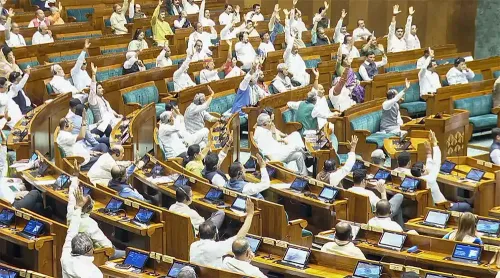
Singh accused Congress leader Rahul Gandhi of 'extremely unparliamentary' conduct during the parliamentary debate on the legislation.
He described Gandhi's behaviour as a 'habit,' framing it as a pattern rather than an isolated incident.
The bill's progress through both Houses and enforcement by bodies such as the National Testing Agency (NTA) will be closely watched by millions of exam aspirants.
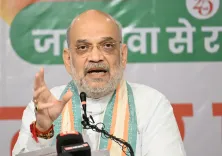
A bill that its backers call the toughest crackdown on India's exam mafia in history landed at the centre of a sharp parliamentary storm on Thursday, 30 July 2026 — and Union Panchayati Raj and Fisheries Minister Rajiv Ranjan Singh, popularly known as Lalan Singh, made sure the country heard both sides of it.
In a post on X, the senior Janata Dal (United) leader pinned his defence of the Public Examination (Prevention of Unfair Means) Amendment Bill, 2026, describing it as 'abhi tak ka sabse sakht kanoon' — the strictest law yet against exam paper leaks and the organised mafias behind them. The bill, he wrote, was brought with a clear purpose: to protect the futures of the country's youth and students, and to guarantee fairness in public examinations.
What the 2026 Amendment Bill sets out to do
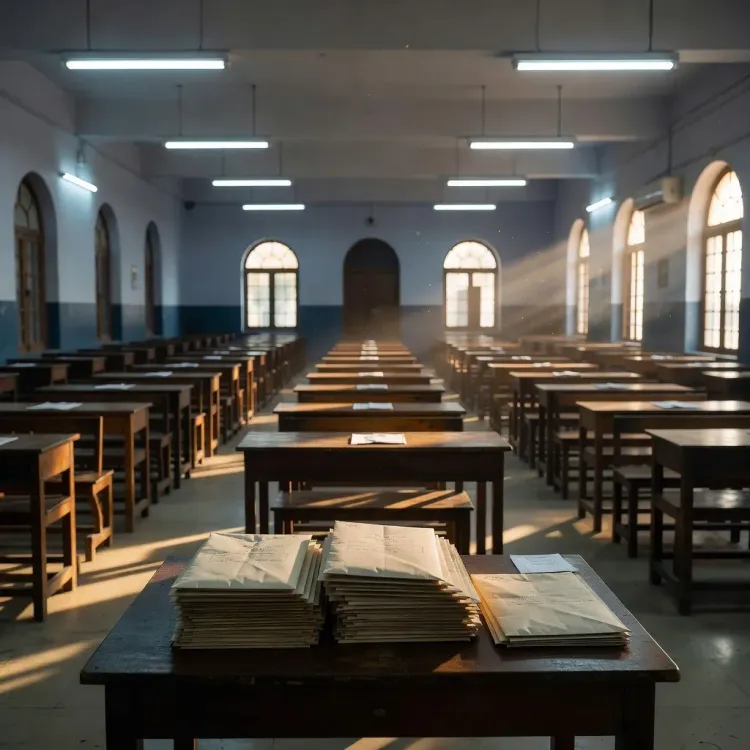
The amendment builds on the Public Examinations (Prevention of Unfair Means) Act, 2024, which Parliament passed in the wake of repeated paper-leak controversies rocking high-stakes national tests. Exams such as NEET and JEE had become flashpoints — each scandal erasing years of preparation for hundreds of thousands of aspirants and fuelling public fury at the system. The 2024 law introduced criminal penalties for organised cheating; the 2026 amendment is positioned as tightening those provisions further.
The stakes are not abstract. Millions of young Indians sit public examinations every year for government jobs, medical seats, and engineering colleges. A single leaked paper can corrupt an entire cycle, and the syndicates that profit from it have grown sophisticated enough to operate across state lines.
Lalan Singh's broadside at Rahul Gandhi
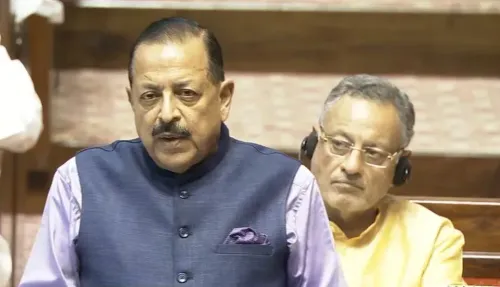
Singh did not stop at defending the legislation. He turned his post into a pointed critique of Congress leader Rahul Gandhi, alleging that Gandhi's conduct during the parliamentary debate on the bill was 'extremely unparliamentary and worrying for democracy' — 'loktantra ke liye chintajanak'. He added that such behaviour was no longer a surprise: 'Unfortunately this is not something new; it has now become his habit.'
The charge is a familiar weapon in the ruling coalition's arsenal against the principal opposition leader, but the specific context — a bill aimed at protecting students — gives it a sharper edge. By tying Gandhi's conduct to legislation framed around youth welfare, Singh is making a political argument as much as a procedural one.
A pattern older than this Parliament
Acrimonious exchanges between treasury and opposition benches on examination-reform legislation are not new. Successive governments have rushed to toughen penalties each time a paper-leak scandal erupted, and each time the opposition has contested both the adequacy of the bill and the government's own responsibility for the crisis. That cycle — scandal, legislation, parliamentary clash — has repeated itself often enough to feel structural.
What changes now is the political temperature. With the 2026 amendment still working its way through both Houses, and enforcement machinery at bodies like the National Testing Agency under scrutiny, the bill's passage will be watched closely by the millions of aspirants who have the most to gain — or lose — from whether it works.
India's exam mafia has survived tougher laws before. The real test of this amendment will not be in Parliament — it will be in the next exam season.
Point of View
While simultaneously keeping pressure on Rahul Gandhi's parliamentary conduct as a recurring narrative. The decision to pin the post signals a deliberate, sustained messaging campaign rather than a one-off reaction. Framing Gandhi's behaviour as a 'habit' rather than an isolated incident is a calibrated attempt to make the conduct stick as a character argument heading into the bill's final passage.
NationPress
14 Sept 2026
Frequently Asked Questions
What is the Public Examination (Prevention of Unfair Means) Amendment Bill 2026?
It is a proposed amendment to the 2024 anti-paper-leak law, described by the government as the strictest legislation yet against exam mafias and paper leaks in India's public examinations, aimed at protecting student futures and ensuring fairness.
What did Lalan Singh say about Rahul Gandhi in Parliament?
Singh alleged on X that Rahul Gandhi's conduct during the parliamentary debate on the exam bill was 'extremely unparliamentary and worrying for democracy,' and called it a recurring habit rather than a one-off incident.
What was the original Public Examinations Act 2024 about?
The Public Examinations (Prevention of Unfair Means) Act, 2024 was enacted to curb organised cheating, paper leaks, and malpractices in major national exams such as NEET and JEE, introducing criminal penalties for those involved.
Has India had paper leak problems in exams before?
Yes. Repeated paper-leak scandals in high-stakes national tests like NEET and government recruitment exams have driven successive governments to strengthen penalties, making exam-system integrity a persistent political issue.