CM Fadnavis launches MahaIT DAaS and Mini Setu centres in Maharashtra
Synopsis
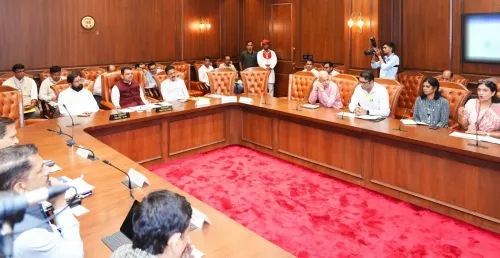
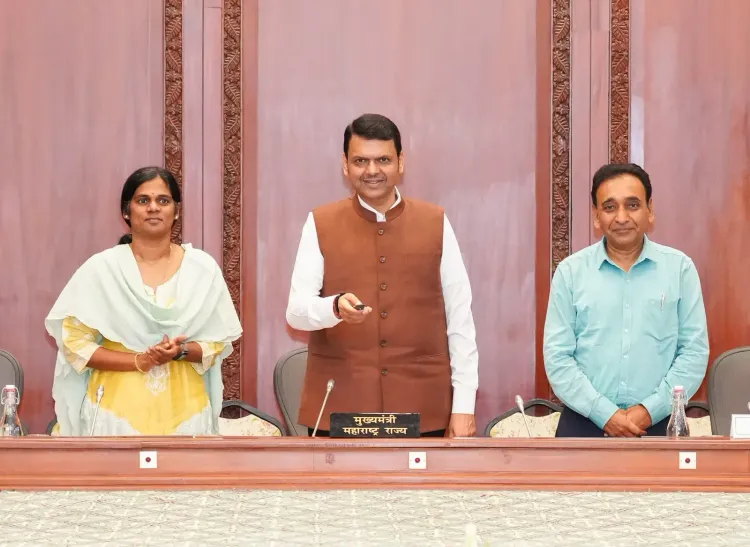
Chief Minister Devendra Fadnavis on 16 July 2026 launched MahaIT DAaS to unify state departmental data for evidence-based policy, and inaugurated 22 Mini Setu centres in Gadchiroli to deliver online government services at village level in remote and formerly Naxal-affected areas.
Key Takeaways
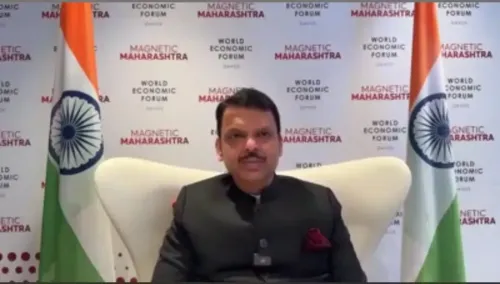
MahaIT DAaS (Data Analytics as a Service) was inaugurated on 16 July 2026 at Sahyadri Guest House, Mumbai by CM Devendra Fadnavis .
The platform will consolidate data from multiple Maharashtra government departments to enable evidence-based, transparent policy-making.
22 Mini Setu centres (Aaple Sarkar Seva Kendras) have been launched across Gadchiroli district — 13 Dadalora Khidki and 9 Aadi Seva Kendras .
The centres target citizens in remote, hilly and formerly Naxal-affected areas, eliminating the need to travel to taluka or district headquarters for government services.
Both initiatives fall under Maharashtra's Department of Electronics, Information Technology and Artificial Intelligence .
The rollout extends the state's Aaple Sarkar e-governance platform, operational since 2015 , to Gadchiroli's village level.
The Chief Minister's Office of Maharashtra announced on Thursday, 16 July 2026, that Chief Minister Devendra Fadnavis inaugurated two landmark digital governance initiatives — MahaIT Data Analytics as a Service (DAaS) and 22 Mini Setu centres — at Sahyadri Guest House, Mumbai, under the state's Department of Electronics, Information Technology and Artificial Intelligence.
What was launched
The MahaIT DAaS platform is designed to consolidate data from multiple state government departments into a single, secure analytics environment. According to the Chief Minister's Office, the initiative will accelerate data-aadharit nirnay prakriya (data-based decision-making), making service delivery 'more efficient, transparent and citizen-centric' while enabling evidence-based policy formulation.
Alongside DAaS, the government launched 22 Mini Setu centres — operating as Aaple Sarkar Seva Kendras — spread across 13 Dadalora Khidki centres and 9 Aadi Seva Kendras in Gadchiroli district. The centres aim to bring online government services directly to village level, sparing residents the need to travel to taluka or district headquarters.
Context
Gadchiroli is an eastern Maharashtra district that has historically been affected by Naxal insurgency and remains one of the state's most remote and underserved regions. The government framed the Mini Setu rollout explicitly as serving citizens in areas described as 'remote, hilly and freed from Naxal influence,' signalling the dual developmental and security logic behind the expansion.
The Aaple Sarkar e-governance portal, first launched in 2015, has served as Maharashtra's primary platform for integrated online citizen services. The Mini Setu centres extend that infrastructure to geographies where digital access has historically been limited.
Policy backdrop
Maharashtra has been a consistent participant in the national Digital India programme since 2015, progressively pushing e-governance tools from urban centres toward remote districts. The DAaS initiative fits within a broader national trend of state-level data platforms supporting evidence-based administration, mirroring frameworks adopted by several other large states seeking to rationalise departmental silos.
CM Fadnavis, who previously served as Chief Minister from 2014 to 2019, has a track record of championing IT infrastructure projects in Maharashtra. The current initiative under the Electronics, IT and AI department represents a continuation and deepening of that agenda, now incorporating artificial intelligence and analytics layers atop the existing e-governance stack.
Stakeholders and impact
Tribal communities and residents of Gadchiroli's remote villages stand to benefit most immediately from the Mini Setu rollout. The government stated that citizens will save 'money, time and effort' by accessing various online services at the village level rather than undertaking long journeys to administrative centres.
At the state level, departments that feed data into the MahaIT DAaS platform are expected to gain faster analytical insights, potentially improving targeting of welfare schemes and infrastructure spending. Civil society observers tracking last-mile delivery in left-wing extremism-affected districts will likely watch uptake rates closely.
What's next
The Chief Minister's Office did not specify a timeline for expanding Mini Setu centres beyond Gadchiroli, but the broader Digital Maharashtra push suggests further rollout to additional talukas is anticipated. Analysts will also watch whether DAaS outputs are formally integrated into state budget planning or annual policy documents, which would mark a significant step toward institutionalising data-driven governance in Maharashtra.
Point of View
If integrated into budget and scheme planning, could mark a meaningful shift from intuition-driven to evidence-driven governance in one of India's larger states. Both moves also reinforce Fadnavis's political positioning as a technology-forward administrator ahead of a period when state-level AI governance frameworks are becoming an electoral differentiator.
NationPress
16 Jul 2026
Frequently Asked Questions
What is MahaIT DAaS launched by CM Fadnavis?
MahaIT DAaS (Data Analytics as a Service) is a Maharashtra government platform launched on 16 July 2026 that consolidates data from various state departments to enable faster, evidence-based policy decisions and more efficient citizen service delivery.
What are Mini Setu centres in Maharashtra?
Mini Setu centres are Aaple Sarkar Seva Kendras — village-level government service points — launched in Gadchiroli district to allow residents to access online government services without travelling to taluka or district headquarters.
How many Mini Setu centres were launched in Gadchiroli?
A total of 22 Mini Setu centres were launched in Gadchiroli — 13 at Dadalora Khidki centres and 9 at Aadi Seva Kendras.
Why was Gadchiroli chosen for Mini Setu centres?
Gadchiroli is a remote, hilly district in eastern Maharashtra that was historically affected by Naxal insurgency. The government chose it to extend digital government services to citizens in underserved areas now described as freed from Naxal influence.
What is the Aaple Sarkar portal and how does it relate to Mini Setu?
Aaple Sarkar is Maharashtra's integrated e-governance portal launched in 2015 to deliver online citizen services. Mini Setu centres function as physical access points for this portal at the village level in remote districts like Gadchiroli.