Kejriwal demands Sonam Wangchuk as Education Minister
Synopsis
AAP convenor Arvind Kejriwal has publicly demanded the removal of Union Education Minister Dharmendra Pradhan and his replacement with Ladakhi innovator Sonam Wangchuk. The call sharpens opposition pressure on NEP 2020 implementation and amplifies Ladakh's voice in national education policy.
Key Takeaways
AAP convenor Arvind Kejriwal posted on 16 July 2026 demanding Sonam Wangchuk be made India's Education Minister.
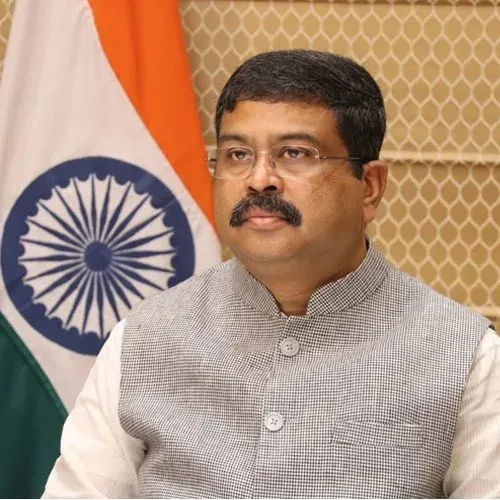
Dharmendra Pradhan currently holds the Union Education portfolio and has overseen the phased rollout of NEP 2020 since 2021.
Sonam Wangchuk is the founder of SECMOL in Ladakh, known for experiential, mother-tongue-based pedagogy.
AAP has since 2015 positioned Delhi's school reforms as a model contrasting with central government education policy.
Wangchuk has also led campaigns for Sixth Schedule constitutional protections for Ladakh, making the suggestion politically layered.
No response from the Ministry of Education had been issued at the time of publication.
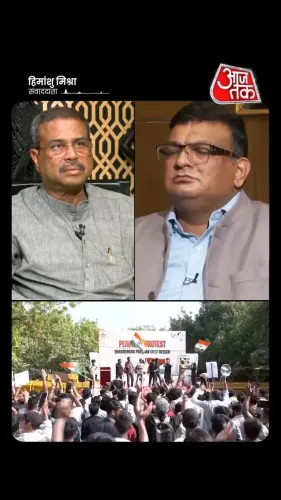
AAP convenor Arvind Kejriwal on Thursday, 16 July 2026, called for the removal of Union Education Minister Dharmendra Pradhan and demanded that Sonam Wangchuk, the Ladakhi engineer and education innovator, be appointed in his place. The post, shared on X, is among the sharpest personnel-level demands the opposition has levelled at the National Democratic Alliance government on the education front.
Context
Kejriwal's post in Hindi reads: 'Dharmendra Pradhan ko hataakar Sonam Wangchuk ko desh ka shiksha mantri banaya jae' — 'Remove Dharmendra Pradhan and make Sonam Wangchuk the country's Education Minister.' The demand is unambiguous: a sitting Union Cabinet minister should be replaced by a civil-society figure with no elected office. Such calls are unusual in their specificity and signal deep dissatisfaction with the current stewardship of India's education system.
Dharmendra Pradhan has held the Education portfolio and has been the face of the National Education Policy 2020 rollout, which began phased implementation from 2021 and represents India's first overhaul of its education framework since 1986. Critics have questioned the pace and equity of its implementation, particularly for students in remote and linguistically diverse regions.
Who Is Sonam Wangchuk?
Sonam Wangchuk is a Ladakh-based engineer, innovator, and the founder of the Students' Educational and Cultural Movement of Ladakh (SECMOL), an institution known for its experiential, hands-on pedagogy designed for mountain communities. He gained national and international recognition for inventions such as the ice stupa — an artificial glacier for water conservation — and has been a vocal advocate for constitutionally protected rights for the Union Territory of Ladakh. His approach to education, rooted in local relevance and practical skills, has drawn comparisons with the vocational and mother-tongue emphases of the NEP 2020, even as he has critiqued the government's handling of Ladakh's specific needs.
Wangchuk's prominence has grown beyond Ladakh: he has undertaken public fasts and awareness campaigns to press for Sixth Schedule protections for Ladakh, making him a symbol of both educational reform and regional rights movements. His name invoked in this context carries weight beyond a mere policy critique.
Policy Backdrop
The Aam Aadmi Party has long positioned Delhi's government schools as a counter-narrative to central education policy. Since 2015, the Delhi government under AAP significantly increased the share of the state budget allocated to education, undertook large-scale infrastructure upgrades, and introduced structured teacher-training programmes. Party leaders have repeatedly contrasted these outcomes with what they describe as inadequate implementation at the national level.
The NEP 2020, approved by the Union Cabinet in July 2020, introduced sweeping changes — flexibility in subject choices, a new 5+3+3+4 curricular structure, emphasis on mother-tongue instruction up to Grade 5, and expanded vocational training. While the policy has received broad conceptual support, opposition parties and educators have raised concerns about funding gaps, teacher shortages, and uneven rollout across states and union territories.
Stakeholders and Impact
Kejriwal's demand speaks directly to two constituencies: the vast population of Indian students and parents frustrated with learning outcomes, and the people of Ladakh, who have long sought greater autonomy and culturally relevant education. Wangchuk's SECMOL model — where students manage the campus, learn in their native tongue, and apply knowledge to real-world mountain problems — is seen as a proof of concept for what decentralised, community-rooted education can achieve.
For the Ministry of Education, the post is a pointed political challenge ahead of any parliamentary debates on the education budget. It also amplifies Ladakh's voice in national policy conversations at a time when the region's constitutional status remains a live political issue.
What's Next
No official response from the Ministry of Education or Dharmendra Pradhan had emerged at the time of publication. Parliamentary discussions on education funding and NEP implementation timelines are expected to provide the next formal arena where such critiques will be tested. Whether Wangchuk himself responds to or endorses the suggestion remains to be seen, but Kejriwal's post ensures the question of who should lead India's education agenda will stay in public debate.
Point of View
AAP sidesteps the usual charge of offering only criticism without alternatives. The move also subtly links the education debate to Ladakh's unresolved constitutional demands, broadening the coalition of voters the party seeks to speak to. If Wangchuk publicly responds, the demand could shift from opposition rhetoric to a genuine policy conversation.
NationPress
16 Jul 2026
Frequently Asked Questions
Why is Kejriwal demanding Sonam Wangchuk as Education Minister?
Kejriwal has called for Sonam Wangchuk to replace Dharmendra Pradhan as Union Education Minister, citing an implicit critique of NEP 2020's implementation. Wangchuk's SECMOL model in Ladakh is seen as evidence of effective, ground-up education reform.
Who is Sonam Wangchuk and what is SECMOL?
Sonam Wangchuk is a Ladakhi engineer and founder of SECMOL (Students' Educational and Cultural Movement of Ladakh), an institution that uses hands-on, mother-tongue-based learning suited to mountain communities. He is also known for climate innovations like the ice stupa.
What is the National Education Policy 2020?
NEP 2020 is India's education framework approved by the Union Cabinet in July 2020, replacing the 1986 policy. It introduces a new curricular structure, mother-tongue instruction up to Grade 5, and expanded vocational training, with phased implementation from 2021.
What has AAP done differently in education in Delhi?
Since 2015, the AAP-led Delhi government raised the share of the state budget for education, upgraded school infrastructure, and introduced structured teacher-training programmes, often contrasting these outcomes with central government education performance.
Can a non-elected person become a Union Cabinet minister in India?
Yes, under the Indian Constitution a person who is not a member of Parliament can be appointed to the Union Cabinet, but they must secure a seat in either the Lok Sabha or Rajya Sabha within six months of appointment.