CM Fadnavis Calls for Climate Action on World Environment Day
Synopsis
On World Environment Day, 5 June 2026, Maharashtra Chief Minister Devendra Fadnavis issued a bilingual appeal in English and Marathi urging citizens to commit to climate action, connect with nature, and work toward ending plastic pollution — aligning state messaging with India's net-zero pledges and UN global campaigns.
Key Takeaways
Maharashtra CM Devendra Fadnavis posted a bilingual World Environment Day message on 5 June 2026 calling for climate action and a sustainable future.
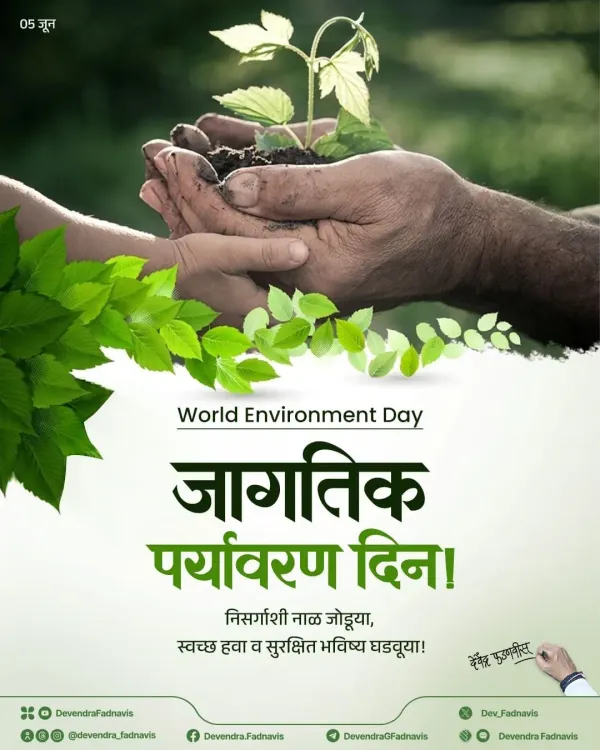
The Marathi portion of the post translates as: 'Today, on World Environment Day, let us connect with nature and build clean air and a safe future!' Maharashtra adopted its State Action Plan on Climate Change in 2014 , revised to include renewable energy and urban resilience targets.
India updated its Nationally Determined Contributions in 2022 , targeting 50 per cent cumulative electric power from non-fossil sources by 2030 .
India's Plastic Waste Management (Amendment) Rules 2021 ban single-use plastics, with states including Maharashtra responsible for enforcement.
Key stakeholders include urban residents, coastal fishing communities, and drought-affected farmers in Vidarbha and Marathwada .
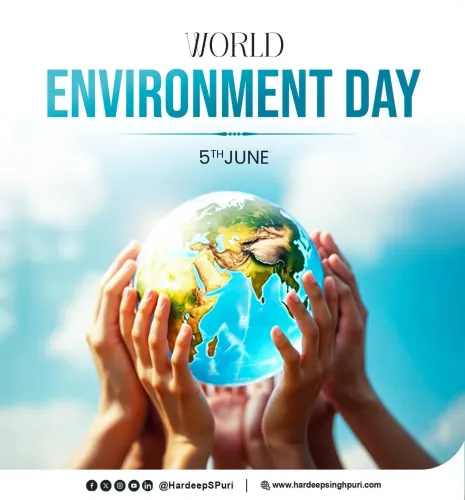
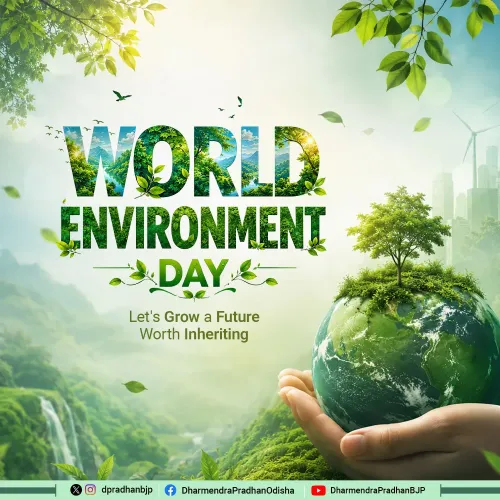
Maharashtra Chief Minister Devendra Fadnavis on Friday, 5 June 2026, marked World Environment Day with a bilingual appeal urging citizens to commit to climate action and build a sustainable future for the state and the country.
Posting in both English and Marathi, Fadnavis wrote: 'आज, जागतिक पर्यावरण दिनी, निसर्गाशी नाळ जोडूया, स्वच्छ हवा व सुरक्षित भविष्य घडवूया!' ['Today, on World Environment Day, let us connect with nature and build clean air and a safe future!']. His post aligned with the UN's global campaign themes of #NowForClimate and #EndingPlasticPollution.
Context
World Environment Day is observed annually on 5 June, a date established by the United Nations in 1972 to promote global awareness and political action on environmental protection. This year's observance falls amid intensifying global calls for accelerated climate commitments from both national governments and sub-national actors such as Indian states. Maharashtra, as India's most industrialised state, occupies a prominent position in this conversation, balancing rapid economic growth with mounting environmental pressures.
Policy Backdrop
Maharashtra adopted its State Action Plan on Climate Change in 2014, which was subsequently revised to incorporate renewable energy targets and urban climate resilience measures. The plan operates within the broader framework of India's National Action Plan on Climate Change (2008), which established eight national missions covering solar energy, sustainable agriculture, and water conservation. At the international level, India's commitments under the Paris Agreement (2015) include reaching net-zero emissions by 2070 and sourcing 50 per cent of cumulative electric power from non-fossil fuels by 2030, as updated in India's Nationally Determined Contributions in 2022.
On plastic pollution — a theme directly referenced in the post — India's Plastic Waste Management (Amendment) Rules 2021 introduced bans on identified single-use plastic items, placing enforcement responsibility squarely on state governments and municipal corporations. Maharashtra has been among the states with early regulatory action in this space, though enforcement across its vast urban and rural expanse remains an ongoing challenge.
Stakeholders and Impact
The Chief Minister's message resonates across a wide cross-section of Maharashtra's population. Urban residents in cities such as Mumbai, Pune, and Nagpur contend with persistent air quality concerns, while coastal fishing communities face the compounding threats of sea-level rise and marine plastic pollution. Drought-affected farmers in Vidarbha and Marathwada remain among the most vulnerable to erratic monsoon patterns linked to climate change.
Fadnavis has previously emphasised infrastructure and urban development during his earlier tenure as Chief Minister from 2014 to 2019. His current messaging on environment and sustainability signals alignment with both national net-zero pledges and the international momentum around climate accountability at the state level.
What's Next
Observers and policy watchers will look to the Maharashtra government's forthcoming budget announcements for concrete allocations toward climate adaptation funds and updates on the enforcement of single-use plastic bans across municipal corporations. The Chief Minister's World Environment Day statement sets a rhetorical benchmark that civil society groups and opposition parties are likely to measure against actual budgetary and regulatory follow-through. Sustained state-level action on afforestation, river rejuvenation, and green urban planning will be key indicators of whether this commitment translates into policy outcomes.
Point of View
Addressing audiences in English and Marathi simultaneously, reflects a deliberate effort to speak to urban, educated voters and the broader Marathi-speaking electorate at once. The explicit reference to plastic pollution is notable given that Maharashtra bears direct enforcement responsibility under the 2021 central rules, subtly framing the state as an active participant rather than a passive recipient of federal mandates. Whether this messaging translates into measurable policy action — on adaptation funding, afforestation, or plastic enforcement — will determine its lasting political and environmental significance.
NationPress
21 Oct 2026
Frequently Asked Questions
Why did CM Devendra Fadnavis post about World Environment Day 2026?
CM Fadnavis marked the annual UN observance on 5 June 2026 with a bilingual appeal urging Maharashtra citizens to commit to climate action, connect with nature, and work toward ending plastic pollution.
What is Maharashtra's role in India's climate action plans?
Maharashtra has its own State Action Plan on Climate Change, adopted in 2014 and revised since, which aligns with India's National Action Plan on Climate Change and the country's Paris Agreement commitments including a net-zero target by 2070.
What does India's plastic pollution ban mean for Maharashtra?
Under India's Plastic Waste Management (Amendment) Rules 2021, single-use plastic items are banned and state governments, including Maharashtra, are responsible for enforcement across municipal corporations and rural areas.
What environmental challenges does Maharashtra face?
Maharashtra faces air pollution in major cities, coastal erosion and marine plastic pollution affecting fishing communities, and recurrent drought in Vidarbha and Marathwada linked to climate variability.
What should we watch for after CM Fadnavis's environment statement?
Key things to watch include Maharashtra's budget allocations for climate adaptation funds, enforcement updates on the single-use plastic ban, and progress on afforestation and river rejuvenation programmes across the state.