Pradhan Calls for Sustainable Living on World Environment Day
Synopsis
Union Education Minister Dharmendra Pradhan marked World Environment Day on 5 June 2026 by calling for collective commitment to sustainable living and responsible stewardship of natural resources, reinforcing the Education Ministry's alignment with NEP 2020's green literacy mandate and India's net-zero goals.
Key Takeaways
Union Education Minister Dharmendra Pradhan posted a World Environment Day message on 5 June 2026 calling for sustainable living and responsible stewardship of natural resources.
World Environment Day has been observed annually on 5 June since 1973 as the UN's principal platform for environmental awareness.
The National Education Policy 2020 mandates integration of environmental awareness and climate literacy across all stages of Indian schooling and higher education.
India's net-zero by 2070 pledge, announced at COP26 in Glasgow (2021) , explicitly links education and skilling to the country's green transition goals.
The National Action Plan on Climate Change (2008) established eight national missions on sustainable development, providing the long-standing policy architecture behind such messaging.
Roll-out of NEP-mandated environmental education modules across state boards remains a key area to watch ahead of the next academic year.
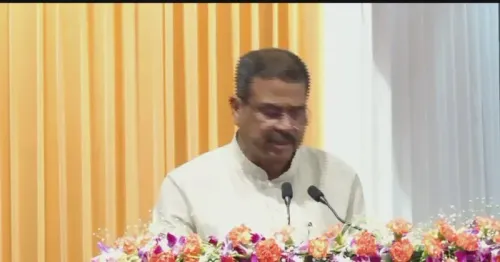
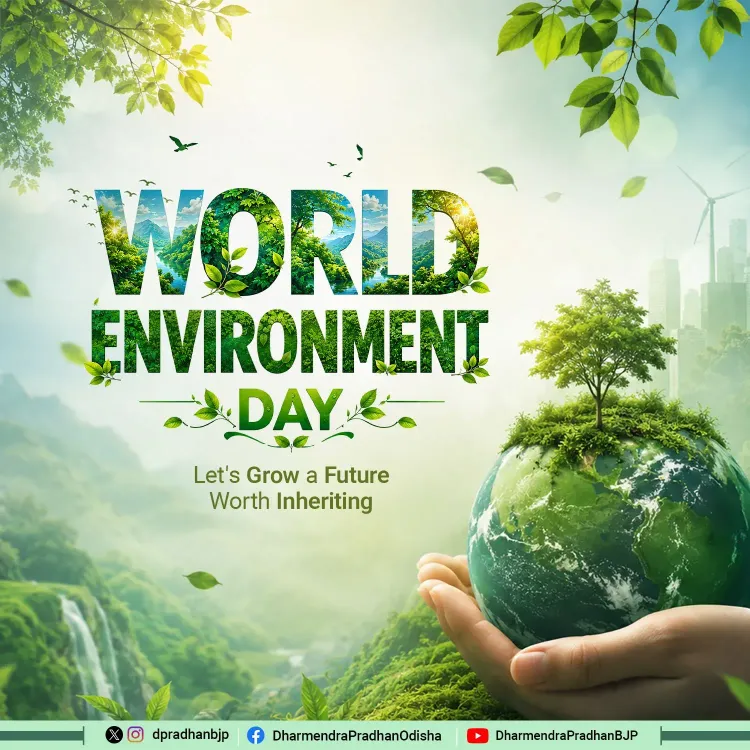
Union Education Minister Dharmendra Pradhan on Friday, 5 June 2026 marked World Environment Day by calling on citizens to renew their collective commitment to sustainable living, responsible stewardship of natural resources, and the building of a greener world for future generations.
Context
World Environment Day, observed annually on 5 June under the aegis of the United Nations, has been the principal global platform for environmental public awareness since 1973. The day draws participation from governments, civil society, and educational institutions worldwide. Pradhan's message — 'A healthy environment is the foundation of a prosperous future' — frames ecological responsibility as a prerequisite for economic well-being, not merely a conservation concern.
The minister called for 'the creation of a greener world for generations to come,' situating the appeal within a long-term, intergenerational frame that aligns with India's stated climate commitments on the international stage.
Policy Backdrop
Pradhan's ministry oversees the implementation of the National Education Policy 2020 (NEP 2020), which explicitly mandates the integration of environmental awareness, sustainability, and climate literacy across all stages of schooling and higher education. The policy treats environmental education not as a peripheral subject but as a core competency for every student in India.
India's broader climate architecture — anchored by the National Action Plan on Climate Change (2008) and its eight national missions on sustainable development — has consistently linked education and skilling to green transition goals. At COP26 in Glasgow in 2021, India announced a net-zero by 2070 target, with human capital development, including green literacy, identified as a long-term enabler of that transition.
Successive governments have sought to embed sustainability within development planning and education reform, treating environmental literacy as foundational to both economic growth and climate resilience. The Education Ministry's public messaging on World Environment Day is consistent with this broader institutional effort.
Stakeholders and Impact
The primary stakeholders in this policy direction are school students and higher education institutions across India, where NEP 2020-mandated environmental education modules are at varying stages of roll-out across state boards. For millions of students entering the formal education system, green literacy is increasingly becoming a structured curricular component rather than an optional add-on.
The minister's message also carries resonance for policymakers, educators, and civil society organisations working on sustainability programmes, signalling that the Education Ministry views World Environment Day as an occasion to reinforce the link between classroom learning and real-world ecological responsibility.
What's Next
Attention will now turn to the roll-out of NEP-mandated environmental education modules in state boards and any fresh guidelines the Ministry of Education may issue ahead of the next academic year. How effectively these curricular directives translate into classroom practice across India's diverse state education systems will be a key indicator of whether the ministry's public commitment to sustainability finds concrete expression in policy delivery.
Point of View
' the minister reinforces the government's effort to position green literacy as an economic imperative, not merely a moral one. This messaging sits within a broader BJP-era pattern of aligning India's domestic education reform agenda with its international climate commitments, particularly the net-zero by 2070 pledge. The real test, however, lies not in the messaging but in whether NEP's environmental education directives achieve consistent implementation across India's heterogeneous state board systems.
NationPress
20 Oct 2026
Frequently Asked Questions
Why did Dharmendra Pradhan post about World Environment Day?
As Union Education Minister, Pradhan used World Environment Day on 5 June 2026 to call for collective commitment to sustainable living and to signal the ministry's alignment with NEP 2020's environmental education goals.
What is World Environment Day and when is it observed?
World Environment Day is the United Nations' principal global platform for environmental awareness, observed every year on 5 June since 1973.
How does NEP 2020 address environmental education in India?
The National Education Policy 2020 mandates that environmental awareness, sustainability, and climate literacy be integrated as core components across all stages of schooling and higher education in India.
What is India's net-zero target and how does education connect to it?
India announced a net-zero by 2070 target at COP26 in Glasgow in 2021, with education and skilling — including green literacy — identified as long-term enablers of the country's clean energy transition.
What should we watch for from the Education Ministry on environmental policy?
Key developments to follow include the roll-out of NEP-mandated environmental education modules in state boards and any new guidelines the Ministry of Education issues ahead of the next academic year.