CM Fadnavis: Nagpur Airport Handed Over to GMR Group

Synopsis
Maharashtra CM Devendra Fadnavis announced the transfer of Nagpur Airport to GMR Group on 25 June 2026, under PM Modi's push for airport privatisation. The move aims to develop Nagpur as a cargo and logistics hub for central India, building on the long-standing MIHAN project framework.
Key Takeaways
Nagpur Airport is being formally transferred to GMR Group on 25 June 2026 under the Union government's airport privatisation programme.
CM Devendra Fadnavis credited Prime Minister Narendra Modi 's leadership for the handover, announcing it from Nagpur.
GMR Group already operates Delhi and Hyderabad airports and brings proven private airport management experience.
The transfer is expected to strengthen Nagpur 's role as a cargo and logistics hub for central India , particularly the Vidarbha region.
The move aligns with the decade-old MIHAN project vision and India's National Civil Aviation Policy 2016 framework for PPP-based airport development.
Cargo facility timelines and new route expansions will be key indicators of progress following the operational handover.
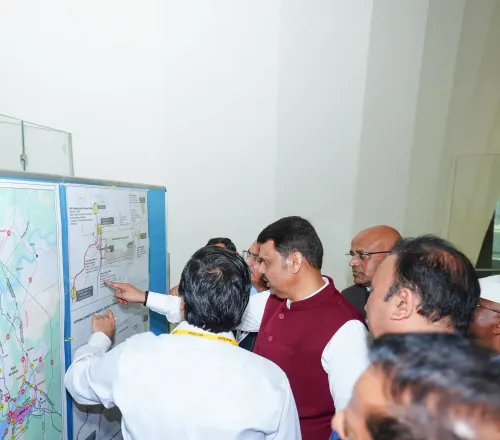
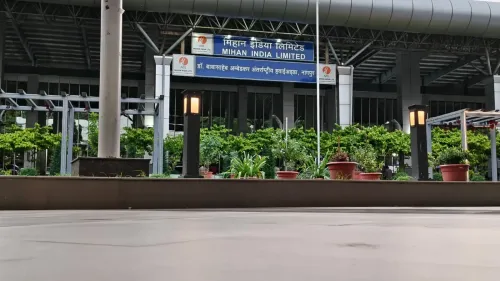
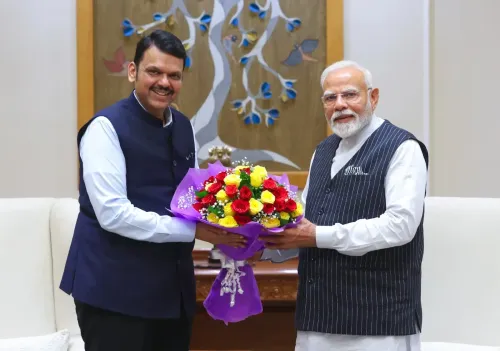
Maharashtra Chief Minister Devendra Fadnavis announced on Thursday, 25 June 2026, that Nagpur Airport is being transferred to GMR Group under the leadership of Prime Minister Narendra Modi, marking a significant step in positioning the city as a cargo and logistics hub for central India.
Context
Posting from Nagpur, CM Fadnavis wrote in Hindi: 'मा. प्रधानमंत्री नरेंद्र मोदी जी इनके नेतृत्व में आज नागपुर एयरपोर्ट का हस्तांतरण 'जीएमआर' को किया जा रहा है' — ('Under the leadership of respected Prime Minister Narendra Modi ji, Nagpur Airport is today being transferred to GMR.'). He added that the airport would give central India a new identity as a strong ecosystem and cargo hub.
The handover represents the formal entry of GMR Group — the private infrastructure conglomerate that already operates Delhi and Hyderabad airports — into the management of one of Maharashtra's strategically located airports.
Policy Backdrop
The push to develop Nagpur as a logistics nerve centre predates this transfer. The Multi-modal International Hub and Airport at Nagpur (MIHAN) project, initiated around 2005, was designed precisely to build out the city's cargo, warehousing, and special economic zone potential along the same corridor.
India's National Civil Aviation Policy of 2016 further formalised the framework for public-private partnerships at regional airports, encouraging private operators to invest in capacity, efficiency, and passenger experience beyond the major metros. The Nagpur Airport transfer fits squarely within this national policy lineage.
GMR Group has a demonstrated track record in airport privatisation, having transformed both Indira Gandhi International Airport in Delhi and Rajiv Gandhi International Airport in Hyderabad into large-scale aviation and commercial hubs. Its entry into Nagpur signals a similar ambition for the Vidarbha region.
Stakeholders and Impact
The transfer is expected to benefit businesses across central India, particularly in the Vidarbha region, which has long sought stronger air connectivity and cargo infrastructure to reduce dependence on Mumbai and Pune. Cargo operators, logistics firms, and exporters of agricultural and industrial goods stand to gain from improved facilities.
For Maharashtra, whose winter capital is Nagpur, an upgraded airport under a proven private operator could accelerate investment into the MIHAN special economic zone and attract manufacturing and warehousing units seeking reliable air freight access.
Aviation sector workers and local businesses around the airport precinct will watch closely how the operational transition is managed, as private takeovers have historically involved phased upgrades to terminals, runways, and cargo aprons.
What's Next
Attention will now turn to implementation — specifically, the timelines GMR Group sets for expanding cargo facilities, adding new routes, and upgrading passenger infrastructure at Nagpur Airport. Stakeholders in the Vidarbha business community will look for concrete commitments on freight capacity and connectivity to domestic and international destinations.
If the Nagpur handover follows the trajectory of GMR's earlier airport operations, it could catalyse a broader economic uplift for central India — but the proof will lie in the pace and scale of investment that follows the formal transfer.
Point of View
The announcement carries dual political value — it reinforces the BJP's development narrative in Vidarbha, a region that has historically felt economically marginalised within Maharashtra. The choice of GMR Group, which has a credible track record at Delhi and Hyderabad, lends the move institutional weight beyond routine ceremony. The real test, however, will be whether the handover accelerates the long-pending MIHAN vision or remains another infrastructure milestone that moves slowly from announcement to execution.
NationPress
25 Jun 2026
Frequently Asked Questions
Who is taking over Nagpur Airport?
GMR Group , a private infrastructure conglomerate that also operates Delhi and Hyderabad airports, is taking over the management of Nagpur Airport as announced on 25 June 2026 .
Why is Nagpur Airport being privatised?
The transfer follows India's broader policy of public-private partnerships in aviation, formalised under the National Civil Aviation Policy 2016 , which aims to improve airport efficiency, capacity, and cargo handling at regional airports.
What is the MIHAN project and how is it related?
The Multi-modal International Hub and Airport at Nagpur (MIHAN) is a project initiated around 2005 to develop Nagpur as a logistics, cargo, and special economic zone hub. The GMR takeover is expected to advance this long-standing vision.
What did CM Fadnavis say about the Nagpur Airport transfer?
CM Devendra Fadnavis said the airport, being transferred under PM Narendra Modi 's leadership, would give central India a new identity as a 'strong ecosystem and cargo hub', posting the announcement from Nagpur on 25 June 2026.
How will the Nagpur Airport transfer benefit Vidarbha?
Businesses, cargo operators, and exporters in the Vidarbha region are expected to benefit from improved air freight access, new routes, and upgraded infrastructure under GMR Group 's management, reducing the region's dependence on Mumbai and Pune airports.