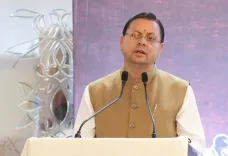
CM Dhami marks 1975 Emergency as 'Samvidhan Hatya Diwas'
Synopsis
Uttarakhand CM Pushkar Singh Dhami marked the 51st anniversary of the 1975 Emergency on 25 June 2026, calling it a 'dark chapter' in Indian democracy and paying tribute to those who resisted civil-liberty curbs under the BJP-designated 'Samvidhan Hatya Diwas' observance.
Key Takeaways
Uttarakhand CM Pushkar Singh Dhami posted a tribute on 25 June 2026 marking the 51st anniversary of the 1975 Emergency.
He described the Emergency as a 'dark chapter' in Indian democratic history, blaming the then Congress government's 'arrogance of power.' The post highlighted suppression of press freedom, jailing of lakhs of citizens and political workers without trial, and curtailment of constitutional fundamental rights.
Dhami invoked the BJP-designated observance Samvidhan Hatya Diwas (Constitution Murder Day) via the hashtag #SamvidhanHatyaDiwas .
The 1975 Emergency was proclaimed under Article 352 on the advice of PM Indira Gandhi and lasted 21 months until March 1977 .
The post is part of the BJP's broader annual effort to contrast Congress-era governance with its own emphasis on constitutional values.
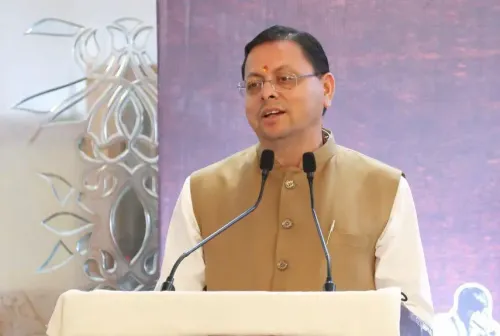
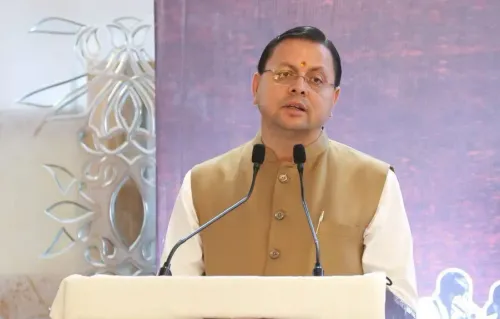
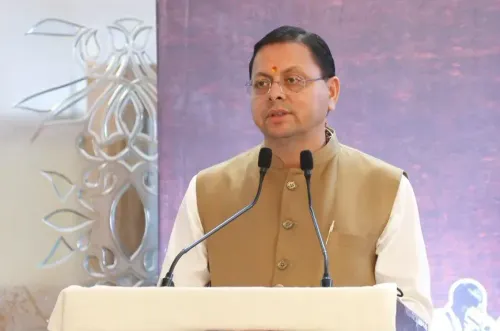
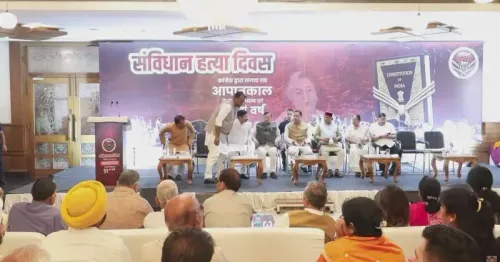
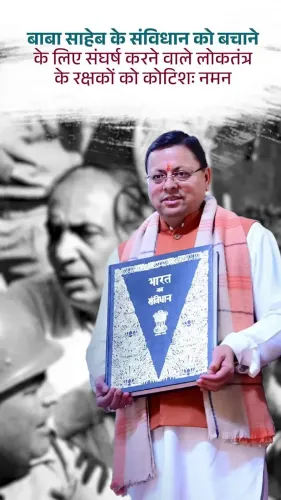
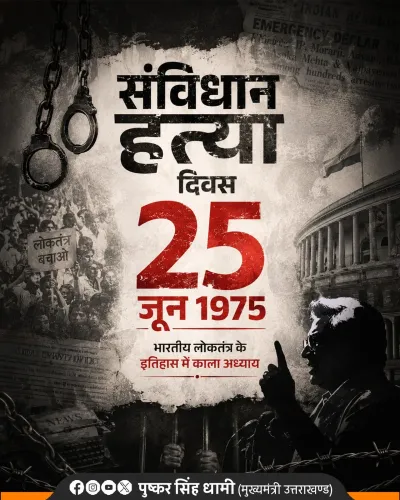
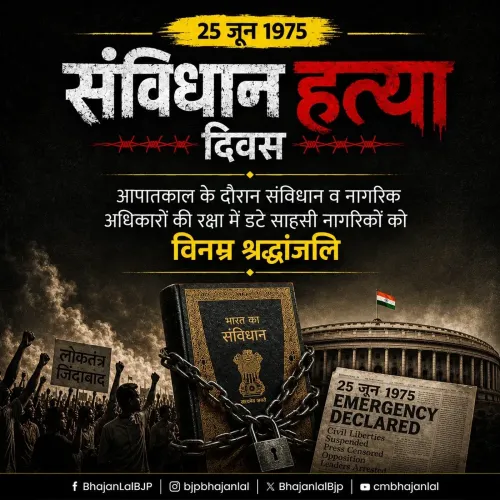
Uttarakhand Chief Minister Pushkar Singh Dhami on Thursday, 25 June 2026, marked the 51st anniversary of the 1975 Emergency with a sharp post on X, calling it a 'dark chapter' in Indian democratic history and paying tribute to those who resisted the crackdown on civil liberties. He invoked the BJP-designated observance Samvidhan Hatya Diwas — literally 'Constitution Murder Day' — to frame the anniversary as an attack on constitutional values rather than a mere political decision.
Context
In his post, Dhami wrote that on this day in 1975, the then Congress government, 'drowned in the arrogance of power,' imposed the Emergency on the country, writing 'a dark chapter in the history of Indian democracy.' He noted that freedom of expression was suppressed, the press was silenced, lakhs of citizens and political workers were jailed without trial, and fundamental rights guaranteed by the Constitution were severely curtailed. He offered salutations to all 'guardians of democracy' who resisted the tyranny, crediting their 'indomitable courage' for keeping India a living democracy.
The national Emergency was proclaimed on 25 June 1975 by President Fakhruddin Ali Ahmed under Article 352 of the Constitution, on the advice of Prime Minister Indira Gandhi. It remained in force for 21 months, ending in March 1977, and is widely regarded as the most severe suspension of democratic norms in independent India's history.
Policy Backdrop
The designation Samvidhan Hatya Diwas reflects the BJP's institutionalised effort to mark 25 June as a day of democratic reckoning. The party has used the anniversary to draw a contrast between what it describes as Congress-era authoritarian governance and its own emphasis on constitutional propriety. Similar messaging has emerged from BJP leaders at both state and national levels each year around this date.
During the Emergency period, the government invoked special powers to suspend fundamental rights, impose press censorship, and detain political opponents — including leaders from across the opposition — under the Maintenance of Internal Security Act (MISA) and other preventive detention laws. The period remains a reference point in Indian political discourse on civil liberties and institutional independence.
Stakeholders and Impact
Journalists and political workers are specifically named by Dhami as among those whose voices were suppressed during the Emergency. His tribute implicitly honours those who faced detention or censorship during 1975–77, a constituency that cuts across party lines in historical memory, even if the annual observance is driven by BJP political framing.
The hashtag #SamvidhanHatyaDiwas signals coordinated messaging across BJP leaders on the platform, amplifying the party's counter-narrative to Congress's historical legacy. For the Congress party, the Emergency remains a contested episode — one that its leadership has at times acknowledged as a mistake, though it disputes the BJP's framing of the anniversary as a formal day of mourning.
What's Next
Statements from other BJP chief ministers and central government ministers on the same date are expected to reinforce the party's unified messaging around Samvidhan Hatya Diwas. Whether the observance gains formal parliamentary recognition — through a resolution or structured debate — remains a question that will shape how the anniversary is institutionalised in future years. The annual recurrence of this messaging also sets up a predictable flashpoint in BJP–Congress exchanges over India's democratic record.
Point of View
' the party attempts to embed its own nomenclature into mainstream political discourse, much as it has done with other historical reframings. The messaging is calibrated to simultaneously honour democratic resisters — a universally sympathetic constituency — while keeping the Congress on the defensive about its own legacy. As long as the BJP remains in power, 25 June is likely to grow as a structured political occasion rather than a purely commemorative one.
NationPress
25 Jun 2026
Frequently Asked Questions
What is Samvidhan Hatya Diwas?
'Samvidhan Hatya Diwas,' meaning 'Constitution Murder Day,' is a designation used by the BJP to mark 25 June — the date in 1975 when the Emergency was imposed — as a day that represents an attack on India's constitutional values and democratic norms.
Why did Pushkar Singh Dhami post about the Emergency on 25 June 2026?
Dhami posted to mark the 51st anniversary of the 1975 Emergency, paying tribute to those who resisted civil-liberty curbs and using the occasion to criticise the then Congress government's decision to suspend fundamental rights.
When was the 1975 Emergency imposed and how long did it last?
The national Emergency was proclaimed on 25 June 1975 under Article 352 of the Constitution on the advice of Prime Minister Indira Gandhi, and it lasted for 21 months until March 1977.
What happened during the 1975 Emergency in India?
During the 1975–77 Emergency, the government suspended fundamental rights, imposed press censorship, and detained thousands of political opponents and ordinary citizens without trial under preventive detention laws such as MISA.
Does the Congress party acknowledge the Emergency as a mistake?
Congress leaders have at various points acknowledged that the Emergency was a mistake, but the party disputes the BJP's framing of the anniversary as a formal day of mourning or as a defining marker of Congress's democratic record.