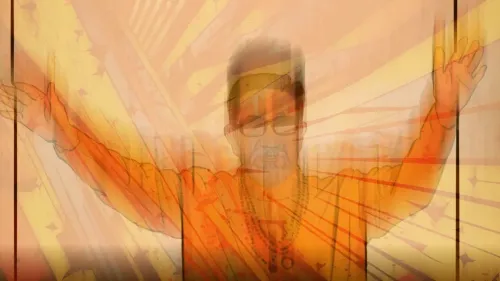
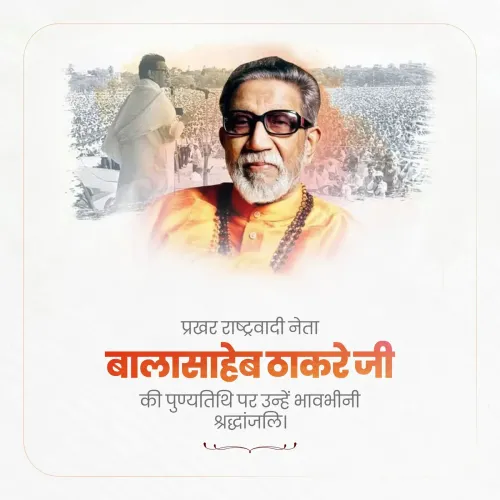
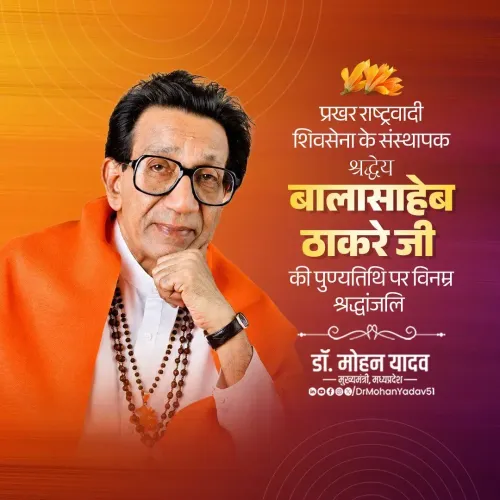
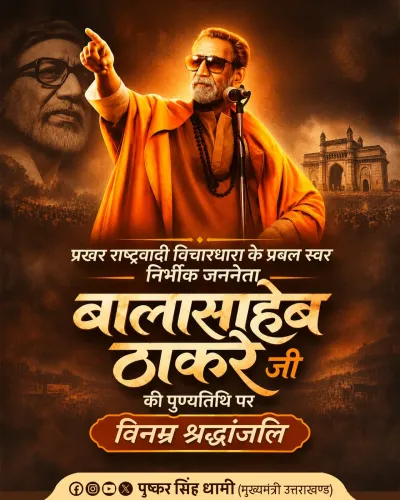
CM Fadnavis pays tribute to Balasaheb Thackeray on Smruti Din
Synopsis
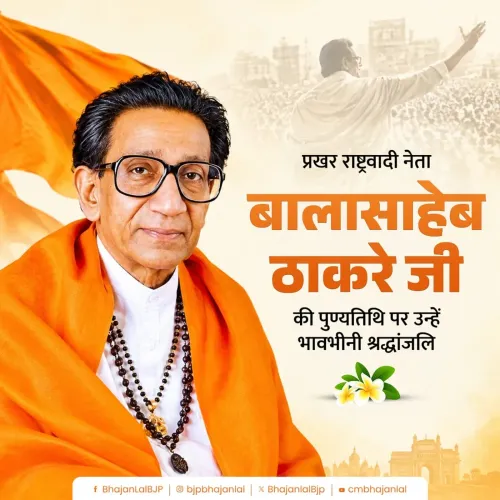
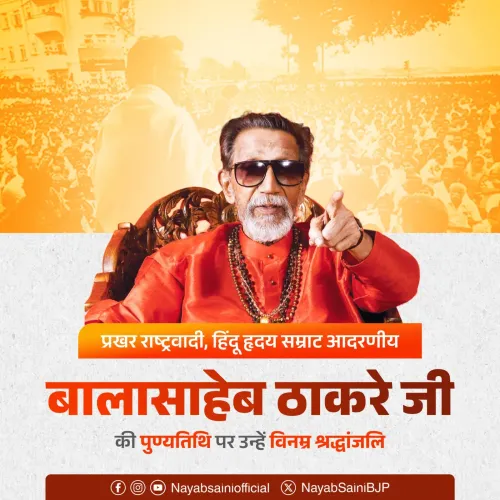
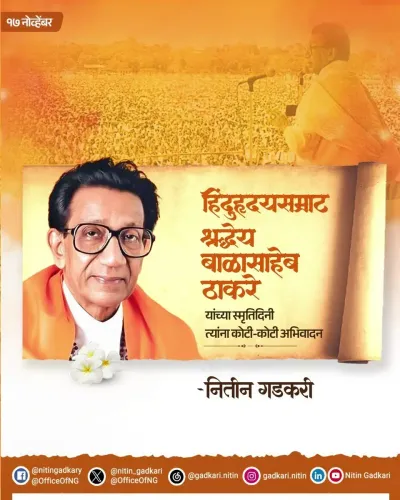
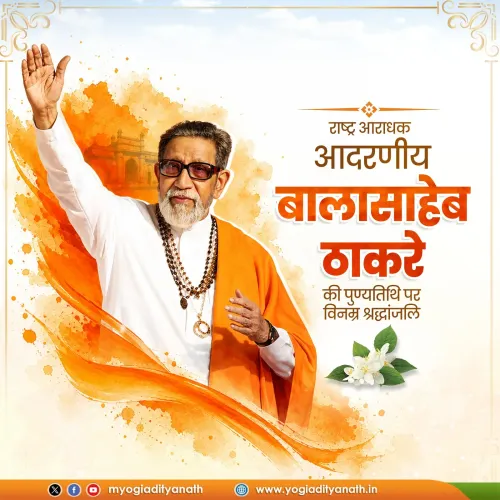
On Balasaheb Thackeray's death anniversary, Maharashtra CM Devendra Fadnavis paid tribute to the Shiv Sena founder, honouring his legacy of Marathi pride and Hindutva on 17 November 2026.
Key Takeaways
Devendra Fadnavis paid tribute to Balasaheb Thackeray on 17 November 2026 , the annual Smruti Din marking Thackeray's death.
Thackeray founded the Shiv Sena in 1966 and built a mass movement around Marathi identity and Hindutva.
He passed away on 17 November 2012 ; the anniversary is observed as Smruti Din across Maharashtra.
Fadnavis referred to Thackeray by his iconic title Hindu Hriday Samrat — Emperor of Hindu Hearts.
Annual tributes by BJP leaders reflect the party's continuing effort to align with Thackeray's ideological legacy amid shifting Shiv Sena factions.
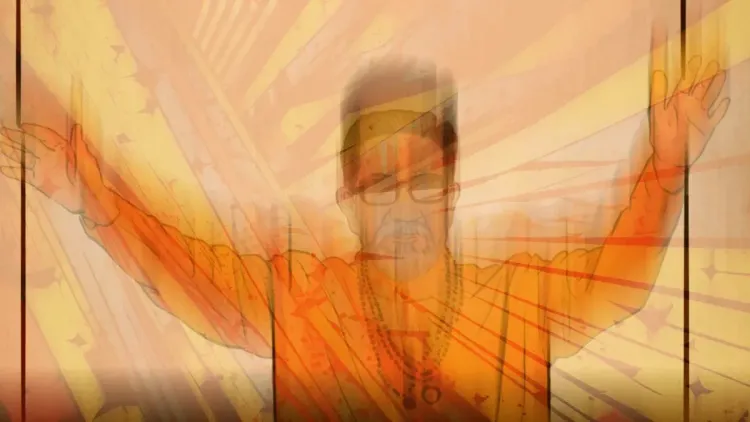
Fourteen years after Maharashtra fell silent at the news of his passing, Balasaheb Thackeray remains the most invoked name in the state's political memory — and on 17 November 2026, Maharashtra Chief Minister Devendra Fadnavis marked the founder of Shiv Sena's death anniversary with a tribute that drew on every pillar of Thackeray's enduring legend: fearless leadership, a powerful voice, and an unbreakable bond with Marathi pride.
Posting on X, Fadnavis wrote in both English and Marathi, honouring the late Shiv Sena supremo as 'हिंदूहृदयसम्राट' — 'Hindu Hriday Samrat', or Emperor of Hindu Hearts — a title Thackeray earned through decades of muscular advocacy for Hindutva and Marathi identity. The Marathi portion of the post offered a 'heartfelt salute' to the champion of Marathi asmita (Marathi pride) and Hindutva on his Smruti Din, the annual day of remembrance.The man whose shadow still falls over Maharashtra's politics
Balasaheb Thackeray founded the Shiv Sena in 1966 as a vehicle for Marathi pride at a time when Mumbai's economic life was seen as dominated by migrants from other states. Over the decades, the party evolved into one of Maharashtra's most powerful political forces, weaving Hindutva nationalism into its original regional-identity core. Thackeray never held formal government office, yet his word was widely regarded as law in the state — a measure of personal authority few politicians anywhere in India have matched. He passed away on 17 November 2012, and the annual Smruti Din has since become a moment when every significant political actor in Maharashtra stakes a claim to his legacy.Why a BJP chief minister's tribute carries extra weight
Fadnavis's commemoration is more than ceremonial calendar-keeping. The BJP and Shiv Sena — now split into rival factions — have shared a complicated alliance history since the early 1990s, and Thackeray was the architect of that original partnership. For Fadnavis, paying homage on Smruti Din is a signal to the vast base of Thackeray loyalists that the ideological thread connecting Marathi pride and Hindutva remains intact under the current dispensation. Each year, the tributes from BJP leaders serve as a quiet assertion: that the values Thackeray embodied are not the exclusive property of any single Sena faction. The kicker belongs to Thackeray himself — a man who never needed a government post to move a government. That gravitational pull, more than a decade after his death, is precisely why every political force in Maharashtra still lines up to salute him.Point of View
He reaffirms the ideological continuity between the original Sena-BJP alliance and the present Maharashtra government. With the Shiv Sena now fractured, BJP's annual commemoration functions as a soft claim on Thackeray's mass base — particularly Marathi voters who remain emotionally attached to the founder's persona. The tribute also signals to the Mahayuti alliance's partners that the ruling coalition respects, rather than competes with, the Thackeray canon. Over time, these annual gestures help BJP consolidate its position as the dominant ideological heir to the Hindutva-Marathi identity platform Thackeray first built.
NationPress
17 Nov 2026
Frequently Asked Questions
When did Balasaheb Thackeray die and why is 17 November observed as Smruti Din?
Balasaheb Thackeray passed away on 17 November 2012. Since then, 17 November is observed annually as his Smruti Din — a day of remembrance — by political parties, Shiv Sena workers, and leaders across Maharashtra.
What does Hindu Hriday Samrat mean and why was Thackeray called that?
'Hindu Hriday Samrat' translates to 'Emperor of Hindu Hearts.' The title reflects Balasaheb Thackeray's immense influence among Hindu communities and his decades-long advocacy of Hindutva alongside Marathi regional pride.
Why did CM Devendra Fadnavis pay tribute to Balasaheb Thackeray?
Fadnavis paid tribute on Thackeray's Smruti Din to honour the Shiv Sena founder's legacy of Marathi identity and Hindutva — values that underpin the ideological alliance between BJP and Shiv Sena factions that Fadnavis leads in Maharashtra.
Who founded Shiv Sena and when?
Balasaheb Thackeray founded the Shiv Sena in 1966 in Mumbai, initially as a movement advocating for the rights and interests of Marathi-speaking people in Maharashtra.
What is Marathi asmita?
Marathi asmita means Marathi pride or identity. It refers to the cultural, linguistic, and political assertion of Marathi-speaking people in Maharashtra, a cause that Balasaheb Thackeray championed throughout his political career.