CM Fadnavis: Purandar Airport Land Acquisition Moving Fast
Synopsis
Maharashtra CM Devendra Fadnavis declared on 18 July 2026 that land acquisition for the long-delayed Purandar Airport near Pune is accelerating and will conclude shortly, while also laying the foundation for three elevated highways in the city.
Key Takeaways
CM Devendra Fadnavis confirmed on 18 July 2026 that land acquisition for Purandar Airport is moving rapidly and will be completed soon.
The announcement was made at the Bhoomipujan of three elevated highways in Pune , signalling a dual push on aviation and road infrastructure.
Purandar , located approximately 40 km south of Pune, was selected as the airport site around 2017–2018 after earlier locations were rejected.
Land acquisition has been the primary bottleneck, with local farmers raising concerns over compensation and displacement.
The existing Pune Airport at Lohegaon faces congestion due to shared use with the Indian Air Force , making a second airport critical for the city's growth.
Completion of acquisition and subsequent environmental clearances will be key milestones before construction can begin.
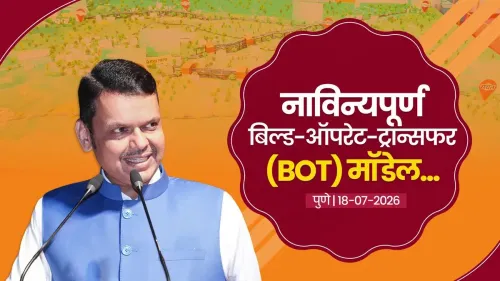
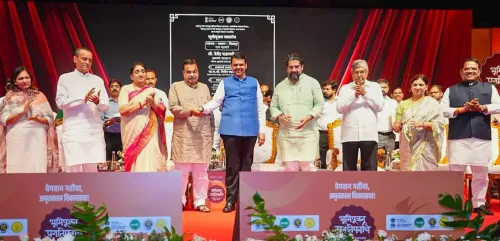
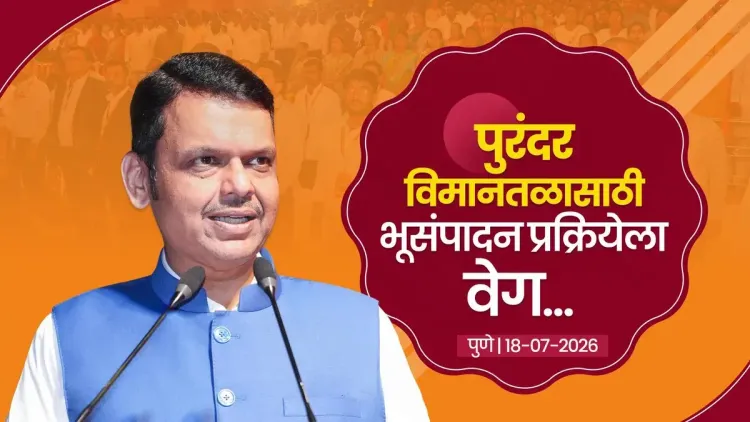
Maharashtra Chief Minister Devendra Fadnavis announced on Saturday, 18 July 2026, that land acquisition for the long-pending Purandar Airport near Pune is progressing rapidly and will be completed soon, making the statement at a groundbreaking ceremony for three elevated highways in the city.
Posting in a mix of Marathi and Hindi on X, Fadnavis stated: 'पुरंदर विमानतळासाठी भूसंपादन प्रक्रिया वेगाने सुरू असून लवकरच ही प्रक्रिया पूर्ण होणार' — 'The land acquisition process for Purandar Airport is moving swiftly and will be completed soon.' The remarks came on the sidelines of the Bhoomipujan (foundation-laying) of three elevated highways in Pune, signalling a dual push on aviation and road connectivity for the city.
Context
Purandar, located roughly 40 kilometres south of central Pune, was identified as the preferred site for Pune's second international airport after earlier proposed locations were dropped due to environmental objections and community resistance. The site was formally zeroed in on around 2017–2018 by the Maharashtra government. Since then, land acquisition — the most contentious phase of the project — has been the principal bottleneck, with farmers in the Purandar belt raising concerns over compensation and displacement.
The existing Pune Airport at Lohegaon operates under significant congestion constraints, partly because it shares runway space with the Indian Air Force. A second greenfield airport has therefore been seen as essential to sustaining Pune's growth as a major IT, manufacturing, and education hub.
Policy Backdrop
Land acquisition for large infrastructure projects in Maharashtra has historically been a prolonged affair, shaped by the Right to Fair Compensation and Transparency in Land Acquisition, Rehabilitation and Resettlement Act, 2013, which mandates social impact assessments and enhanced compensation for affected families. For Purandar Airport, the process has involved multiple rounds of negotiation with farming communities whose livelihoods depend on the fertile land in the region.
The Fadnavis-led government has positioned accelerated infrastructure delivery — spanning airports, expressways, and metro rail — as a cornerstone of its economic agenda for Maharashtra. The simultaneous Bhoomipujan of three elevated highways in Pune on the same day underscores a coordinated effort to address both air and surface connectivity deficits in one of India's fastest-growing metropolitan regions.
Stakeholders and Impact
Farmers and landowners in the Purandar area remain the most directly affected stakeholders, with fair and timely compensation being the central demand from local communities. Pune's business and commuter population, on the other hand, stands to benefit significantly from expanded airport capacity that could attract new airlines and reduce travel time to international destinations.
Urban planners and industry bodies have long argued that a second airport is critical to preventing Pune from losing investment to cities with better air connectivity. The three elevated highway projects announced alongside the airport update are expected to improve last-mile access and ease chronic congestion on Pune's arterial roads.
What's Next
The government's assertion that land acquisition will be completed 'soon' sets an informal public benchmark against which progress will be measured. Key milestones to watch include the formal conclusion of acquisition proceedings, the release of compensation packages for displaced farmers, and any environmental clearances required before construction can begin.
Construction timelines for the three newly inaugurated elevated highways will also be closely tracked, as these projects are intended to complement airport-linked road infrastructure. Fadnavis faces pressure to convert today's announcements into visible ground-level progress before the political calendar tightens ahead of future state elections.
Point of View
And the government needs visible progress to maintain credibility on infrastructure promises. By pairing the airport announcement with a highway Bhoomipujan, the CM is crafting a narrative of comprehensive connectivity rather than isolated wins. However, the absence of a firm deadline or acquisition percentage keeps the announcement in the realm of intent rather than achievement. The real test will come when compensation disbursements begin and farmer resistance — historically the sharpest obstacle — is visibly resolved.
NationPress
18 Jul 2026
Frequently Asked Questions
What is the current status of Purandar Airport land acquisition?
Maharashtra CM Devendra Fadnavis stated on 18 July 2026 that land acquisition for Purandar Airport is progressing rapidly and will be completed soon, though no specific completion date or percentage was disclosed.
Where is Purandar Airport located?
Purandar Airport is proposed to be built near Purandar, approximately 40 kilometres south of central Pune in Maharashtra.
Why does Pune need a second airport?
The existing Pune Airport at Lohegaon is congested partly because it shares runway space with the Indian Air Force. A second greenfield airport at Purandar is intended to expand capacity and support Pune's growth as an IT, manufacturing, and education hub.
What are the main challenges facing the Purandar Airport project?
Land acquisition has been the principal challenge, with farmers in the Purandar region raising concerns about fair compensation and displacement. Environmental clearances are also a key requirement before construction can begin.
What other infrastructure projects were announced alongside the Purandar Airport update?
On 18 July 2026, CM Fadnavis also performed the Bhoomipujan — foundation-laying ceremony — for three elevated highways in Pune, part of a broader push to improve road and air connectivity in the city.