CM Fadnavis releases Ambedkar tribute volume in Gadchiroli
Synopsis
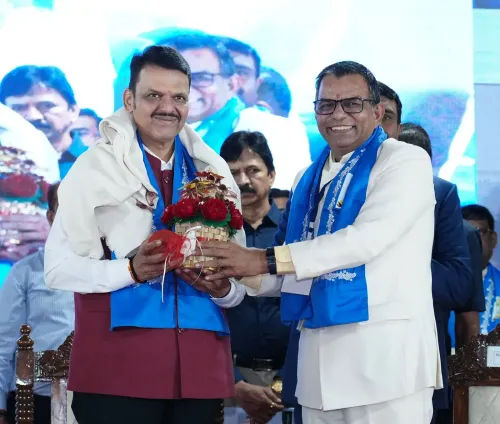
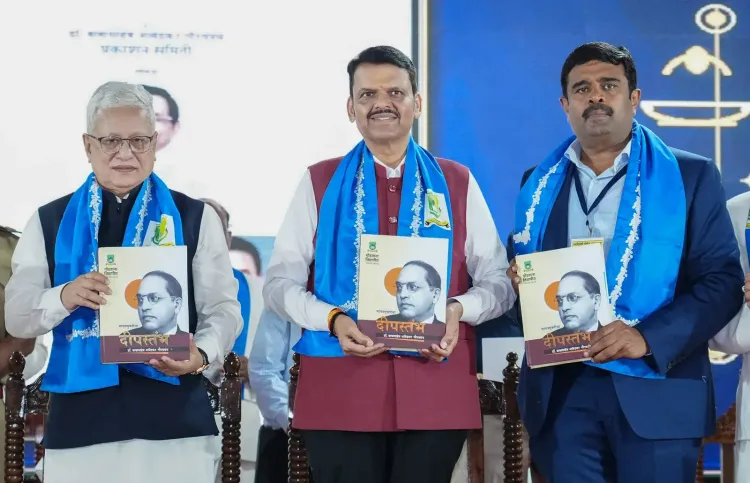
On Janjatiya Gaurav Diwas, Governor Jishnu Dev Varma and CM Devendra Fadnavis released 'Manavmuktīchā Dīpastambha Dr. Babasaheb Ambedkar,' a biographical tribute volume, in Gadchiroli — a district with deep tribal roots — blending Ambedkarite and indigenous heritage narratives.
Key Takeaways
The book 'Manavmuktīchā Dīpastambha Dr.
Babasaheb Ambedkar' was released in Gadchiroli on 15 November 2026 .
Governor Jishnu Dev Varma presided; CM Devendra Fadnavis attended as chief guest.
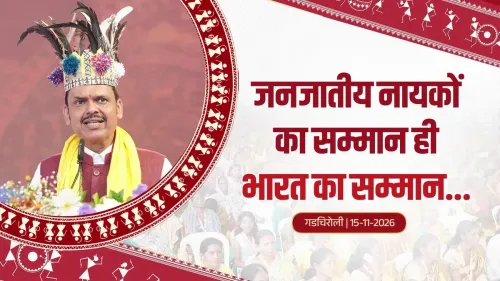
The release coincided with Janjatiya Gaurav Diwas , the national day marking Bhagwan Birsa Munda's birth anniversary, instituted in 2021 .
The volume is based on Dr.
Ambedkar's life, biography, and philosophical thought.
Gadchiroli was chosen as the venue — an eastern Maharashtra district with a large tribal population and high symbolic resonance.
Possible follow-up book distributions and tribal education announcements in other Maharashtra districts are being watched.
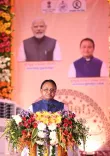
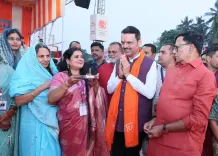
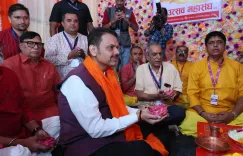
On Janjatiya Gaurav Diwas — the national day honouring tribal heritage observed every 15 November — the government of Maharashtra chose Gadchiroli, one of the state's most tribal-intensive districts, to release a landmark biographical volume on Dr. Babasaheb Ambedkar. The ceremony, held on Sunday, 15 November 2026, was presided over by Governor Jishnu Dev Varma and attended in a principal capacity by Chief Minister Devendra Fadnavis.
A book rooted in Ambedkar's life and philosophy
The volume released is titled 'Manavmuktīchā Dīpastambha Dr. Babasaheb Ambedkar' — translating to 'The Lighthouse of Human Liberation, Dr. Babasaheb Ambedkar.' As the title signals, the book is built around the life story and philosophical thought of the Bharat Ratna laureate, the principal architect of the Indian Constitution and the defining voice of Dalit and marginalised-community rights in modern India. Maharashtra governments have a consistent record of commissioning and backing publications that bring Ambedkar's writings and legacy to wider audiences, treating them as instruments of constitutional awareness rather than purely ceremonial tribute.
Why Gadchiroli, and why today
Gadchiroli is an eastern Maharashtra district with a large indigenous population — making it a symbolically loaded venue for a release timed to Janjatiya Gaurav Diwas. The national observance was instituted by the Government of India in 2021 to mark the birth anniversary of Bhagwan Birsa Munda, the 19th-century tribal icon and freedom fighter. Holding an Ambedkar-centred cultural event inside the Janjatiya Gaurav Diwas framework weaves together two strands of social justice memory — Dalit constitutional rights and indigenous pride — in a district where both resonate acutely.
Gadchiroli's place in Maharashtra's cultural calendar
The district has been a recurring venue for state government cultural and development programmes precisely because its tribal communities sit at the intersection of welfare, identity, and historical marginalisation. By releasing a commemorative volume here rather than in Mumbai or Pune, the administration makes a clear geographic statement: the audience for Ambedkar's legacy is not confined to urban intellectual circles. Researchers and Ambedkarite organisations will now watch whether the book is followed by district-level distribution drives, seminars, or linked announcements on tribal education schemes.
A lighthouse, as the volume's own title reminds us, is built precisely where the waters are darkest — and that choice of metaphor, in Gadchiroli on Janjatiya Gaurav Diwas, is not incidental.
Point of View
Historically underserved district — as the venue for an Ambedkar volume launch on Janjatiya Gaurav Diwas is a deliberate act of political and cultural positioning by the Fadnavis government, fusing Dalit constitutional legacy with indigenous pride under a single symbolic umbrella. It reflects a broader pattern among state governments of using cultural publications to signal ideological proximity to marginalised communities without committing to measurable policy benchmarks. Whether this ceremonial energy translates into funded distribution drives or new tribal-education schemes will determine whether the event is remembered as substance or spectacle. For now, it places Maharashtra's ruling dispensation firmly within the social-justice commemorative calendar at a time when both Ambedkarite and tribal identities are electorally significant.
NationPress
15 Nov 2026
Frequently Asked Questions
What book was released in Gadchiroli on 15 November 2026?
The book titled 'Manavmuktīchā Dīpastambha Dr. Babasaheb Ambedkar' — meaning 'The Lighthouse of Human Liberation, Dr. Babasaheb Ambedkar' — was released. It is based on the life, biography, and philosophical thought of Dr. Babasaheb Ambedkar.
Who released the Ambedkar tribute book in Gadchiroli?
Governor Jishnu Dev Varma presided over the release ceremony, with Chief Minister Devendra Fadnavis attending as the principal guest.
What is Janjatiya Gaurav Diwas and why is it observed on 15 November?
Janjatiya Gaurav Diwas is a national observance on 15 November honouring tribal leaders and indigenous heritage, particularly commemorating the birth anniversary of freedom fighter Bhagwan Birsa Munda. It was instituted by the Government of India in 2021.
Why was Gadchiroli chosen for the Ambedkar book launch?
Gadchiroli is an eastern Maharashtra district with a large tribal population, making it symbolically significant for an event that combines Ambedkarite constitutional legacy with Janjatiya Gaurav Diwas, which honours indigenous communities.
What is the significance of Dr. Babasaheb Ambedkar to India?
Dr. Babasaheb Ambedkar was the principal architect of the Indian Constitution and the foremost advocate for the rights of Dalits and marginalised communities. He was posthumously awarded the Bharat Ratna, India's highest civilian honour.