CM Fadnavis Unveils Jawaharlal Darda Bust Near BSE, Mumbai
Synopsis
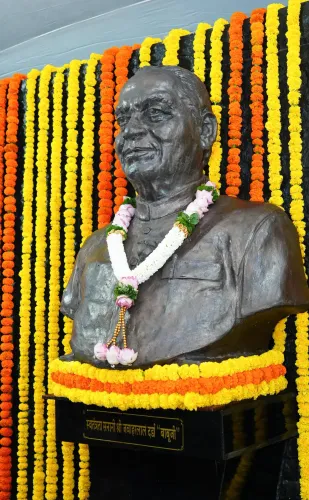
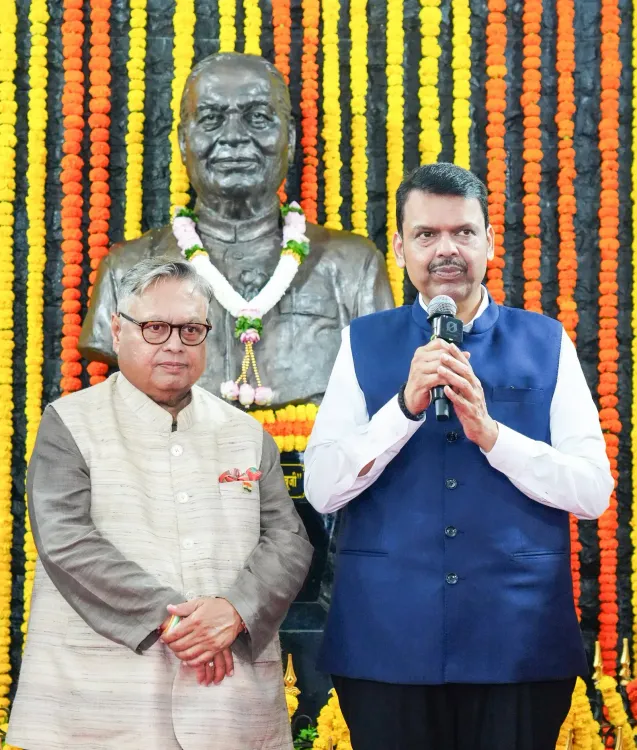
Chief Minister Devendra Fadnavis unveiled a bust of freedom fighter and Lokmat founder Jawaharlal Darda opposite the Bombay Stock Exchange in Mumbai on 2 July 2026, honouring his contributions to Maharashtra's independence movement, governance, and people-oriented journalism.
Key Takeaways
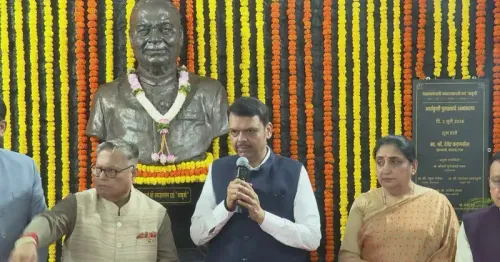
Chief Minister Devendra Fadnavis unveiled a bust of freedom fighter Jawaharlal Darda opposite the Bombay Stock Exchange in Mumbai on 2 July 2026 .
Jawaharlal Darda , known as 'Babujee,' organised youth movements during India's independence struggle and was imprisoned multiple times for his activism.
Darda later served in the Maharashtra state government in various ministerial roles and founded the Lokmat newspaper in 1971 .
The event was attended by Legislative Assembly Speaker Rahul Narwekar , Deputy CM Sunetra Ajit Pawar , four cabinet ministers, and Lokmat Media Group's Vijay Darda and Rajendra Darda .
The site opposite the Bombay Stock Exchange was chosen for the bust's permanent installation, one of Mumbai's most prominent civic locations.
Darda's early inspiration came from his schooling years in Yavatmal , where he was first drawn into the freedom movement.
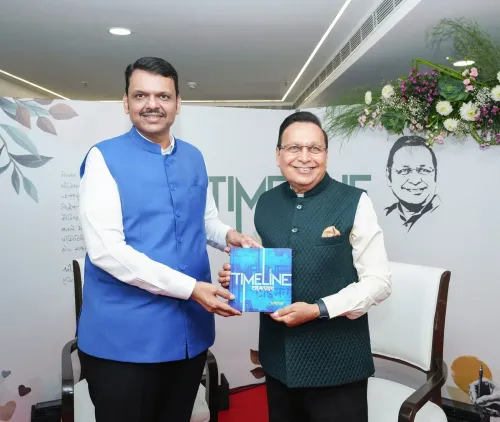
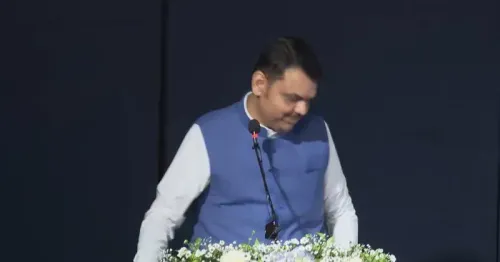
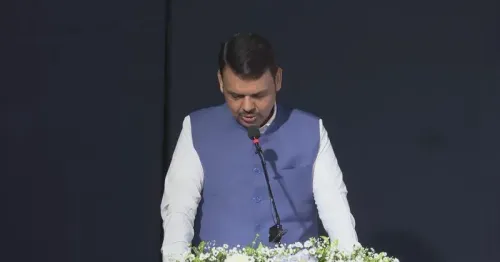
Chief Minister Devendra Fadnavis unveiled a bust of freedom fighter Jawaharlal Darda, popularly known as 'Babujee', at a prominent site opposite the Bombay Stock Exchange in Mumbai on 2 July 2026. The Chief Minister's Office of Maharashtra announced the event, describing Darda as a symbol of people-centric public service and journalism.
Context
The CMO's post described Darda as 'समाजकार्य आणि पत्रकारितेतील लोकाभिमुखतेचे प्रतीक' — 'a symbol of people-orientation in social work and journalism.' CM Fadnavis noted that the installation of the bust at such a significant location in Mumbai was 'a matter of great joy.' The ceremony brought together senior constitutional functionaries, cabinet ministers, and members of the Darda family.
Among those present were Legislative Assembly Speaker Adv. Rahul Narwekar, Deputy Chief Minister Sunetra Ajit Pawar, and ministers Mangalprabhat Lodha, Girish Mahajan, Adv. Ashish Shelar, and Sanjay Rathod. Vijay Darda, Chairman of the Lokmat Media Group, and Rajendra Darda, its Editor-in-Chief, also attended, representing the family's continuing presence in regional media.
Policy Backdrop
Jawaharlal Darda was born in Yavatmal district, where his schooling years first exposed him to the freedom movement. He went on to organise youth movements, participated in multiple agitations, and was imprisoned on several occasions for his activism during the independence struggle.
After 1947, Darda served in the state government, holding charge of various ministerial portfolios and leaving a lasting administrative imprint on Maharashtra. In 1971, he founded Lokmat, a Marathi newspaper that became one of the most widely read regional dailies in the country, extending his public-service philosophy into the domain of journalism.
Stakeholders and Impact
The Lokmat Media Group, now led by Darda's descendants, remains a major voice in Marathi public discourse. The choice of the Bombay Stock Exchange precinct — one of Mumbai's most high-visibility urban landmarks — for the bust's permanent installation signals the state government's intent to embed freedom-era legacies into the city's commercial and civic fabric.
For Maharashtra's journalist community and freedom-fighter families, the event reaffirms state recognition of figures who straddled both political activism and media institution-building. Citizens of Yavatmal, Darda's home district, also hold a particular stake in commemorations of his legacy.
What's Next
The Fadnavis government has shown a pattern of commissioning heritage memorials and statue dedications at prominent urban sites across Maharashtra. Further such projects — potentially in other districts — are likely to be announced as part of the government's broader cultural commemoration agenda. References to freedom-fighter tributes may also surface in upcoming legislative sessions as the government builds its heritage narrative ahead of future electoral cycles.
Point of View
Whose reach across Vidarbha and the rest of Maharashtra remains electorally significant. The attendance of the Deputy Chief Minister and multiple cabinet ministers elevates what could have been a routine tribute into a high-profile state event. More broadly, it fits a wider Maharashtra pattern of using heritage ceremonies to consolidate regional identity politics ahead of future electoral contests.
NationPress
2 Jul 2026
Frequently Asked Questions
Who was Jawaharlal Darda?
Jawaharlal Darda, known as 'Babujee,' was a freedom fighter from Yavatmal, Maharashtra, who organised youth movements during the independence struggle, served in state government after 1947, and founded the Lokmat newspaper in 1971.
Where was the Jawaharlal Darda bust unveiled?
The bust was unveiled at a prominent site opposite the Bombay Stock Exchange in Mumbai on 2 July 2026.
Who unveiled the Jawaharlal Darda statue in Mumbai?
Chief Minister Devendra Fadnavis performed the unveiling ceremony, with senior ministers and members of the Darda family in attendance.
What is Lokmat and who founded it?
Lokmat is a major Marathi-language newspaper founded by Jawaharlal Darda in 1971, established to bring people-oriented journalism to Maharashtra. It is currently led by his descendants Vijay Darda and Rajendra Darda.
What is Jawaharlal Darda's connection to Yavatmal?
Jawaharlal Darda received his early schooling in Yavatmal, where he was first inspired by the freedom movement and began organising youth agitations against British rule.