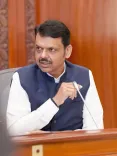
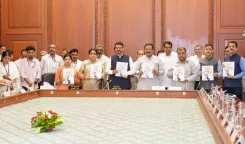
CM Fadnavis Unveils Balbharati Textbooks for Classes 1-6
Synopsis
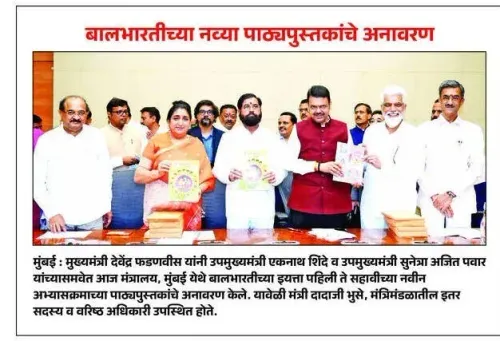
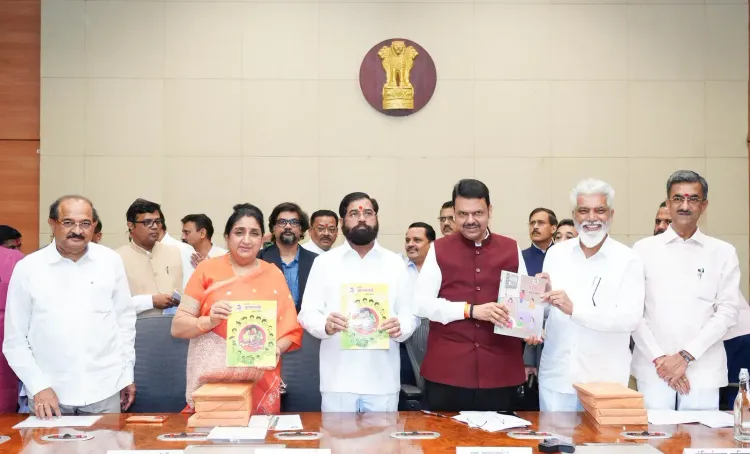
Chief Minister Devendra Fadnavis, flanked by Deputy CMs Eknath Shinde and Sunetra Ajit Pawar, unveiled revised Balbharati textbooks for Classes 1 to 6 at Mantralaya, Mumbai on 9 June 2026, marking a key step in Maharashtra's NEP 2020-aligned curriculum overhaul for primary school students.
Key Takeaways
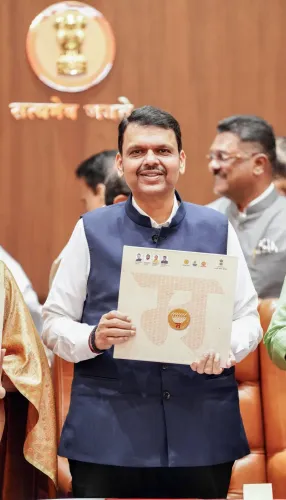
Chief Minister Devendra Fadnavis unveiled new Balbharati textbooks for Classes 1 to 6 at Mantralaya, Mumbai on 9 June 2026 .
Deputy Chief Ministers Eknath Shinde and Sunetra Ajit Pawar , along with Minister Dadaji Bhuse and senior officials, were present at the event.
The revised textbooks are aligned with National Education Policy 2020 , which Maharashtra adopted in 2021 .
The new books target the foundational and preparatory stages of schooling, emphasising reduced curriculum load and activity-based learning.
The textbooks are expected to be rolled out across all Maharashtra state-board schools for the 2026-27 academic year .
The event reflected the joint public presence of all three leaders of Maharashtra's tripartite coalition government on a social-sector initiative.
The Chief Minister's Office of Maharashtra announced on Tuesday, 9 June 2026 that Chief Minister Devendra Fadnavis unveiled new Balbharati textbooks for Classes 1 through 6 at Mantralaya, Mumbai, alongside Deputy Chief Ministers Eknath Shinde and Sunetra Ajit Pawar.
The official post stated that the unveiling took place at Mantralaya with Minister Dadaji Bhuse, other cabinet members, and senior officials in attendance. The new curriculum-aligned textbooks are published by Balbharati — formally the Maharashtra State Bureau of Textbook Production and Curriculum Research — the state agency responsible for developing and printing school-level educational material.
Context
Balbharati has been the sole authorised producer of school textbooks for Maharashtra's state board for decades. The agency periodically revises its syllabi and textbook content to reflect updated pedagogical standards. The current revision cycle for Classes 1 to 6 is among the most significant in recent years, covering the foundational and early primary stages of schooling.
Maharashtra formally adopted the National Education Policy (NEP) 2020 in 2021, committing to phased curriculum revisions aligned with the policy's emphasis on foundational literacy and numeracy, mother-tongue-based instruction, and reduced rote-learning load in early grades.
Policy Backdrop
NEP 2020 restructured India's schooling framework into a 5+3+3+4 model, replacing the older 10+2 structure. Under this design, Classes 1 to 6 fall within the 'Foundational' and 'Preparatory' stages — the very grades for which Maharashtra has now released revised Balbharati texts. States across India have been updating their textbooks since 2022 to meet NEP rollout timelines.
Maharashtra's revision aligns the curriculum with NEP goals such as activity-based learning, integration of local context, and a lighter cognitive load for younger students. The state education department is expected to roll out the new books across all state-board schools for the 2026-27 academic year.
Stakeholders and Impact
The revised textbooks directly affect primary school students enrolled in Maharashtra's state board — a cohort running into several lakh children across urban and rural districts. Teachers will need to adapt lesson plans to the updated content, and the education department may announce accompanying teacher-training modules ahead of the new academic year.
For parents, the change signals a shift in the material their children will study from Class 1 itself, with the new books designed to be more age-appropriate and less content-heavy. The event also served as a visible joint appearance by all three leaders of Maharashtra's tripartite coalition government — the BJP, the Shinde-led Shiv Sena, and the Ajit Pawar-led NCP — projecting unity on a social-sector deliverable.
What's Next
The immediate priority is the distribution of the new Balbharati textbooks to state-board schools before the 2026-27 academic session begins. The education department's capacity to train teachers on the revised curriculum within this window will be a key operational test.
Broader implementation — including whether the new books achieve NEP's foundational learning outcomes — will be assessed through state-level learning surveys in the coming years. Maharashtra's experience will also serve as a reference point for other large states still completing their own NEP-aligned textbook revisions.
Point of View
Voter-visible deliverable that allows Maharashtra's three-party coalition to demonstrate administrative cohesion on education — a sector that directly touches millions of families. By anchoring the revision to NEP 2020, the state government also positions itself as a proactive implementer of central policy, which carries political value for the BJP-led alliance. The joint appearance of Fadnavis, Shinde, and Sunetra Pawar at a non-controversial social event signals the coalition's continued effort to project unity ahead of any future electoral cycle. Whether the curriculum changes translate into measurable learning improvements will, however, depend on implementation depth — particularly teacher training and timely book distribution.
NationPress
26 Oct 2026
Frequently Asked Questions
What are the new Balbharati textbooks unveiled in Maharashtra?
The new Balbharati textbooks are revised editions for Classes 1 to 6 in Maharashtra's state board schools, unveiled at Mantralaya, Mumbai on 9 June 2026 by Chief Minister Devendra Fadnavis.
Why are Maharashtra's school textbooks being changed?
The revision aligns Maharashtra's curriculum with the National Education Policy 2020, which the state adopted in 2021. NEP 2020 emphasises foundational literacy, numeracy, activity-based learning, and a lighter content load for early grades.
When will the new Balbharati books be used in schools?
The new textbooks are expected to be introduced across Maharashtra state-board schools from the 2026-27 academic year.
Which classes are affected by the new Maharashtra textbook revision?
The current revision covers Classes 1 through 6, which correspond to the foundational and preparatory stages under the NEP 2020 schooling framework.