CM Fadnavis Unveils Shahu Maharaj Statue in Kolhapur
Synopsis
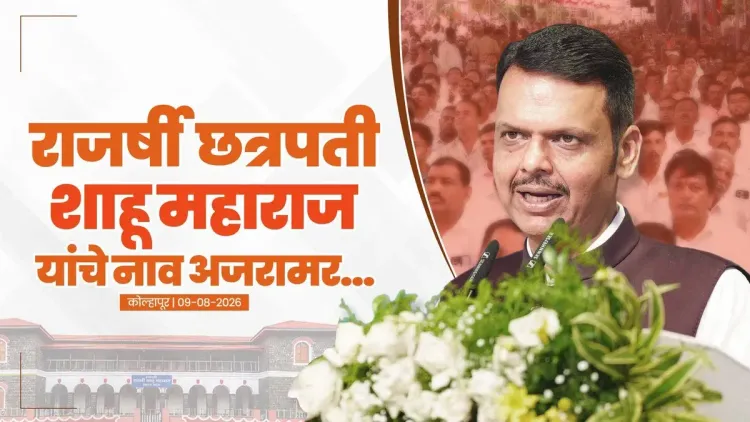
Maharashtra CM Devendra Fadnavis unveiled a full-size statue of Rajarshi Chhatrapati Shahu Maharaj in Kolhapur on 9 August 2026, declaring the 19th-century social reformer-king immortal 'as long as the sun and moon endure.'
Key Takeaways
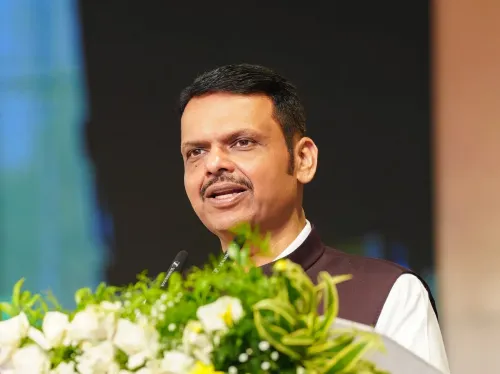
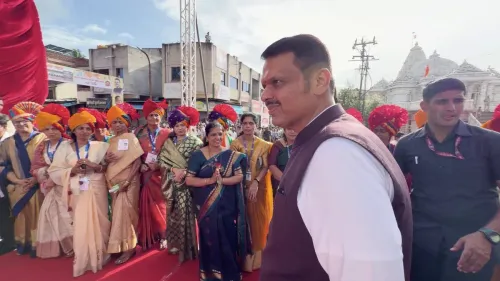
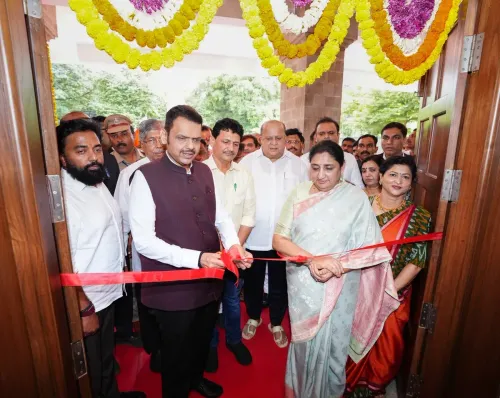
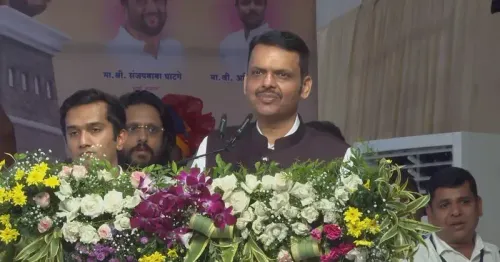
Devendra Fadnavis , Chief Minister of Maharashtra, attended and addressed the statue unveiling in Kolhapur on 9 August 2026 .
The statue is a full-size ( purnakruti ) likeness of Rajarshi Chhatrapati Shahu Maharaj , ruler of Kolhapur from 1894 to 1922 .
Fadnavis declared in both Marathi and Hindi that Shahu Maharaj's name would remain immortal 'as long as the sun and moon endure.' Shahu Maharaj is credited with pioneering reservations and educational access for backward classes decades before India's Constitution.
The ceremony was held on 9 August , the anniversary of the Quit India Movement .
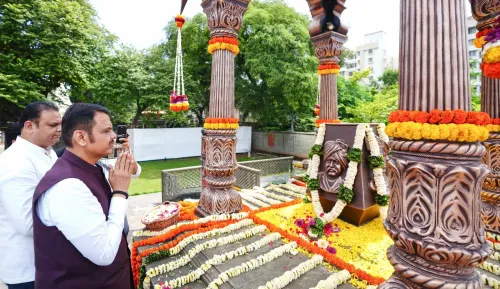
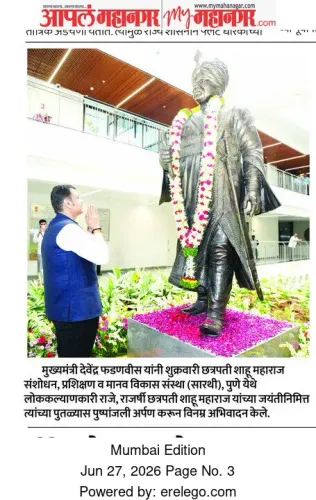
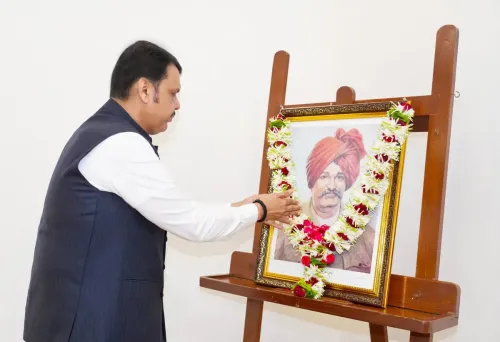
A reformer who lived a century ago stood tall again in Kolhapur on 9 August 2026, as Maharashtra Chief Minister Devendra Fadnavis unveiled a full-size statue of Rajarshi Chhatrapati Shahu Maharaj — the ruler whose decisions on education and reservations reshaped the social fabric of an entire region.
Speaking at the ceremony, Fadnavis invoked an ancient Marathi and Hindi declaration of immortality: 'जोपर्यंत चंद्र-सूर्य असतील तोपर्यंत राजर्षी छत्रपती शाहू महाराज यांचे नाव अजरामर राहील' — 'As long as the sun and moon endure, the name of Rajarshi Chhatrapati Shahu Maharaj will remain immortal.' The words, delivered in both Marathi and Hindi, underscored the pan-Indian resonance the Chief Minister sought to attach to the occasion.
The Man Behind the Marble: Who Was Shahu Maharaj?
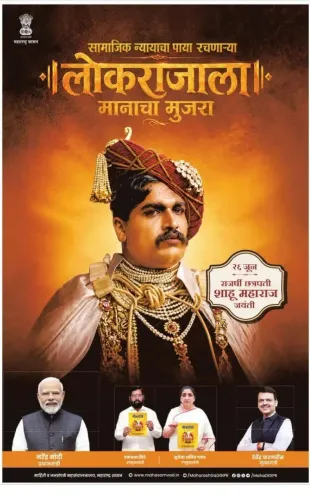
Chhatrapati Shahu Maharaj ruled the Kolhapur princely state from 1894 to 1922 and used that authority in ways few rulers of his era dared. He opened schools for backward-class children, mandated access to education beyond caste lines, and introduced reservations for marginalised communities — decades before India's Constitution enshrined such protections. Kolhapur, already tied to the Bhonsle royal legacy, became under his rule a laboratory for social equity.
The title Rajarshi — 'the sage-king' — was not self-styled. It was conferred in recognition of a reign defined less by conquest than by legislation that lifted millions. His legacy sits at the intersection of Maratha pride and Dalit-Bahujan social memory, making him a figure claimed across Maharashtra's political spectrum.
Why Kolhapur, Why Now
Statue unveilings and heritage memorials for regional reformers are a recurring feature of Maharashtra's political calendar — but the choice of 9 August carries weight. The date coincides with the Quit India Movement anniversary, layering a note of national defiance onto a ceremony rooted in local pride. The presence of the Chief Minister signals the state government's intent to anchor its cultural outreach in figures who command cross-caste reverence.
Kolhapur's residents and the broader Maratha community have long pressed for greater public recognition of Shahu Maharaj's contributions. A full-size statue — purnakruti putla, as the event banner described it — in the heart of his historic seat is a tangible answer to that demand.
A reformer's stone likeness now watches over the city he transformed. Whether the government follows the ceremony with substantive policy gestures — heritage site upgrades, educational endowments — will determine whether this moment outlasts its inauguration-day headlines.
Point of View
OBC, and Dalit communities alike, he is one of the few historical figures who can fill a public square without triggering a political counter-narrative. For Fadnavis, presiding over the event in Kolhapur — a city with its own strong regional identity — is also a signal of the BJP's intent to deepen its footprint in western Maharashtra ahead of future electoral cycles.
NationPress
9 Aug 2026
Frequently Asked Questions
Who was Rajarshi Chhatrapati Shahu Maharaj?
Rajarshi Chhatrapati Shahu Maharaj was the ruler of the Kolhapur princely state from 1894 to 1922, celebrated for pioneering reservations and educational access for backward-class communities long before India's Constitution.
Where was the Shahu Maharaj statue unveiled in 2026?
The full-size statue was unveiled in Kolhapur, Maharashtra, on 9 August 2026, in the city historically associated with Shahu Maharaj's reign.
What did CM Devendra Fadnavis say at the Kolhapur ceremony?
Fadnavis declared in both Marathi and Hindi that Shahu Maharaj's name would remain immortal 'as long as the sun and moon endure,' honouring the reformer-king's lasting legacy.
Why is Chhatrapati Shahu Maharaj important to Maharashtra?
Shahu Maharaj is revered across Maharashtra for his early 20th-century social legislation — opening schools to backward classes and introducing reservations — making him a foundational figure in the state's social reform history.
What is the significance of 9 August for the Kolhapur statue event?
9 August is the anniversary of the Quit India Movement of 1942, adding a layer of national historical significance to a ceremony rooted in local and regional pride.