CM Fadnavis visits Kagal's historic school, chats with students
Synopsis
Maharashtra CM Devendra Fadnavis visited Hindu Rao Ghatge Vidya Mandir in Kagal — the historic school where freedom movement leader Gopal Krishna Gokhale studied — and interacted with students, calling their ambitions the real strength of a developed Maharashtra.
Key Takeaways
Devendra Fadnavis visited Hindu Rao Ghatge Vidya Mandir in Kagal, Kolhapur district on Sunday, August 9, 2026 .
The school is historically linked to Gopal Krishna Gokhale , the nationalist leader and social reformer who received his early education there.
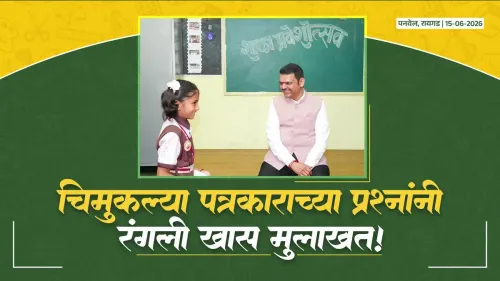
Fadnavis interacted directly with students and described the experience as a source of 'special joy and pride.' He framed the children's aspirations as the true foundation of a 'Viksit Maharashtra' — a developed Maharashtra.
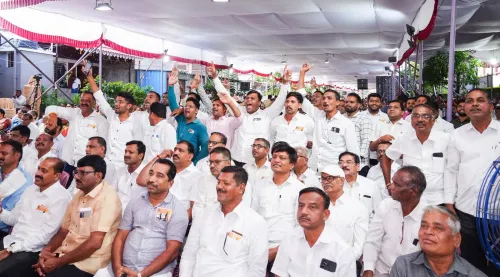
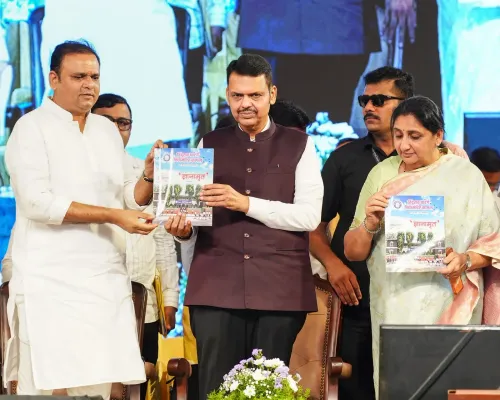
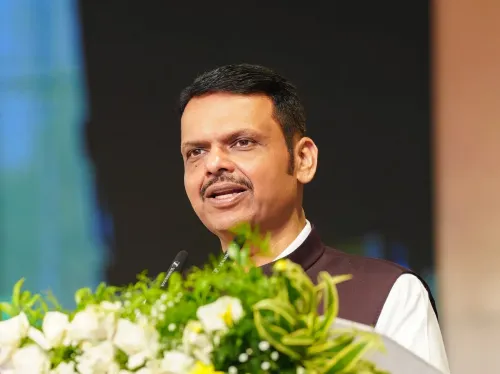
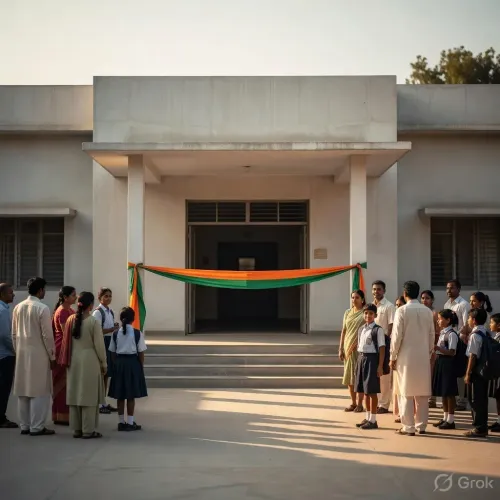
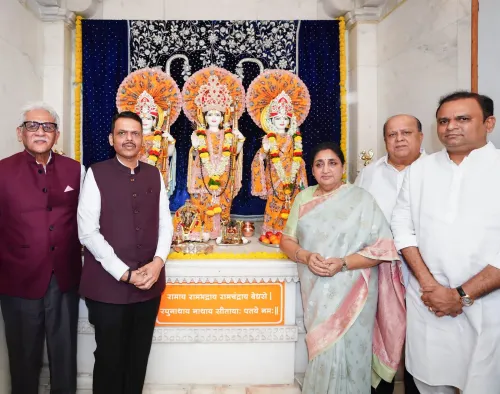
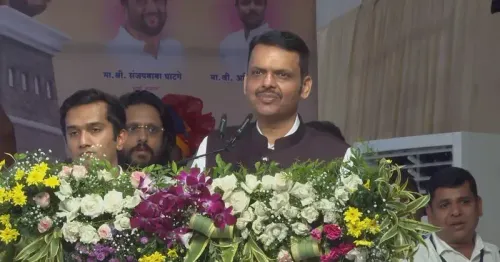
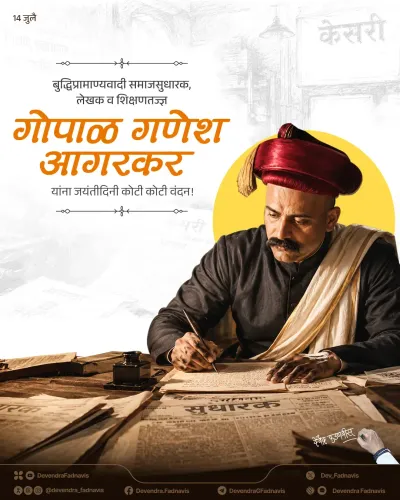
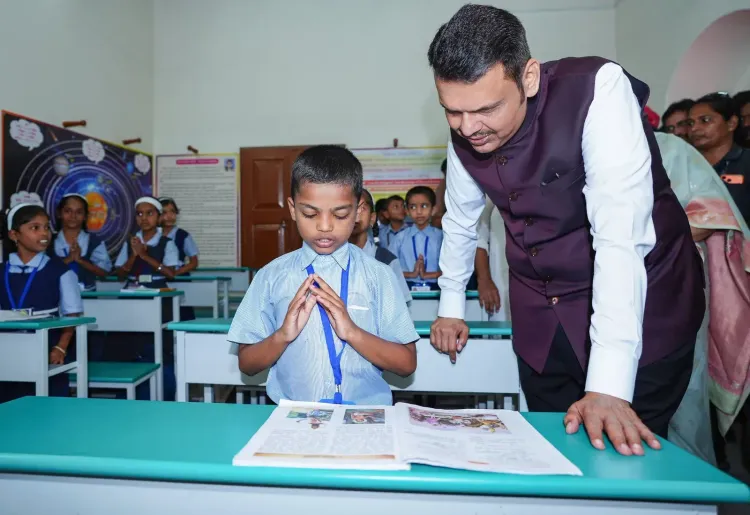
The visit was documented with four photographs shared on the Chief Minister's official X account.
In the same courtyard where a towering figure of India's freedom movement once sat with his books, Maharashtra Chief Minister Devendra Fadnavis sat down on Sunday, August 9, 2026, with a new generation of young dreamers — and came away visibly moved.
Fadnavis visited Hindu Rao Ghatge Vidya Mandir, a storied school in Kagal, a town in Kolhapur district, Maharashtra, and interacted with its students. The occasion carried unmistakable historical weight: it was within these very walls that Gopal Krishna Gokhale — nationalist leader, social reformer, and one of the most consequential minds of colonial India — received his early education.
Gokhale's school, a century later
Gokhale's connection to Kagal is a point of quiet local pride. The reformer who shaped a generation of Indian leaders — and who counted Mahatma Gandhi as a devoted political disciple — began his intellectual journey in this district. That lineage gives Hindu Rao Ghatge Vidya Mandir a resonance well beyond its modest setting.
Fadnavis acknowledged exactly that in his post, writing in Marathi: 'ज्या शाळेच्या ज्ञानपरंपरेत गोपाळकृष्ण गोखले यांच्यासारख्या महान व्यक्तिमत्त्वाने शिक्षण घेतले' — 'the school whose tradition of knowledge nurtured a great personality like Gopal Krishna Gokhale.' He described the interaction with students as a source of 'special joy and pride.'
The dreams in young eyes
The Chief Minister framed the visit around a simple but pointed idea: the ambitions visible in these children's eyes are the real strength of a 'Viksit Maharashtra' — a developed Maharashtra. It is a phrase that maps onto the broader national 'Viksit Bharat' development narrative, grounding a large political vision in a small-town schoolyard.
Four photographs accompanied the post, capturing Fadnavis in conversation with uniformed students — the imagery of a sitting Chief Minister in an unhurried, ground-level exchange rather than a formal dais address.
Whether the visit seeds a formal state education outreach initiative or remains a standalone moment of political communication, the symbolism is deliberate: history made here, future being made here too.
Point of View
Associating with Gokhale, a figure claimed across the ideological spectrum, is a calibrated act of bridge-building. The 'Viksit Maharashtra' framing also quietly aligns local sentiment with the ruling dispensation's national development narrative. Visits like this rarely produce immediate policy outcomes, but they accumulate into a sustained image of an accessible, history-conscious leadership.
NationPress
9 Aug 2026
Frequently Asked Questions
Which school did CM Fadnavis visit in Kagal?
Fadnavis visited Hindu Rao Ghatge Vidya Mandir in Kagal, Kolhapur district — a historic institution associated with the education of nationalist leader Gopal Krishna Gokhale.
What is the connection between Gopal Krishna Gokhale and Kagal?
Gopal Krishna Gokhale , the prominent Indian nationalist and social reformer, received his early education at Hindu Rao Ghatge Vidya Mandir in Kagal, giving the school a significant place in Maharashtra's educational and political heritage.
What did Devendra Fadnavis say about the students?
Fadnavis said the dreams in the students' eyes and the determination in their hearts are the 'real strength of Viksit Maharashtra' — a developed Maharashtra.
When did Fadnavis visit the Kagal school?
The visit took place on Sunday, August 9, 2026 , as documented in Fadnavis's post on X.
Where is Kagal located?
Kagal is a town in Kolhapur district , in the western Maharashtra region of India.