CM Fadnavis visits Santa Cruz Navratri Utsav, prays for Maharashtra
Synopsis
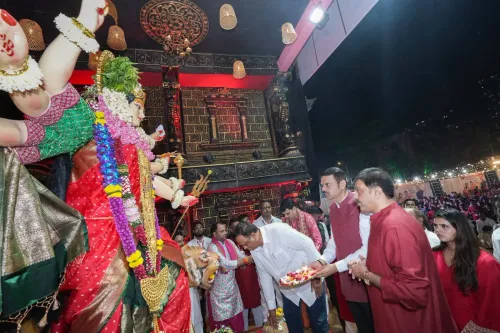
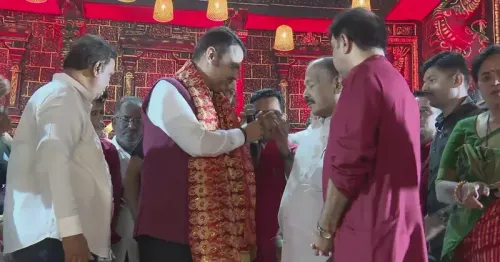
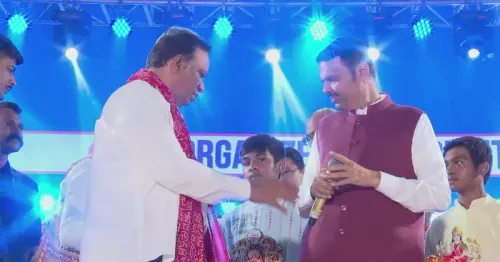
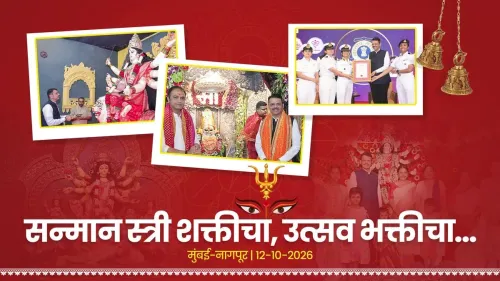
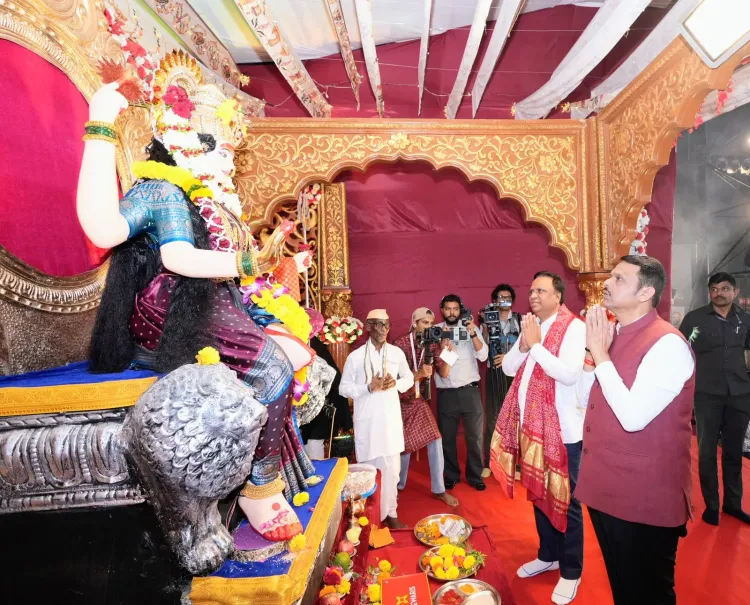
Maharashtra Chief Minister Devendra Fadnavis attended the Santa Cruz Navratri Utsav in Mumbai on 13 October 2026, organised by minister Ashish Shelar, and offered prayers to Goddess Durga for the welfare of the entire state.
Key Takeaways
CM Devendra Fadnavis visited the Santa Cruz Navratri Utsav 2026 in Mumbai on 13 October 2026 .
The event was organised by Maharashtra minister Ashish Shelar , a senior BJP leader from Mumbai.
Fadnavis opened his post with a classical Sanskrit invocation saluting the nine forms of Goddess Durga .
He offered prayers specifically for the welfare of the entire state of Maharashtra .
The visit reflects a consistent pattern of BJP leaders publicly participating in major Hindu festivals across Maharashtra.
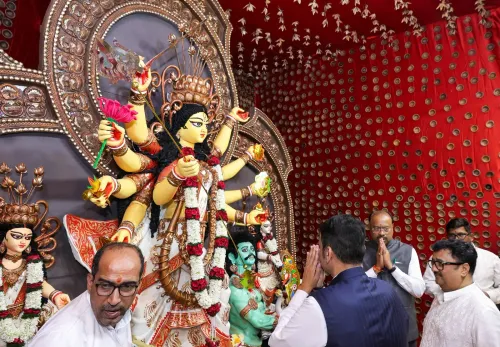
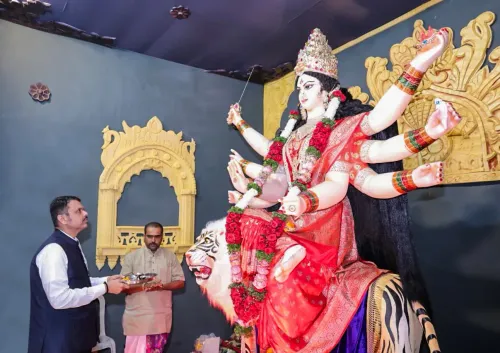
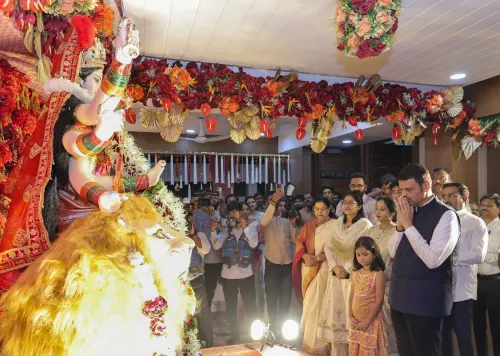
On the auspicious occasion of Navratri 2026, Maharashtra Chief Minister Devendra Fadnavis visited the Santa Cruz Navratri Utsav in Mumbai on 13 October 2026, bowing at the feet of Goddess Durga and offering prayers for the welfare of the entire state.
Fadnavis opened his post with the revered Sanskrit invocation — 'ॐ जयन्ती मंगला काली भद्रकाली कपालिनी, दुर्गा क्षमा शिवा धात्री स्वाहा स्वधा नमोऽस्तुते' — a classical salutation to Goddess Durga that translates as: 'O Jayanti, Mangala, Kali, Bhadrakali, Kapalini, Durga, Kshama, Shiva, Dhatri, Swaha and Swadha — I bow to you.' The choice of verse set a devotional tone before any political word was spoken.
Shelar's Santacruz celebration draws the Chief Minister
The event was organised by Maharashtra minister and BJP leader Ashish Shelar, who represents the Vandre West constituency and has long championed large-scale cultural celebrations in the western suburbs of Mumbai. Fadnavis noted that he attended 'on behalf of' Shelar's initiative — underscoring the collegial, community-rooted character of the gathering rather than a solo state appearance.
Navratri, the nine-night festival honouring the nine forms of Goddess Durga, is one of Maharashtra's most widely observed Hindu festivals. Public pandals, garba nights, and devotional processions animate neighbourhoods across Mumbai, Pune, and smaller towns throughout the period, drawing millions of devotees.
A tradition of festival presence in Maharashtra politics
Senior BJP leaders in Maharashtra have consistently marked major religious festivals with public appearances — a pattern of cultural engagement that reinforces the party's connect with Hindu traditions without necessarily anchoring the visit to a policy announcement. For Fadnavis, now in his third stint as Chief Minister, such appearances are a familiar part of the public calendar.
As Navratri moves toward its final days, similar events across the state are expected to draw further participation from ministers and local leaders — keeping the spirit of the festival alive in the public square all the way through Vijayadashami.
Point of View
Rather than a generic greeting, signals a deliberate authenticity in the messaging. For Shelar, whose event drew the Chief Minister, it is also a quiet display of organisational clout within the party's Mumbai apparatus. Collectively, these festival appearances sustain a soft-power cultural narrative the BJP has carefully cultivated in Maharashtra ahead of any future electoral cycle.
NationPress
14 Oct 2026
Frequently Asked Questions
Which Navratri event did CM Devendra Fadnavis attend in Mumbai in 2026?
CM Fadnavis attended the Santa Cruz Navratri Utsav 2026 in Mumbai on 13 October 2026, an event organised by Maharashtra minister Ashish Shelar.
Who is Ashish Shelar and why did he organise the Navratri event?
Ashish Shelar is a Maharashtra minister and senior BJP leader from Mumbai who organised the Santa Cruz Navratri Utsav 2026 as a community cultural celebration during the Navratri festival period.
What did CM Fadnavis pray for at the Navratri event?
According to his post, CM Fadnavis bowed at the feet of Goddess Durga and prayed for the welfare of the entire state of Maharashtra.
What is the Sanskrit verse CM Fadnavis quoted in his Navratri post?
He quoted a classical Durga stotram: 'ॐ जयन्ती मंगला काली भद्रकाली कपालिनी, दुर्गा क्षमा शिवा धात्री स्वाहा स्वधा नमोऽस्तुते', which salutes the nine forms of Goddess Durga.
Do BJP leaders in Maharashtra regularly attend Navratri festivals?
Yes, senior BJP leaders in Maharashtra have historically participated in major religious festivals like Navratri as part of their public engagement, emphasising the party's connect with Hindu cultural traditions.