CM Rekha Gupta Echoes BJP Chief on Modi Honouring Guru Heritage
Synopsis
Delhi CM Rekha Gupta amplified BJP National President Nitin Nabin's tribute to PM Modi for honouring India's guru legacy and connecting the new generation to ancient ideas — a move that reflects the BJP's sustained effort to link governance with India's civilisational educational traditions.
Key Takeaways
Delhi CM Rekha Gupta shared a quote from BJP National President Nitin Nabin on 18 November 2026 crediting PM Modi with honouring the guru tradition.
The statement frames PM Narendra Modi's governance as an act of connecting the new generation to India's ancient philosophical heritage.
The BJP has consistently deployed the guru-shishya tradition as a cultural-governance narrative since 2014 .
NEP 2020 gave institutional grounding to this messaging by mandating integration of Indian Knowledge Systems into school and higher education curricula.
The relay — national president's words amplified by a state chief minister — signals coordinated BJP cultural messaging.
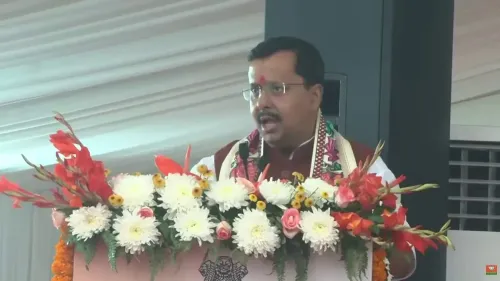
A thread connecting ancient India's guru tradition to modern governance ran through Delhi's political conversation on Wednesday, November 18, 2026, as Delhi Chief Minister Rekha Gupta amplified a pointed tribute from the BJP's national leadership — one that positions Prime Minister Narendra Modi as a bridge between civilisational wisdom and the new generation.
CM Gupta shared a quote attributed to BJP National President Nitin Nabin, which reads: 'Aadarneey Pradhan Mantri Shri Narendra Modi ji ne guruon ki virasat ko samman dilakar nayi peedhi ko unke vicharon se jodne ka karya kiya hai' — 'The honourable Prime Minister Shri Narendra Modi has done the work of honouring the legacy of gurus and connecting the new generation to their ideas.'The Guru Tradition as a Political Frame
The statement is a deliberate piece of ideological signalling. The BJP has consistently woven India's ancient guru-shishya tradition — the bond between teacher and student — into its cultural and governance narrative, using moments like Teachers' Day and national cultural programmes to position revered historical gurus as role models for today's youth. The framing argues that respecting this heritage is itself a governance act, not merely a ceremonial one.
Prime Minister Modi has made the acknowledgement of traditional knowledge systems a recurring element of his public addresses since taking office in 2014. The National Education Policy 2020 gave this rhetoric institutional weight — it formally introduced emphasis on integrating Indian Knowledge Systems (IKS), guru-shishya traditions, and cultural heritage into school and higher education curricula across the country.
From Policy to Classroom: NEP 2020's Knowledge-System Push
At its core, NEP 2020 marked the first time a national education framework explicitly mandated that students engage with the philosophical and pedagogical roots of India's gurukul tradition. For students and teachers — the two most direct stakeholders — this means curriculum material that draws on ancient texts and teaching methods, not just Western academic frameworks. The policy framing invoked by BJP leaders like Nabin and amplified by CM Gupta sits squarely within this broader institutional shift.
What gives Wednesday's post its significance is its chain of endorsement: a state chief minister amplifying a national party president praising the prime minister. That layered relay is itself a signal of coordinated messaging — the kind that typically precedes or follows a major cultural event, an educational announcement, or a campaign cycle that needs a civilisational anchor.
Whether a specific event or curriculum announcement triggered Nabin's original remark remains unconfirmed — but the message, now carrying CM Gupta's stamp, is unmistakable: in BJP's framing, honouring India's gurus is governance, and governance is culture.Point of View
A prominent state leader amplifies it, and the prime minister is positioned as the living executor of an ancient legacy. This approach draws direct rhetorical continuity from NEP 2020, which translated guru-tradition symbolism into formal education policy. Ahead of any state election cycle or major cultural calendar event, such coordinated messaging helps the party consolidate its core voters while projecting a governance identity rooted in Indian heritage — a positioning no rival has credibly contested on the same terrain.
NationPress
18 Nov 2026
Frequently Asked Questions
What did Nitin Nabin say about PM Modi and India's guru tradition?
BJP National President Nitin Nabin stated that PM Narendra Modi has honoured the legacy of gurus and worked to connect the new generation to their ideas — a quote amplified by Delhi CM Rekha Gupta on 18 November 2026 .
What is the guru-shishya tradition in Indian education?
The guru-shishya tradition is India's ancient system of personalised knowledge transfer between a teacher (guru) and student (shishya). It forms the philosophical basis of the gurukul model and was formally recognised in NEP 2020 , which mandated integration of Indian Knowledge Systems into modern curricula.
How does NEP 2020 relate to India's guru heritage?
NEP 2020 explicitly directed schools and universities to incorporate Indian Knowledge Systems, including the values and methods of the guru-shishya tradition, into their programmes — giving legislative and policy weight to the BJP's cultural messaging on guru heritage.
Why is Rekha Gupta sharing quotes from the BJP national president?
As Delhi Chief Minister and a senior BJP leader, Rekha Gupta regularly amplifies party messaging from national leadership. Sharing Nitin Nabin's tribute to PM Modi signals coordinated BJP communication on cultural and governance themes.