CM Sukhu meets GSSS Amalaihar students at HP Vidhan Sabha
Synopsis
Himachal Pradesh CM Sukhvinder Singh Sukhu met school students from GSSS Amalaihar who visited the Tapovan Vidhan Sabha to watch live assembly proceedings, calling it a meaningful civic lesson for Gen Z and Gen Alpha beyond textbook knowledge.
Key Takeaways
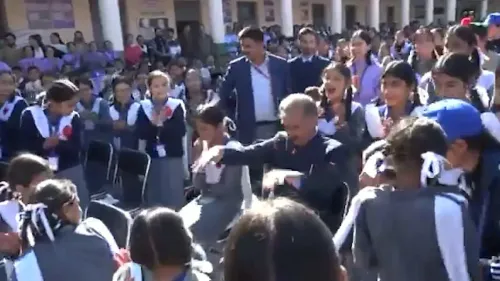
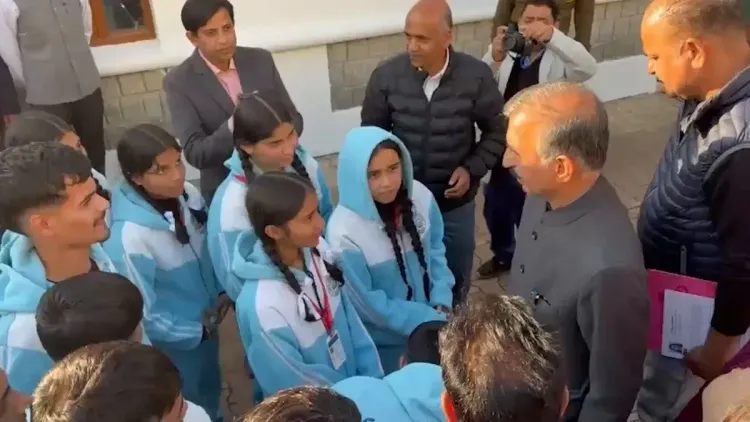
CM Sukhvinder Singh Sukhu personally met students of GSSS Amalaihar at the HP Vidhan Sabha, Tapovan on 18 November 2026 .
Students had come to observe live assembly proceedings , combining classroom learning with direct democratic experience.
CM Sukhu specifically highlighted the visit's value for Gen Z and Gen Alpha children, noting they returned with new understanding of how democracy functions.
The Himachal Pradesh Vidhan Sabha at Tapovan regularly hosts school groups during session days as part of civic education outreach.
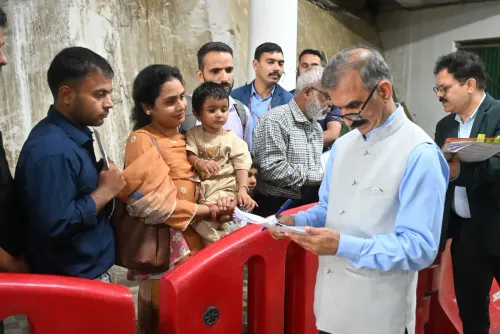
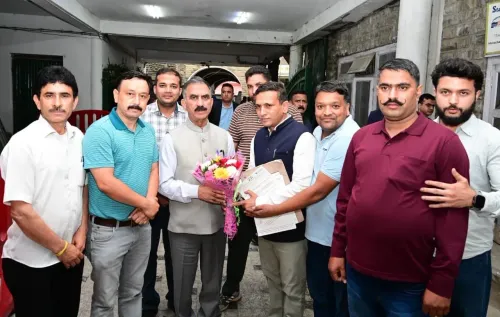
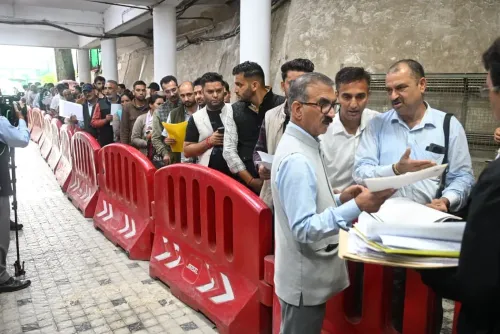
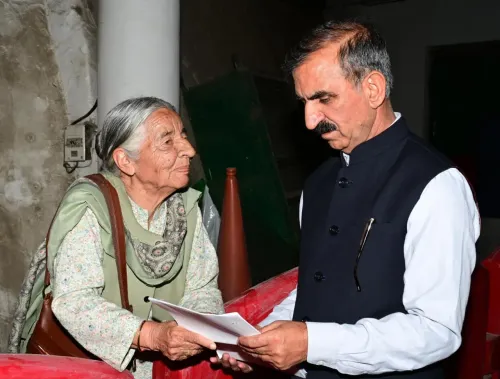
Photographs were taken during the CM's interaction with the student group, amplifying the moment on social media.
Democracy is not just a chapter in a textbook — sometimes it walks through the doors of the Himachal Pradesh Vidhan Sabha and sits in the gallery. Chief Minister Sukhvinder Singh Sukhu on Wednesday, 18 November 2026, met students of Government Senior Secondary School (GSSS), Amalaihar, who had come to Tapovan, Shimla to observe the state assembly in session.
Sharing the moment on X, the Chief Minister wrote: 'विधानसभा परिसर, तपोवन में राजकीय वरिष्ठ माध्यमिक विद्यालय (GSSS), अमलैहड़ के बच्चों से मिलकर अच्छा लगा' — 'It was a pleasure meeting the children of GSSS Amalaihar at the Vidhan Sabha premises in Tapovan.' He noted photographs were taken, and expressed happiness that Gen Z and Gen Alpha children went beyond bookish knowledge to witness, understand, and carry home fresh lessons about how democracy actually works.
A gallery seat in living democracy
Student visits to state legislative assemblies have long been a quiet pillar of civic education across India. The Himachal Pradesh Vidhan Sabha, housed in the Tapovan complex in Shimla, regularly opens its gallery to school groups during session days, letting young visitors watch floor debates, Question Hour, and procedural motions unfold in real time — something no civics textbook can fully replicate.
For children still in school, the experience bridges two worlds: the theoretical framework of parliamentary democracy they study, and the lived, sometimes raucous, sometimes solemn reality of elected representatives at work. CM Sukhu's decision to personally meet the visiting batch — and pose for photographs — added a direct human connection to the institutional lesson.
Gen Z and Gen Alpha in the gallery
The Chief Minister's specific call-out of Gen Z (born roughly 1997–2012) and Gen Alpha (born from 2013 onwards) is deliberate framing. These are the first cohorts to grow up entirely in a smartphone-saturated, social-media-shaped information environment — where political noise is constant but structured civic literacy is uneven. Bringing them inside an actual chamber of governance, away from screens, makes the gesture more than ceremonial.
Across Indian states, assembly outreach programmes for schools have quietly expanded alongside digital civics initiatives, reinforcing that participatory democracy is best understood by seeing it, not just reading about it.
Point of View
Personal engagement with school students visiting the Vidhan Sabha fits a broader pattern of Congress-led state governments projecting accessible, people-first governance ahead of election cycles. Framing the visit explicitly around Gen Z and Gen Alpha signals an awareness that the next wave of voters is watching — and that civic engagement must be cultivated early. Such low-cost, high-visibility gestures serve dual purposes: they reinforce institutional legitimacy for democratic institutions and position the CM as approachable and education-conscious. If formalised into a structured outreach programme, these visits could become a durable legacy plank for the Sukhu administration.
NationPress
18 Nov 2026
Frequently Asked Questions
Why did CM Sukhu meet students at the Himachal Pradesh Vidhan Sabha?
GSSS Amalaihar students had come to the Tapovan Vidhan Sabha premises to observe live assembly proceedings. CM Sukhu met them during the visit, posing for photographs and expressing happiness at their civic engagement.
Where is the Himachal Pradesh Vidhan Sabha located?
The Himachal Pradesh Vidhan Sabha is located in the Tapovan complex in Shimla, Himachal Pradesh.
What did CM Sukhu say about Gen Z and Gen Alpha students?
CM Sukhu said he was glad that Gen Z and Gen Alpha children went beyond bookish knowledge to see and understand how democracy functions, returning with fresh lessons from their assembly visit.
What is GSSS Amalaihar?
GSSS Amalaihar is a Government Senior Secondary School in Himachal Pradesh whose students visited the state Vidhan Sabha on 18 November 2026 to watch assembly proceedings.
Do Indian state assemblies allow school visits?
Yes, student visits to state legislative assemblies occur regularly across India as part of civic education, allowing young people to observe parliamentary democracy in action beyond what textbooks teach.