CM Sukhu sets crop prices for HP farmers at Kisan Samvad
Synopsis
At Kisan Samvad in Tanda, CM Sukhvinder Singh Sukhu declared that his Congress government fixed prices for turmeric, wheat, and maize — something the previous BJP government never attempted — crediting his farming family roots for the policy focus.
Key Takeaways
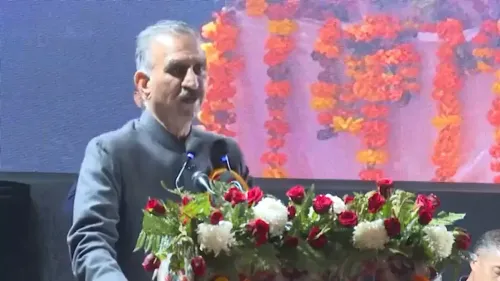
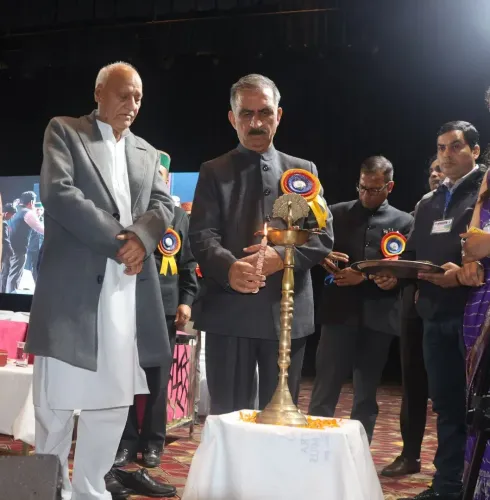
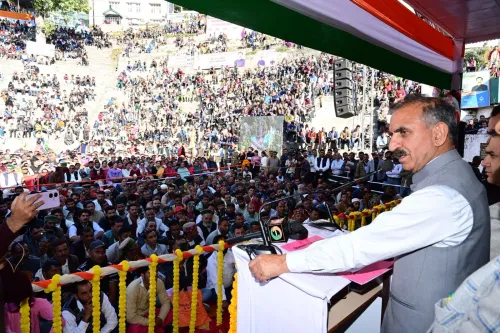
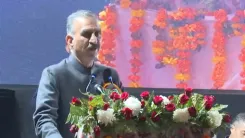
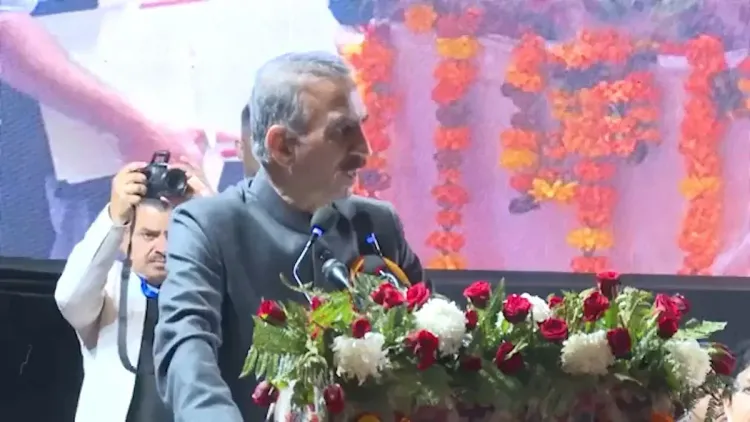
CM Sukhu addressed the Kisan Samvad programme in Tanda on 18 November 2026 .
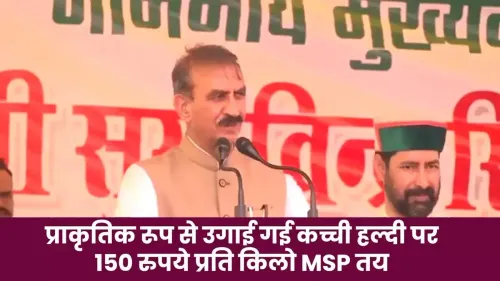
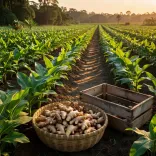
He said the Congress government fixed prices for turmeric, wheat, and maize — crops the previous BJP government never set state-level prices for.
Sukhu attributed the initiative to his own background growing up in a farming family , giving him first-hand understanding of agrarian hardship.
The Kisan Samvad format brings the Chief Minister directly to farming communities rather than holding meetings in the state capital.
Details of exact price levels and procurement mechanisms have not yet been confirmed in public records.
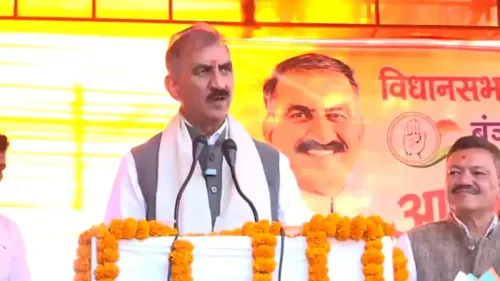
A Chief Minister who grew up in a farming family is now fixing prices for the crops that family once grew. At the Kisan Samvad programme in Tanda on Wednesday, 18 November 2026, Himachal Pradesh Chief Minister Sukhvinder Singh Sukhu drew a sharp line between what he called a 'routine government' and a 'working government' — and put his own biography at the centre of the argument.
Posting from the event, Sukhu wrote in Hindi: 'Routine sarkar aur kaam karne wali sarkar ki soch mein fark hota hai' — 'There is a difference in the thinking of a routine government and a working government.' His pointed contrast: the previous Bharatiya Janata Party government never thought to fix prices for turmeric, wheat, and maize, but the Congress government took that initiative. The reason, he argued, is personal — a man from a farming family became Chief Minister and has seen and felt the troubles of farmers and horticulturists up close.
Why crop price fixation matters in Himachal Pradesh
Himachal Pradesh is not just a wheat-and-maize state. Its economy is deeply shaped by horticulture — apples, stone fruits — alongside field crops including turmeric. Central government Minimum Support Price frameworks have historically covered major crops but left many state-specific produce without a formal floor. When state governments step in to fix prices, it can provide a measure of certainty for farmers who would otherwise be fully exposed to market volatility.
The Congress party's 2022 election victory in Himachal Pradesh came with strong agrarian pledges. Sukhu, who has consistently foregrounded his background as someone from a farming household, has made farmer welfare a defining narrative of his government. State-level price support measures — distinct from central MSP — are a tool Congress-governed states have periodically deployed to signal differentiated intent on agriculture.
Kisan Samvad: taking the message to Tanda
The Kisan Samvad — literally 'farmer dialogue' — is a direct-engagement format that brings the Chief Minister to agricultural communities rather than waiting for delegations in Shimla. Tanda, the venue for today's event, is located in the lower hills, an area where wheat and maize cultivation is common and where growers have historically had limited bargaining power in unregulated markets.
By framing the price-fixation initiative at a public farmer dialogue rather than a policy briefing, Sukhu signals that this is a political and personal commitment as much as an administrative one. The BJP, in government from 2017 to 2022 under Chief Minister Jai Ram Thakur, governed through years of central MSP revisions but did not, according to Sukhu's claim, introduce a state-level mechanism for turmeric, wheat, and maize price floors.
The 'farming family' argument in Indian politics
Sukhu's framing is deliberate and familiar in Indian electoral politics: a leader's credibility on agrarian policy is rooted in lived experience, not bureaucratic expertise. It is a contrast device Congress has used at multiple levels — from national campaigns to state narratives — positioning its leaders as organically connected to rural India in ways opponents are not.
What makes the Himachal framing specific is that the state's farming community is unusually diverse — irrigated wheat growers in the lower belts, maize farmers in the mid-hills, turmeric cultivators in select pockets, and the powerful apple-growers lobby in the upper hills. A price-support initiative that spans those categories would be administratively ambitious. The details — exact price levels, procurement mechanisms, timelines — are what farmers and opposition benches will now demand.
The Kisan Samvad series is worth watching for those follow-up announcements. A government that opens the conversation at Tanda will face sharp questions if the numbers never materialise in an agriculture department order.
Point of View
The opposition as indifferent, and a specific list of crops to give the claim concrete weight. The 'working government vs routine government' framing is designed to travel beyond Himachal Pradesh, reinforcing a national Congress narrative ahead of future electoral cycles. The real test, however, is in the follow-through — state-level crop price support without a robust procurement mechanism can evaporate between announcement and harvest. How the government operationalises the turmeric, wheat, and maize price floors will determine whether this is a durable policy legacy or a durable talking point.
NationPress
18 Nov 2026
Frequently Asked Questions
What did CM Sukhu announce at Kisan Samvad in Tanda?
CM Sukhvinder Singh Sukhu stated at the Kisan Samvad programme in Tanda that the Congress government fixed prices for turmeric, wheat, and maize — a step he said the previous BJP government never took.
What is the Kisan Samvad programme in Himachal Pradesh?
Kisan Samvad, meaning 'farmer dialogue', is a direct-engagement programme where the Chief Minister meets farming communities across Himachal Pradesh to hear their concerns and communicate government initiatives.
How is state-level crop price support different from central MSP?
Central Minimum Support Price covers select major crops nationally. State governments can announce their own price floors for crops not covered or to supplement central rates, giving farmers in that state additional protection.
Why does CM Sukhu emphasise his farming family background?
Sukhu argues that growing up in a farming household gave him direct experience of the difficulties faced by farmers and horticulturists, which he says explains his government's focus on crop price support — a contrast he draws with the previous BJP administration.
Which crops did the Himachal Pradesh government fix prices for according to Sukhu?
According to CM Sukhu's statement at Kisan Samvad, the Congress government fixed prices for turmeric, wheat, and maize in Himachal Pradesh.