CM Rekha Gupta Pushes Central Welfare Schemes Across Delhi
Synopsis
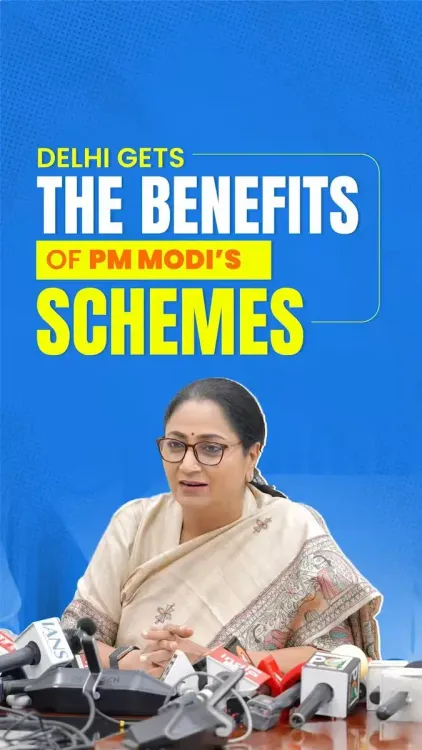
Delhi Chief Minister Rekha Gupta on 14 October 2026 cited over 9 lakh Ayushman Bharat registrations, 3 lakh Vaya Vandana enrolments, and 425 Arogya Mandirs as evidence of the BJP government's drive to saturate PM Modi's central welfare schemes across the capital.
Key Takeaways
Delhi has crossed 9 lakh registrations under the Ayushman Bharat PM-JAY health insurance scheme, which offers up to ₹5 lakh cover per family.
Over 3 lakh senior citizens in Delhi have been enrolled under PM Vaya Vandana Yojana , a pension scheme for those aged 60 and above.
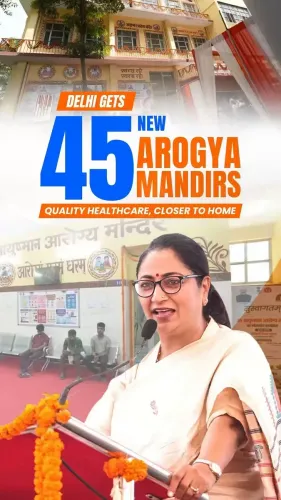
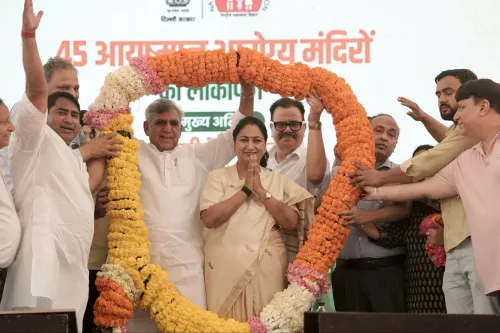
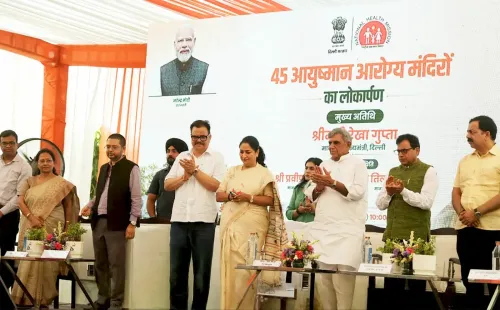
425 Ayushman Arogya Mandirs — upgraded Health and Wellness Centres — are now operational across the capital.
Chief Minister Rekha Gupta framed the figures as a commitment to ensuring every needy Delhiite benefits from PM Narendra Modi 's welfare programmes.
The announcement was made under the #SevaSankalpAbhiyan and #25YearsOfSeva campaign banners on 14 October 2026 .
Over 9 lakh Ayushman registrations, 3 lakh senior citizens enrolled under Vaya Vandana Yojana, and 425 Ayushman Arogya Mandirs operational — Delhi Chief Minister Rekha Gupta posted these figures on Wednesday, 14 October 2026, framing them as proof of her government's commitment to delivering Prime Minister Narendra Modi's welfare agenda to every needy household in the capital.
In her post, Chief Minister Gupta declared, 'Har jankallyanakari yojana ka labh Delhi ke har zarooratmand tak pahunchane ke liye hum pratibaddh hain' — ('We are committed to ensuring every welfare scheme reaches every person in need in Delhi'). The announcement was tagged under #SevaSankalpAbhiyan and #25YearsOfSeva, tying the rollout to a broader BJP campaign milestone.
Three Schemes, Three Fronts of Welfare Delivery
The numbers span three distinct programmes. Ayushman Bharat Pradhan Mantri Jan Arogya Yojana, launched nationally in 2018, provides up to ₹5 lakh health insurance cover per family for secondary and tertiary hospitalisation — and Delhi's registration drive has now crossed the 9 lakh mark. That is a significant scale-up for a state that had a complicated relationship with the scheme's rollout under earlier administrations.
On a parallel front, over 3 lakh elderly residents have been enrolled under PM Vaya Vandana Yojana, the pension scheme for citizens aged 60 and above, introduced in 2017, which guarantees assured monthly returns. For a city with a rapidly ageing urban population, the number signals an active outreach push at the ground level.
The third pillar — 425 Ayushman Arogya Mandirs — represents the primary-care infrastructure backbone. These are Health and Wellness Centres upgraded under the Ayushman Bharat framework, designed to bring preventive and primary healthcare services to doorsteps, reducing pressure on tertiary hospitals.
BJP's Saturation Strategy in the Capital
The post fits a recognisable pattern: BJP-led state governments have made the saturation of central health insurance and elderly pension schemes a signature deliverable after assuming office, turning beneficiary numbers into political proof-points. For Delhi — a state with high visibility and a history of fierce electoral competition — the numbers serve a dual purpose: administrative scorecard and campaign narrative.
The #25YearsOfSeva hashtag places this welfare push within a larger commemorative arc, suggesting the BJP is drawing a thread from its organisational legacy to present-day governance outcomes in the capital. How quickly the Arogya Mandir network deepens further, and whether beneficiary verification matches the headline numbers, will be the metrics to watch in upcoming state health reports.
Nine lakh families with a health safety net. Three lakh elders with a pension anchor. Four hundred and twenty-five clinics closer to the people. The architecture is being built — the question now is whether it holds.
Point of View
A state where the party's governance record is under constant scrutiny. By anchoring the numbers to PM Modi's schemes specifically, she reinforces the centre-state alignment narrative that is central to the BJP's Delhi political identity. The inclusion of elderly pension enrolments alongside health coverage signals a deliberate attempt to broaden the welfare beneficiary base before the next electoral cycle. Whether the headline registration figures translate into actual claim settlements and functional primary-care access will ultimately determine the political dividend.
NationPress
14 Oct 2026
Frequently Asked Questions
What is the Ayushman Bharat scheme and who is eligible in Delhi?
Ayushman Bharat PM-JAY provides up to ₹5 lakh annual health insurance for secondary and tertiary hospitalisation to low-income families. In Delhi, the current BJP government has been actively enrolling eligible households, with registrations now exceeding 9 lakh.
What is PM Vaya Vandana Yojana and what benefits does it offer?
PM Vaya Vandana Yojana is a pension scheme for Indian citizens aged 60 and above, introduced in 2017, offering assured monthly returns. Over 3 lakh senior citizens in Delhi have been enrolled under the scheme according to CM Rekha Gupta's latest update.
What are Ayushman Arogya Mandirs?
Ayushman Arogya Mandirs are Health and Wellness Centres upgraded under the Ayushman Bharat framework to deliver primary and preventive care services at the community level. Delhi now has 425 such centres operational.
What is the SevaSankalp Abhiyan?
SevaSankalp Abhiyan is a BJP campaign drive aimed at saturating central government welfare schemes among eligible beneficiaries. CM Rekha Gupta used the hashtag alongside #25YearsOfSeva while announcing Delhi's welfare milestones.
How has Delhi's relationship with Ayushman Bharat changed under the BJP government?
Delhi had a complicated history with the Ayushman Bharat scheme under earlier administrations, with implementation delayed. The current BJP government under CM Rekha Gupta has prioritised enrolment drives, pushing registrations past 9 lakh.