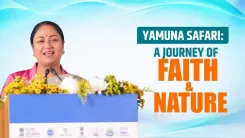
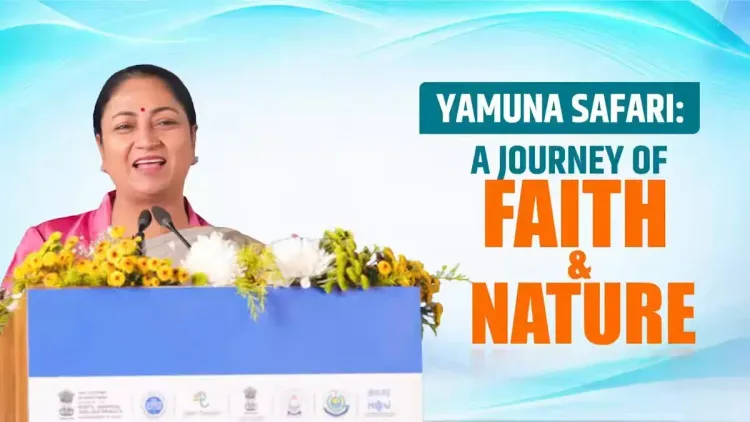
CM Rekha Gupta launches Yamuna Safari from Sonia Vihar to Jagatpur
Synopsis
Delhi Chief Minister Rekha Gupta has invited residents to experience the Namo Yamuna River Safari on the Sonia Vihar–Jagatpur route, framing the initiative as proof of a cleaner, more liveable river after decades of pollution and failed remediation attempts.
Key Takeaways
Delhi CM Rekha Gupta publicly invited Delhiites to the Namo Yamuna River Safari on November 10, 2026 .
The safari route runs from Sonia Vihar to Jagatpur in north-east Delhi.
The initiative is positioned as a family-friendly activity to showcase a cleaner Yamuna.
The Yamuna has been subject to remediation efforts since the Yamuna Action Plan of 1993 .
Operational details including ticketing and safety protocols have not yet been officially confirmed.
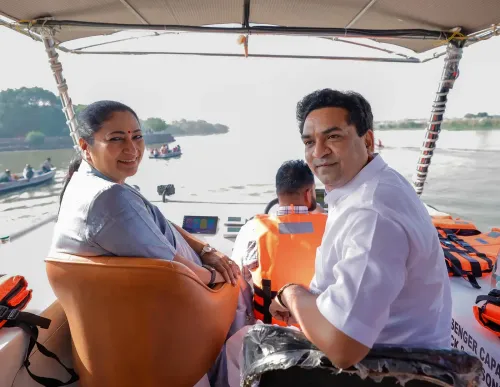
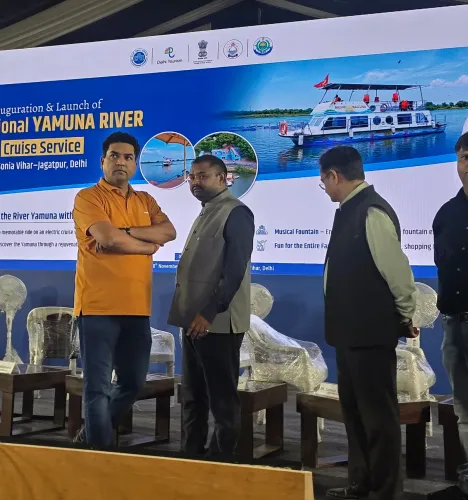
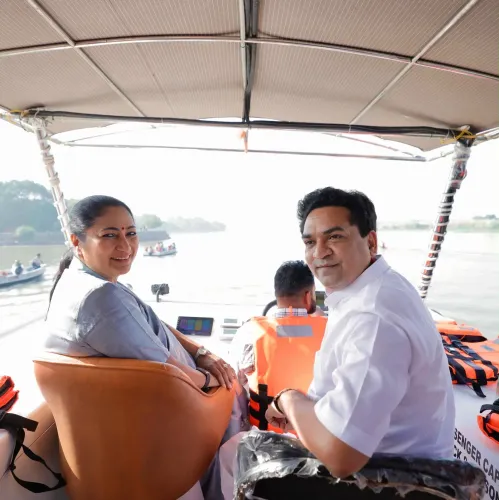
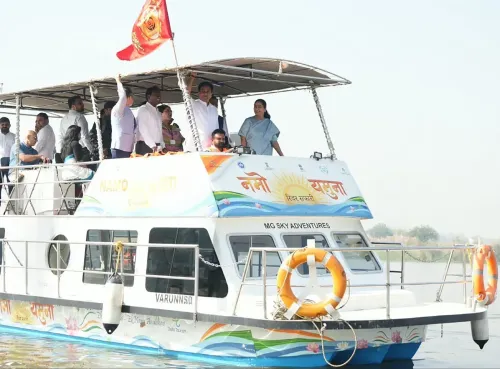
A river that Delhiites have long associated with pollution and neglect is now being pitched as a destination. Delhi Chief Minister Rekha Gupta on Tuesday, November 10, 2026, publicly invited residents to experience the Namo Yamuna River Safari — a river tourism route running from Sonia Vihar to Jagatpur in north-east Delhi — framing it as a chance to witness a newer, cleaner face of the capital.
Posting on X, the Chief Minister said: 'मैं दिल्ली के लोगों को आमंत्रित करती हूं कि वे यहां आएं और सोनिया विहार से जगतपुर तक के इस रूट पर यमुना सफारी करें' — 'I invite the people of Delhi to come and experience the Yamuna Safari on this route from Sonia Vihar to Jagatpur.' She urged families to bring their children to 'have the darshan of Maa Yamuna and enjoy nature' — adding that this is 'the positive image of Delhi that we have been longing for, seen in peace and tranquillity.'
The Sonia Vihar–Jagatpur corridor and what it represents
The stretch from Sonia Vihar to Jagatpur runs through the northern reaches of the river as it passes through Delhi — a segment that sits upstream of the most heavily polluted central-city drains. Positioning a family-oriented safari here is a deliberate choice: it places the most presentable stretch of the Yamuna at the centre of the city's new river-tourism narrative.
The Yamuna has been the subject of remediation talk since the Yamuna Action Plan was first initiated in 1993 — over three decades of successive schemes, tribunals, and pledges. Each Delhi administration has launched some version of a riverfront vision; the Namo Yamuna River Safari is the current government's attempt to make an improvement tangible and visible to ordinary families, not just auditors and courts.
Tourism as proof-of-concept for a cleaner river
The logic behind river tourism as a policy signal is straightforward: if people are willing to get on a boat, the river has cleared a basic threshold of habitability. Delhi administrations have used this playbook before — combining recreational infrastructure with conservation messaging to shift public perception alongside actual pollution-abatement work.
Chief Minister Gupta's framing explicitly targets families, invoking the idea of children witnessing the river's spiritual and natural character. The hashtag #NamoYamunaRiverSafari doubles as a campaign label, anchoring the initiative to a broader branding effort. Exact operational details — ticketing, frequency, and safety protocols — are yet to be officially confirmed.
Whether the safari becomes a lasting fixture or a headline moment, its true test will come when Delhiites board those boats and judge the river for themselves.
Point of View
Public-facing projects. By anchoring the initiative in family tourism and spiritual imagery — 'darshan of Maa Yamuna' — CM Gupta is simultaneously pursuing a cultural register and a governance credential ahead of the next electoral cycle. The choice of the Sonia Vihar–Jagatpur corridor, one of the river's less degraded urban stretches, is strategically astute: it maximises visual impact while sidestepping the more contentious, heavily polluted central segments. River tourism as proof-of-concept, however, remains hostage to the river's actual condition — a fact that courts, NGOs, and citizens downstream will not let go unanswered.
NationPress
10 Nov 2026
Frequently Asked Questions
What is the Namo Yamuna River Safari?
The Namo Yamuna River Safari is a river tourism initiative promoted by the Delhi government, running along the Yamuna from Sonia Vihar to Jagatpur in north-east Delhi. It is designed to let residents experience the river in a recreational, family-friendly setting.
Where does the Yamuna safari route start and end?
The promoted safari route starts at Sonia Vihar and ends at Jagatpur, both located in north-east Delhi along the Yamuna river.
Who launched the Yamuna River Safari in Delhi?
Delhi Chief Minister Rekha Gupta invited residents to experience the Namo Yamuna River Safari, posting the invitation on X on November 10, 2026.
Is the Yamuna river in Delhi clean enough for a safari?
The Delhi government's promotion of the safari signals incremental improvement in the river's condition, particularly along the Sonia Vihar–Jagatpur stretch. However, independent verification of water quality standards for the full route has not been officially confirmed.
What is the history of Yamuna clean-up efforts in Delhi?
The Yamuna Action Plan, initiated in 1993, was among the first formal efforts to address pollution along the Yamuna in Delhi and upstream states. Multiple subsequent plans and court orders over three decades have continued to target the river's restoration.