CM Rekha Gupta credits Modi govt for Delhi flyovers, Yamuna push
Synopsis
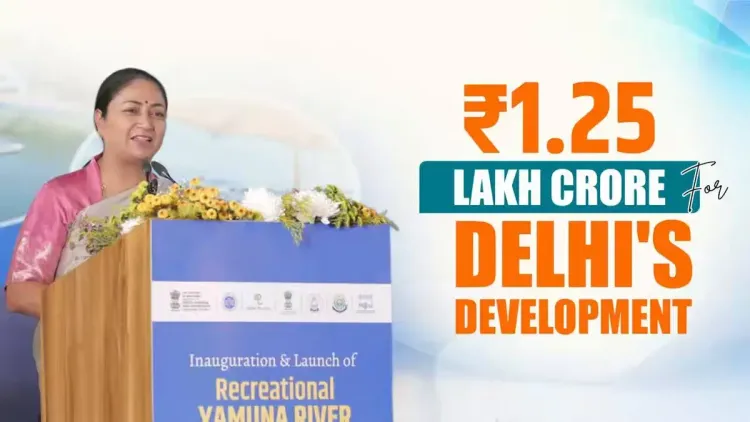
Delhi Chief Minister Rekha Gupta on 10 November 2026 credited PM Narendra Modi's government for building large flyovers and expressways to decongest Delhi and for driving the Namo Yamuna River Safari, challenging previous governments' environmental record.
Key Takeaways
CM Rekha Gupta posted on 10 November 2026 crediting the Modi government for large flyovers and new expressways built to decongest Delhi .
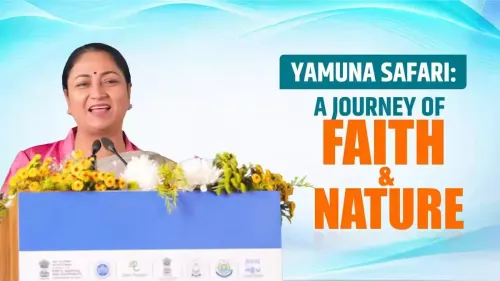
The post is pegged to the #NamoYamunaRiverSafari project, a riverfront development initiative on the Yamuna River .
Gupta cited approximately 1.75 years of BJP governance in Delhi as a benchmark for environmental work, challenging the record of previous governments.
The Eastern Peripheral Expressway , completed in 2018 , remains a key example of central government infrastructure aimed at reducing traffic entering Delhi.
The post signals that the BJP's Delhi narrative is merging road infrastructure with environmental and riverfront development messaging ahead of potential future milestones.
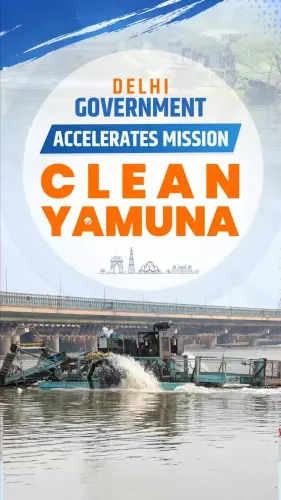
Flyovers, expressways, and a river brought back to life — Delhi Chief Minister Rekha Gupta on Tuesday, 10 November 2026 made a sweeping case that the national capital's transformation under Prime Minister Narendra Modi is unlike anything previous governments attempted. The trigger: the #NamoYamunaRiverSafari project, which has become the latest emblem of the BJP's urban-environment pitch for Delhi.
Flyovers, expressways, and the decongestion push
In her post, CM Gupta said — 'दिल्ली को डीकंजेस्ट करने के लिए बड़े-बड़े फ्लाईओवर बनाए गए। नए-नए एक्सप्रेसवे बनाए गए' — 'large flyovers were built to decongest Delhi, new expressways were built.' The reference anchors to a real policy lineage: the Eastern Peripheral Expressway, completed in 2018 under the central government, was explicitly designed to divert through-traffic away from the capital and ease choking congestion on its ring roads. That project remains one of the most cited examples of centre-funded relief for Delhi's road network.
The environment question she is asking out loud
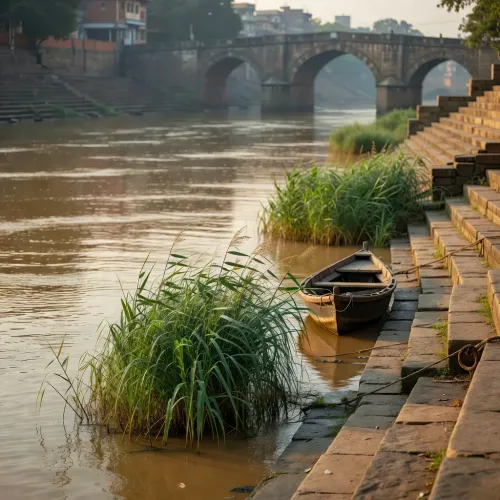
Gupta sharpened the political edge with a rhetorical challenge: 'Did any of the previous governments ever think this way, ever work this way on the environment?' The 1.75 years she references correspond to the BJP's tenure in the Delhi government — a period in which the administration has repeatedly contrasted its environmental record against the previous state government's. The Yamuna River, which flows through the heart of Delhi and has long ranked among the country's most polluted urban waterways, is now the centrepiece of that contrast.
Namo Yamuna River Safari: the project at the centre of the claim
The hashtag #NamoYamunaRiverSafari signals that this post is pegged to a riverfront development initiative on the Yamuna — a project being positioned as both an ecological and a tourism landmark. The Yamuna's restoration has been a politically charged goal for decades, with successive governments promising transformation and delivering limited results. By linking road infrastructure, expressways, and a river safari under a single narrative, Gupta is packaging a broader governance argument: that the Modi government's approach to Delhi is both larger in scale and more environmentally conscious than what came before.
Delhi commuters and residents remain the ultimate judges of that claim — and the Yamuna's water quality, the actual traffic numbers on those flyovers, and the eventual opening of the river safari will all serve as measurable checkpoints. The BJP is clearly betting the pitch lands before those numbers are contested.
Point of View
Expressways) with environmental soft power (Yamuna revival) to construct a unified BJP legacy narrative for Delhi. The rhetorical question directed at 'previous governments' is a standard BJP framing device, but it carries particular weight in Delhi where the AAP-BJP rivalry over the Yamuna's condition has been a live political battleground for years. The 1.75-year benchmark is strategically placed: long enough to claim a record, short enough to avoid being held against results the Yamuna's water quality data may not yet support. The Namo Yamuna River Safari, still taking shape, will be the clearest test of whether this narrative survives contact with ground reality.
NationPress
10 Nov 2026
Frequently Asked Questions
What is the Namo Yamuna River Safari project?
The Namo Yamuna River Safari is a riverfront development and ecological initiative on the Yamuna River in Delhi, being promoted by the BJP-led Delhi government as part of its environmental and tourism agenda. Its full operational details and timeline are yet to be officially confirmed.
What flyovers and expressways has the Modi government built for Delhi?
The central government has funded multiple flyovers to ease Delhi's internal traffic and completed the Eastern Peripheral Expressway in 2018, which was designed to divert heavy through-traffic away from the national capital's road network.
What did Delhi CM Rekha Gupta say about the environment and previous governments?
CM Rekha Gupta said that in roughly 1.75 years, the current government has worked on the environment in a way previous governments never thought or worked towards, posing this as a rhetorical challenge to their record.
How polluted is the Yamuna River in Delhi?
The Yamuna River flowing through Delhi has long been ranked among India's most polluted urban waterways, with high levels of industrial and domestic effluent discharge. Successive governments have announced restoration plans, though significant pollution challenges persist.
Why is the Yamuna politically significant in Delhi?
The Yamuna's condition has been a central point of political contest in Delhi for years, with competing parties — particularly the BJP and AAP — blaming each other for the river's poor water quality and trading claims over cleanup efforts and infrastructure investment.