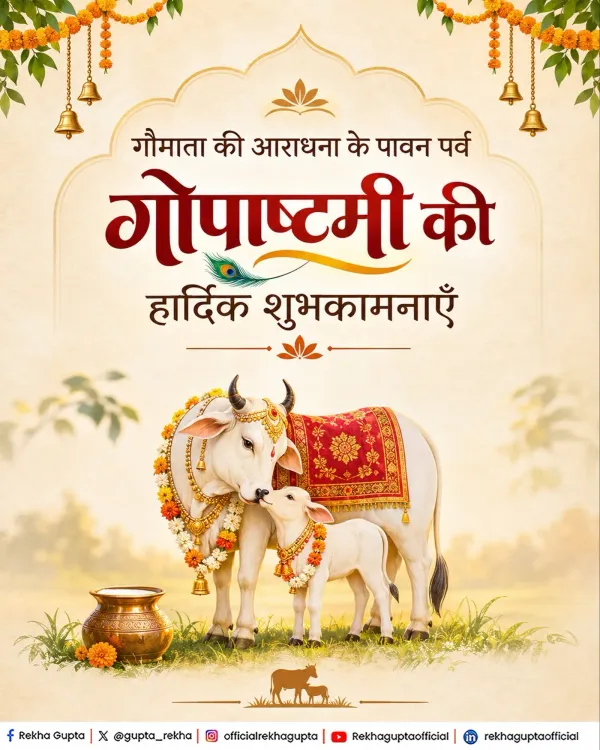
CM Rekha Gupta extends Gopashtami wishes, honours Sanatan tradition
Synopsis
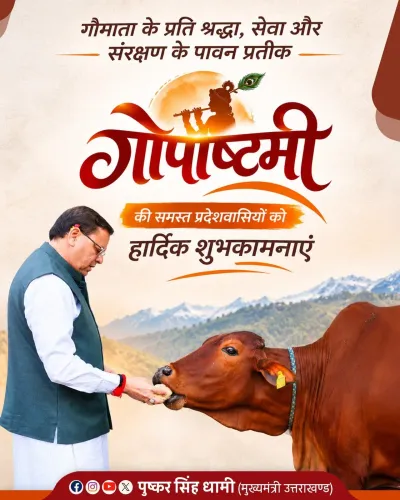
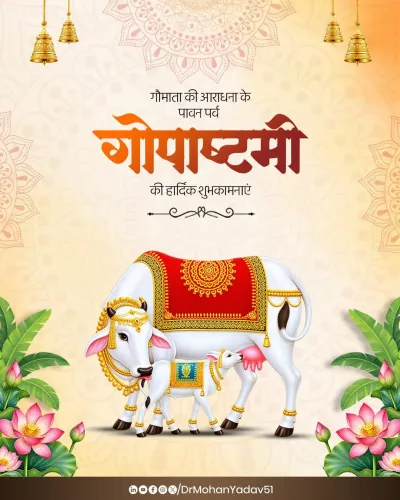
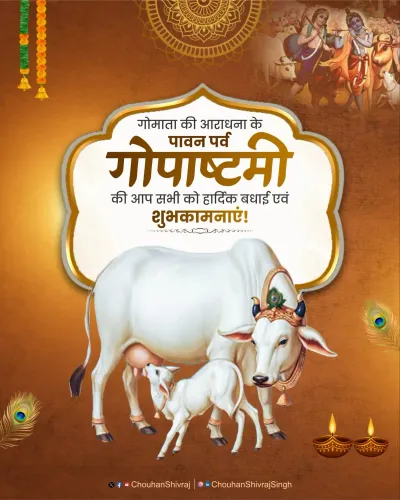
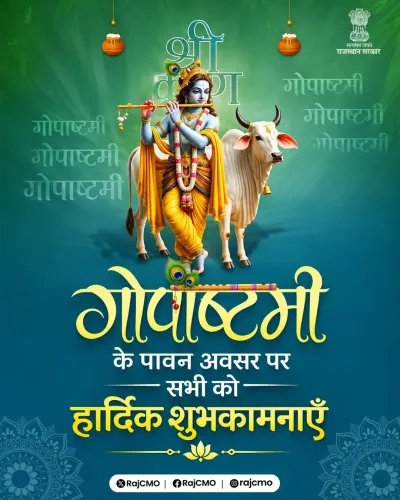
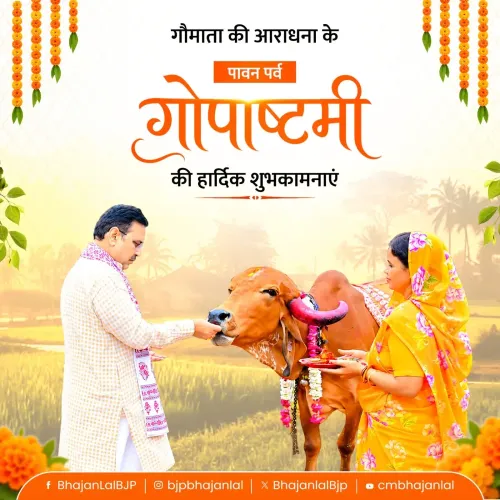
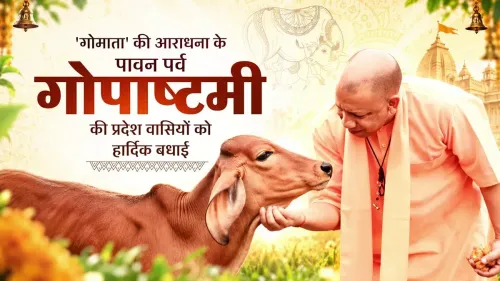
Delhi Chief Minister Rekha Gupta extended Gopashtami greetings on November 17, describing the cow as the living embodiment of affection, compassion and auspiciousness in Sanatan culture, as devotees across India marked the Kartik festival.
Key Takeaways
Delhi CM Rekha Gupta posted Gopashtami greetings on November 17, 2026 .
Gopashtami is observed on the eighth day of the bright fortnight of the Hindu month of Kartik .
The festival commemorates Lord Krishna's formal role as a cowherd and centres on the worship of cows.
Gupta described Gau Mata as the living embodiment of affection, compassion and auspiciousness in Sanatan tradition.
The post reflects the established practice of Indian political leaders engaging publicly with major Hindu observances.
On the auspicious occasion of Gopashtami, Delhi Chief Minister Rekha Gupta extended warm greetings to devotees across the country, invoking the deep spiritual and cultural significance that cows hold in Sanatan tradition.
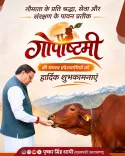
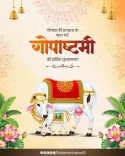
Posting on Tuesday, November 17, the Chief Minister wrote in Hindi: 'गौसेवा, गोभक्ति और पुण्यभाव के पावन पर्व गोपाष्टमी की आप सभी को हार्दिक शुभकामनाएं' — 'Heartfelt greetings to all on the sacred festival of Gopashtami, the festival of cow-service, cow-devotion and pious intent.' She described the cow as the living embodiment of affection, compassion and auspiciousness in Sanatan culture, adding that her feet carry the sanctity of pilgrimages, her service earns spiritual merit, and her presence is divine.
Gopashtami falls on the eighth day of the bright fortnight of the Hindu month of Kartik, commemorating the moment when Lord Krishna formally began his duties as a cowherd. Across India, devotees bathe and worship cows, perform parikrama (circumambulation), and offer prayers at temples and gaushalas on this day. The festival is especially prominent in Mathura, Vrindavan and other sites associated with Krishna's life.
In Sanatan philosophy, the cow — Gau Mata — occupies a singular place as a symbol of nurturing abundance, selfless giving and cosmic purity. The practice of Gauaseva (cow-service) is considered a form of devotion in itself, an expression of gratitude toward a being whose every part is held sacred in the tradition.
Public greetings from elected representatives on Gopashtami are part of a wider pattern of cultural engagement with Hindu observances during the Kartik month, one of the most spiritually significant periods in the Hindu calendar. Chief Minister Gupta's message follows this established tradition, affirming the festival's place in India's shared cultural consciousness.
Point of View
Using festival occasions to reinforce a Sanatan identity among its core voter base. For a Chief Minister who governs a city-state with an outsized symbolic profile, such posts serve a dual function: expressing personal faith and signalling political alignment with the broader Hindutva cultural framework. The practice of issuing festival greetings is universal across parties, but the vocabulary here — Gauaseva, punya, divyata — is deliberate and resonant with a specific ideological register. How leaders calibrate this language often tells us more about electoral positioning than any single policy announcement.
NationPress
17 Nov 2026
Frequently Asked Questions
What is Gopashtami and why is it celebrated?
Gopashtami is a Hindu festival observed on the eighth day of the bright fortnight of Kartik month. It commemorates the day Lord Krishna formally began his duties as a cowherd, and devotees mark it by worshipping cows, visiting gaushalas and offering prayers.
What did Delhi CM Rekha Gupta say on Gopashtami 2026?
Delhi CM Rekha Gupta extended greetings to all citizens, describing the cow as the living embodiment of affection, compassion and auspiciousness in Sanatan culture, and said her service earns spiritual merit while her presence is divine.
When is Gopashtami celebrated in 2026?
In 2026, Gopashtami falls on November 17 , coinciding with the eighth day of the bright fortnight of the Hindu month of Kartik.
What is the significance of Gau Mata in Hindu tradition?
In Sanatan philosophy, the cow — Gau Mata — is revered as a symbol of nurturing abundance, purity and selfless giving. Gauaseva (cow-service) is considered an act of devotion and spiritual merit.
Where is Gopashtami celebrated most prominently in India?
Gopashtami is celebrated across India but is especially prominent in Mathura and Vrindavan , the sites most closely associated with Lord Krishna's life and his role as a cowherd.