CM Rekha Gupta marks International Tiger Day, hails Modi's conservation push

Synopsis
Delhi Chief Minister Rekha Gupta marked International Tiger Day on 29 July 2026 by praising PM Modi's conservation leadership. India's tiger protection framework — anchored by Project Tiger (1973) and the NTCA (2005) — remains a flagship environmental commitment, with the next national tiger census set to test its real-world impact.
Key Takeaways
Delhi CM Rekha Gupta posted on International Tiger Day, 29 July 2026 , reaffirming India's tiger conservation commitment.
She credited Prime Minister Narendra Modi 's leadership for strengthening conservation efforts.
Project Tiger , launched in 1973 , remains India's foundational tiger protection programme.
The National Tiger Conservation Authority was established in 2005 under the Wildlife Protection Act to coordinate nationwide efforts.
Periodic All India Tiger Estimation exercises have tracked population trends since 2006 .
The next national tiger census will be the key indicator of whether current policy is delivering measurable results.
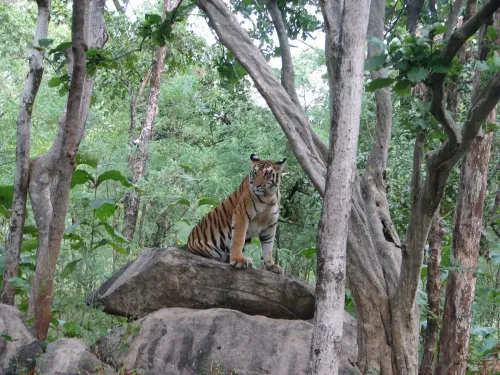
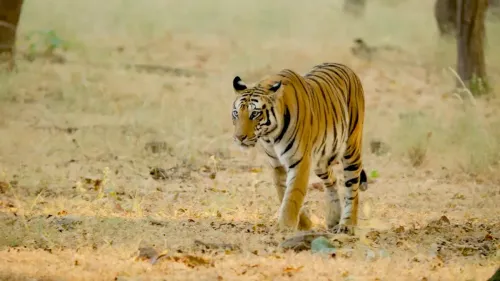
Every 29 July, the world pauses to reckon with a creature that is both apex predator and ecological barometer — and Delhi Chief Minister Rekha Gupta used International Tiger Day 2026 to reaffirm India's conservation pledge, crediting Prime Minister Narendra Modi's leadership for deepening the nation's commitment to protecting its tiger population.
A day with roots in global alarm
International Tiger Day was established to spotlight the precarious state of wild tiger populations worldwide. India, home to the world's largest share of wild tigers, has long been central to that conversation. The country's flagship response — Project Tiger — dates to 1973, when the government designated a network of protected reserves to halt a catastrophic decline in numbers driven by poaching and habitat loss.
That framework was reinforced in 2005 with the creation of the National Tiger Conservation Authority (NTCA), a statutory body under the Wildlife Protection Act tasked with coordinating protection efforts across central and state governments. Periodic All India Tiger Estimation exercises, conducted since 2006, have provided the data backbone for policy decisions.
What Gupta's message signals
In her post, Gupta described tigers as 'the majestic sentinel of India's forests' and framed their protection as inseparable from the nation's broader biodiversity goals — 'Protecting tigers is protecting the rich biodiversity of our nation.' The message aligns with standard BJP political positioning on wildlife conservation, tying environmental stewardship to the Modi government's record.
Conservation in India has historically drawn cross-party support, but annual observances like this one have increasingly become platforms for ruling-party messaging around forest and wildlife policy. Gupta's call for a 'collective effort' gestures at the multi-stakeholder reality of tiger conservation, which involves forest communities and civil society alongside government agencies.
The census that will define the next chapter
The next All India Tiger Estimation will be the real test of whether conservation commitments are translating into population gains on the ground. Results from that exercise — whenever released — will either validate the policy trajectory or force a harder conversation about the gap between political will and ecological outcomes. India's tiger story is still being written.
Point of View
But it reflects a broader pattern of the ruling party anchoring wildlife conservation to the Modi government's identity. India's tiger conservation architecture — Project Tiger and the NTCA — predates the current government, yet successive administrations have claimed ownership of its successes. The real political and ecological test lies in the forthcoming All India Tiger Estimation: strong numbers would validate the government's narrative, while stagnation or decline would invite scrutiny of whether political messaging has outpaced on-ground action. Conservation credibility, ultimately, is built in the forest — not on the timeline.
NationPress
27 Oct 2026
Frequently Asked Questions
When is International Tiger Day celebrated?
International Tiger Day is observed every year on 29 July to raise global awareness about tiger conservation and the threats facing wild tiger populations.
What is Project Tiger in India?
Project Tiger is a centrally sponsored scheme launched in 1973 to establish protected tiger reserves across India and reverse the decline of the tiger population caused by poaching and habitat destruction.
What is the National Tiger Conservation Authority?
The National Tiger Conservation Authority (NTCA) is a statutory body set up in 2005 under the Wildlife Protection Act to oversee, coordinate, and monitor tiger protection efforts across India's reserves.
What is the All India Tiger Estimation?
The All India Tiger Estimation is a periodic national census of wild tigers conducted since 2006 to track population trends and inform conservation policy decisions.
Why did Delhi CM Rekha Gupta post about tigers?
Delhi Chief Minister Rekha Gupta posted on International Tiger Day, 29 July 2026 , to mark the global observance, reaffirm India's conservation commitment, and credit PM Narendra Modi 's leadership in wildlife protection.