CM Rekha Gupta Hails 12 Years of Modi's Security Doctrine
Synopsis
Delhi Chief Minister Rekha Gupta credited PM Narendra Modi's twelve years in office with transforming India's security posture, citing Article 370 abrogation, the Surgical Strikes, Balakot airstrikes, and Operation Sindoor as pillars of a new doctrine of proactive national security.
Key Takeaways
Delhi CM Rekha Gupta posted on June 17, 2026 marking 12 years of PM Modi's national security record under #12YearsOfSurakshitBharat .
Article 370 was revoked in August 2019 , reorganising Jammu and Kashmir into a union territory.
The Surgical Strikes of September 2016 were the first publicly acknowledged Indian cross-LoC operations in the modern era.
The Balakot airstrikes of February 2019 marked the first Indian use of air power across the border since 1971 .
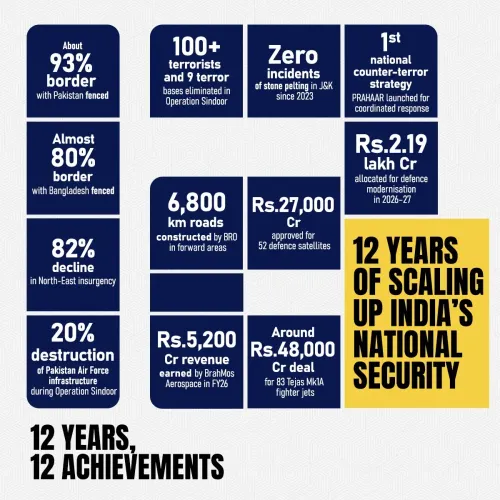
Security conditions in the Red Corridor and Northeast India have improved through a combination of operations and development initiatives since 2014 .
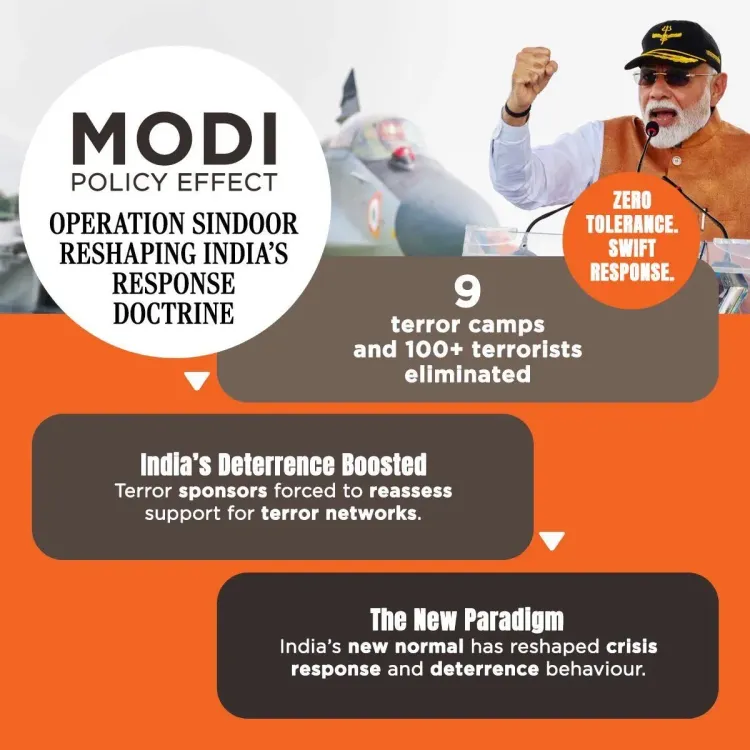
CM Gupta also cited Operation Sindoor ; independent confirmation of that operation's details was not available at publication.
Delhi Chief Minister Rekha Gupta on Wednesday, June 17, 2026, credited Prime Minister Narendra Modi's twelve years in office with fundamentally transforming India's national security posture, citing the abrogation of Article 370, the Surgical Strikes of 2016, the Balakot airstrikes of 2019, and Operation Sindoor as milestones of a new strategic doctrine.
Context
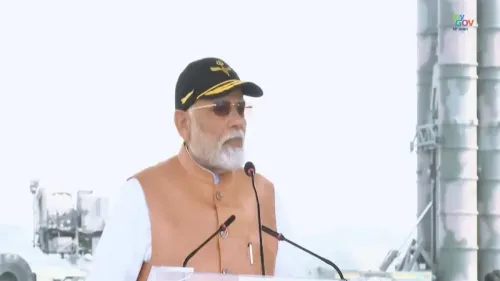
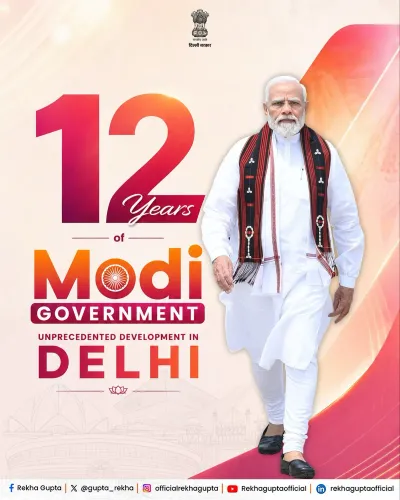
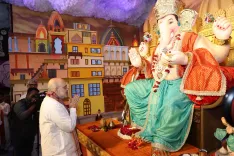
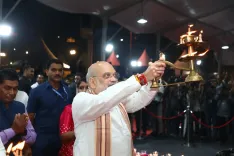
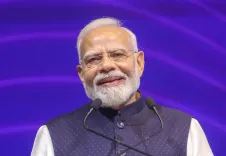
Posting under the hashtag #12YearsOfSurakshitBharat (12 Years of a Secure India), CM Gupta declared that Prime Minister Modi's tenure had 'rewritten the grammar of national security.' She framed the series of actions as evidence that 'Bharat will not wait for justice; Bharat will ensure it' — articulating what she described as a decisive shift from reactive to proactive security thinking. The post was accompanied by four images and was shared on the evening of June 17, 2026.
The tribute coincides with a broader BJP campaign marking twelve years since Narendra Modi assumed office in May 2014, with party leaders across the country amplifying the #12YearsOfSurakshitBharat narrative on social media.
Policy Backdrop
Article 370, which granted special constitutional status to Jammu and Kashmir, was revoked through a presidential order and the Jammu and Kashmir Reorganisation Act in August 2019 — a move the BJP government described as completing national integration. The action remains one of the most consequential constitutional changes of the Modi era.
The Surgical Strikes of September 2016 — cross-LoC operations publicly acknowledged by the government following the Uri attack — and the Balakot airstrikes of February 2019, which targeted a Jaish-e-Mohammed camp in Pakistan after the Pulwama attack, marked the first use of Indian air power across the border since 1971. Both operations were presented by the government as punitive responses to cross-border terrorism. CM Gupta also referenced Operation Sindoor in her post; details of that operation have not been independently confirmed from open sources available at the time of publication.
Beyond the western border, the period from 2014 to 2026 saw a significant reduction in left-wing extremist violence across the Red Corridor — districts in central and eastern India historically affected by Maoist insurgency — as well as multiple peace accords and security operations in Northeast India. The government has attributed these gains to a combination of targeted security operations and accelerated development spending in affected regions.
Stakeholders and Impact
The constituencies most directly affected by the policies CM Gupta cited span a wide geography: residents of Jammu and Kashmir, who have lived under the reorganised union territory framework since 2019; communities in Red Corridor districts where security conditions have measurably changed; and populations in Northeast states where insurgency-related violence has declined. The Indian Armed Forces — Army, Air Force, and intelligence agencies — have been the operational arm of each of the actions mentioned.
Politically, the BJP has consistently used these security milestones as electoral and rhetorical anchors, positioning PM Modi as the architect of a muscular national security state. Opposition parties have at various points contested the scope, timing, and strategic outcomes of these operations, though the broad popular approval for cross-border responses has constrained open criticism.
What's Next
With the #12YearsOfSurakshitBharat campaign underway, expect further statements from BJP chief ministers and central ministers consolidating the party's security narrative ahead of any upcoming electoral cycles. Parliamentary scrutiny of security legislation and the outcomes of ongoing counter-insurgency operations in designated districts will be the substantive tests of the doctrine CM Gupta described. Whether the government formally codifies the principles of pre-emptive or punitive kinetic response into published security doctrine remains an open question that analysts and lawmakers are likely to press.
Point of View
Uri response, Pulwama response) is stitched into a single coherent 'doctrine' narrative that is easier to campaign on than to debate in detail. The framing of India as a nation that 'ensures justice' rather than 'waits for it' is a deliberate rhetorical shift from the pre-2014 defensive posture the party consistently attributes to its predecessors. As the BJP marks twelve years in power, these security anchors serve a dual purpose: consolidating the base and pre-empting opposition attempts to shift the conversation to economic or governance metrics. The inclusion of Operation Sindoor — details of which remain unconfirmed publicly — suggests the party is also signalling recent or ongoing actions as part of the same continuum, raising questions that parliamentary oversight bodies will need to address.
NationPress
17 Sept 2026
Frequently Asked Questions
What is the #12YearsOfSurakshitBharat campaign?
#12YearsOfSurakshitBharat is a BJP social media campaign marking twelve years since Narendra Modi became Prime Minister in May 2014, highlighting the government's national security record including Article 370 abrogation, Surgical Strikes, and Balakot airstrikes.
What were the Surgical Strikes of 2016?
The Surgical Strikes were Indian Army cross-Line of Control operations conducted in September 2016 in response to the Uri attack, publicly acknowledged by the Indian government as targeted action against militant launch pads in Pakistan-administered territory.
What was the Balakot airstrike?
The Balakot airstrike was an Indian Air Force operation in February 2019 targeting a Jaish-e-Mohammed training camp in Balakot, Pakistan, carried out after the Pulwama suicide bombing that killed over 40 CRPF personnel. It was the first Indian air strike across the international border since 1971.
Why was Article 370 revoked?
Article 370 was revoked by the Indian Parliament in August 2019 through a presidential order and the Jammu and Kashmir Reorganisation Act, ending the special constitutional status of Jammu and Kashmir and bifurcating the state into two union territories.
Who is Rekha Gupta and why is she commenting on national security?
Rekha Gupta is the Chief Minister of Delhi and a senior BJP leader. As a chief minister from the ruling party at the Centre, she regularly amplifies the national government's policy record, including on security issues, particularly during campaign milestones such as the twelve-year anniversary of PM Modi's tenure.