CM Rekha Gupta Hails Modi's 12-Year Northeast Transformation

Synopsis
Delhi Chief Minister Rekha Gupta credited PM Narendra Modi with transforming Northeast India over 12 years through major infrastructure investments — including 46,290 km of rural roads, 8 greenfield airports, and ₹95,000 crore in railways — alongside 12 peace accords that brought over 10,000 militants into the mainstream.
Key Takeaways
Delhi CM Rekha Gupta praised PM Narendra Modi for repositioning Northeast India as a national development hub over 12 years .
The post cites construction of more than 46,290 km of new rural roads and development of 8 new greenfield airports in the region.
Railway investment in the Northeast is stated at ₹95,000 crore , aimed at removing longstanding connectivity barriers.
12 peace accords and the return of over 10,000 militants to the mainstream are credited with establishing stability in the region.
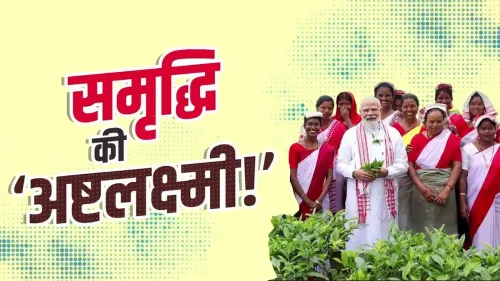
The post invokes the term 'Ashtalakshmi' to frame the eight northeastern states as symbols of national prosperity, not peripheral security concerns.
The messaging aligns with the BJP's Act East Policy narrative, positioning the Northeast as a gateway to Southeast Asia .
Delhi Chief Minister Rekha Gupta on Saturday, June 20, 2026, credited Prime Minister Narendra Modi with repositioning Northeast India from a peripheral frontier into a central pillar of national development, citing sweeping infrastructure investments and peace-building efforts over the past 12 years.
Context
Gupta's post, shared under the hashtag #12YearsOfRisingNorthEast, frames the region's transformation as a direct outcome of political will. She invoked the term 'Ashtalakshmi' ('eight forms of Lakshmi'), a reference Modi has used to describe the eight northeastern states, signalling prosperity and cultural reverence rather than strategic burden. The post marks what appears to be a coordinated BJP messaging exercise commemorating 12 years of the party's policy focus on the region.
Gupta wrote that the Northeast has moved 'beyond the identity of the last border outpost to become the primary foundation of the nation's progress and development journey' — a pointed contrast to decades when the region was treated chiefly as a security problem.
Policy Backdrop
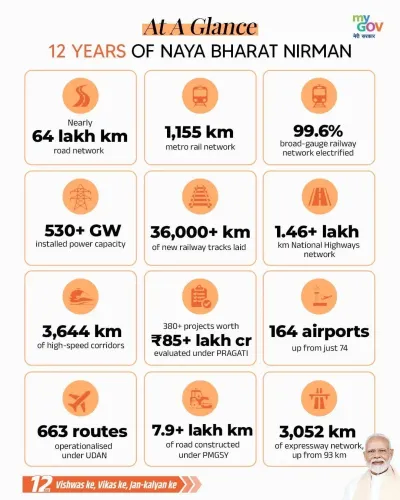
The infrastructure claims in the post are substantial. Gupta cited the construction of more than 46,290 kilometres of new rural roads, the development of 8 new greenfield airports, an expanded inland waterway network, and a railway investment of ₹95,000 crore as evidence of this transformation.
These figures sit within a broader policy lineage. In 2014, the Look East Policy was rebranded as the Act East Policy, deepening economic and strategic connectivity between the Northeast and ASEAN nations. The Ministry of Development of North Eastern Region has since coordinated infrastructure, welfare, and connectivity initiatives across all eight states, with the twin goals of reducing internal isolation and positioning the region as a gateway to Southeast Asia.
Peace Accords and Stability
Gupta also highlighted the security dimension, stating that 12 peace accords and the return of more than 10,000 militants to the mainstream have laid the foundation for a secure future in the region. Notable among the accords cited in the broader policy record is the 2020 Bodo Peace Accord and the 2015 Framework Agreement with the NSCN-IM.
This peace-building narrative reflects a deliberate shift in the government's approach — from a primarily security-focused posture to one that treats large-scale development as an antidote to insurgency. Gupta described the Northeast as now playing 'a decisive role in realising the resolve of a strong, self-reliant, and developed India.'
Stakeholders and Impact
The primary beneficiaries of these changes, if the cited figures hold, are the residents of the eight northeastern states — Arunachal Pradesh, Assam, Manipur, Meghalaya, Mizoram, Nagaland, Sikkim, and Tripura — who have historically faced acute connectivity deficits. Improved road and rail links directly affect access to markets, healthcare, and education.
The trade and tourism sectors also stand to gain significantly. Better connectivity with Southeast Asia opens new corridors for cross-border commerce, while the greenfield airports and waterway networks can support a growing domestic tourism footprint in one of India's most biodiverse and culturally rich regions.
What's Next
Attention will now turn to the pace of completion for remaining rail and multi-modal waterway projects listed in successive Union Budgets, as well as the status of ongoing peace talks with residual insurgent factions. For the BJP, the Northeast has become an electoral and ideological priority — and posts like Gupta's signal that the party intends to keep this narrative prominent as the political calendar advances.
Point of View
Airports, rail investment — the party moves the conversation away from security failures and toward a development dividend narrative. The invocation of 'Ashtalakshmi' is culturally deliberate, recasting eight states long associated with conflict and neglect as auspicious engines of national growth. As the BJP deepens its footprint in the Northeast electorally, such messaging serves both as a record-of-performance claim and a forward-looking promise to a region that has historically felt underserved by Delhi.
NationPress
18 Sept 2026
Frequently Asked Questions
What did Delhi CM Rekha Gupta say about Northeast India?
Rekha Gupta credited PM Narendra Modi with transforming Northeast India over 12 years through major infrastructure investments and peace accords, describing the region as now central to India's national progress rather than a peripheral frontier.
What infrastructure has been built in Northeast India under Modi?
According to Gupta's post, the Northeast has seen more than 46,290 km of new rural roads, 8 greenfield airports, an expanded waterway network, and ₹95,000 crore invested in railways over the past 12 years.
What is 'Ashtalakshmi' in the context of Northeast India?
'Ashtalakshmi' refers to the eight northeastern states — Arunachal Pradesh, Assam, Manipur, Meghalaya, Mizoram, Nagaland, Sikkim, and Tripura — a term PM Modi uses to describe them as eight forms of the goddess Lakshmi, symbolising prosperity.
How many peace accords have been signed in Northeast India since 2014?
Rekha Gupta's post states that 12 peace accords have been signed, with over 10,000 militants returning to the mainstream. Notable accords in the policy record include the 2020 Bodo Peace Accord and the 2015 Framework Agreement with the NSCN-IM.
What is India's Act East Policy and how does it relate to the Northeast?
The Act East Policy, launched in 2014 as a rebrand of the Look East Policy, aims to deepen economic and strategic ties with ASEAN nations by using Northeast India as a connectivity gateway to Southeast Asia.