CM Rekha Gupta Hosts JPC on Constitution Amendment Bills
Synopsis
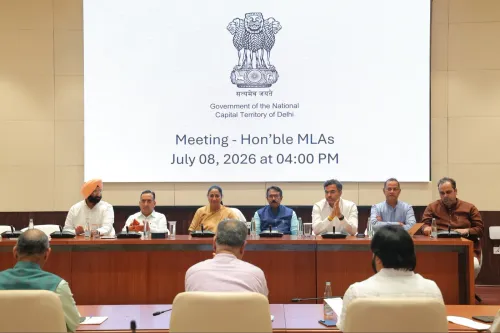
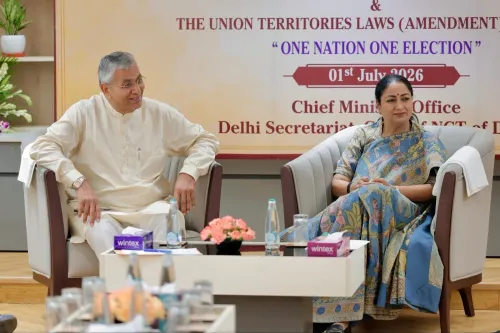
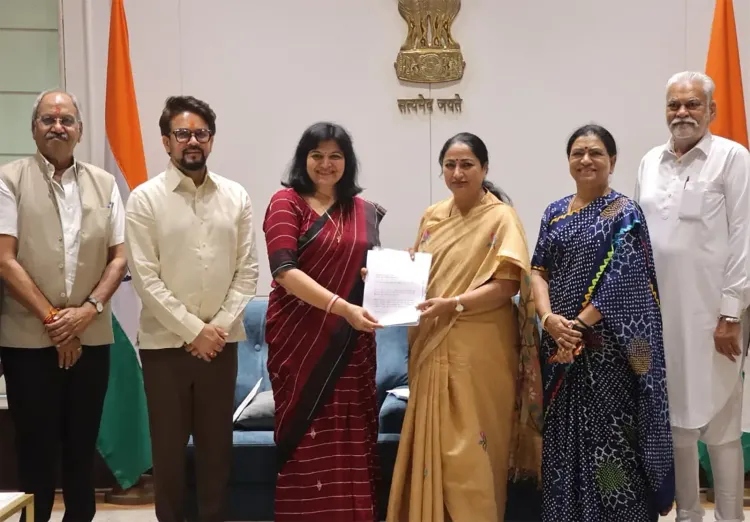
Delhi Chief Minister Rekha Gupta on 17 June 2026 hosted a Joint Parliamentary Committee led by MP Aprajita Sarangi at the Delhi Secretariat. The committee reviewed key provisions of three bills — including the Constitution (130th Amendment) Bill, 2025 — aimed at strengthening transparency and refining Union Territory governance structures.
Key Takeaways
Delhi CM Rekha Gupta welcomed the JPC delegation at the Delhi Secretariat on 17 June 2026 .
The JPC is chaired by BJP MP Aprajita Sarangi and is examining three legislative proposals.
The three bills under review are the Constitution (130th Amendment) Bill, 2025 , the Jammu and Kashmir Reorganisation (Amendment) Bill, 2025 , and the Union Territory Government (Amendment) Bill, 2025 .
The Constitution (130th Amendment) Bill is aimed at strengthening transparency and accountability in public life.
The visit was part of a local study tour by the JPC to gather ground-level inputs before finalising its report.
The JPC report is expected to precede floor debate, likely during the Monsoon Session of Parliament .
Delhi Chief Minister Rekha Gupta on Wednesday, 17 June 2026 welcomed members of a Joint Parliamentary Committee (JPC) at the Delhi Secretariat, hosting a local study visit focused on three significant legislative proposals currently under parliamentary scrutiny. The committee, chaired by BJP MP Aprajita Sarangi, received detailed presentations on key provisions of the bills during the visit.
Context
The JPC delegation visited the Delhi Secretariat as part of a structured local study tour to examine the Constitution (130th Amendment) Bill, 2025, the Jammu and Kashmir Reorganisation (Amendment) Bill, 2025, and the Union Territory Government (Amendment) Bill, 2025. Chief Minister Gupta, in her post on X, described the visit as an occasion to welcome 'माननीय सदस्यों' (honourable members) of the committee chaired by 'सांसद श्रीमती अपराजिता सारंगी जी' (MP Aprajita Sarangi).
During the visit, the committee received a detailed presentation on the major provisions of the three bills. The Chief Minister noted that the Constitution (130th Amendment) Bill aims to 'strengthen public trust by reinforcing transparency and accountability in public life.'
Policy Backdrop
The Jammu and Kashmir Reorganisation Act, 2019 forms the foundational legislation that the 2025 amendment bill seeks to modify. That landmark 2019 law reorganised the erstwhile state of Jammu and Kashmir into two Union Territories — Jammu and Kashmir (with a legislature) and Ladakh (without one) — and the current legislative exercise represents a further layer of administrative fine-tuning to that framework.
The transparency provisions sought through the Constitution (130th Amendment) Bill build on the foundational norms established by the Right to Information Act, 2005. JPCs have historically been deployed by successive governments to enable cross-party scrutiny of complex constitutional and administrative amendments before they proceed to a floor vote, lending the process a degree of legislative consensus-building.
Stakeholders and Impact
The bills, if passed, would directly affect Union Territory administrators, elected representatives in UT legislatures, and citizens seeking accountability from public officeholders. The transparency-focused provisions of the 130th Amendment could reshape disclosure obligations for those in public life across the country.
For Jammu and Kashmir specifically, the reorganisation amendment bill carries implications for the governance architecture of the UT, which has been administered under a distinct legal framework since 2019. Stakeholders including civil society groups and UT-level political parties are expected to closely watch the JPC's final recommendations.
What's Next
The JPC is expected to continue its study visits and consultations before tabling its final report. The report, once submitted, will set the stage for floor debate on all three bills, most likely during the Monsoon Session of Parliament. Should the bills receive presidential assent, related transparency mechanisms and revised UT governance structures would come into effect.
The Delhi Secretariat visit signals that the committee is in an active evidence-gathering phase, engaging with state and UT-level administrations to assess on-ground implications before finalising its recommendations to Parliament.
Point of View
Having a sitting Chief Minister formally receive the committee reinforces the party's stake in the bills' passage. The exercise also reflects Parliament's continuing effort to institutionally process the governance changes set in motion by the 2019 J&K reorganisation, now entering a more granular legislative phase.
NationPress
17 Sept 2026
Frequently Asked Questions
What is the Constitution 130th Amendment Bill 2025 about?
The Constitution (130th Amendment) Bill, 2025 aims to strengthen transparency and accountability in public life, reinforcing public trust in governance institutions. The exact operative clauses are under JPC review and have not yet been made fully public.
Who is chairing the JPC on the Constitution Amendment Bill 2025?
BJP MP Aprajita Sarangi is chairing the Joint Parliamentary Committee examining the Constitution (130th Amendment) Bill, 2025 and the two related UT amendment bills.
Why did the JPC visit the Delhi Secretariat?
The JPC conducted a local study visit to the Delhi Secretariat on 17 June 2026 to receive detailed presentations on the key provisions of the three bills it is scrutinising, as part of its evidence-gathering process before submitting its report to Parliament.
What is the Jammu and Kashmir Reorganisation Amendment Bill 2025?
The Jammu and Kashmir Reorganisation (Amendment) Bill, 2025 proposes changes to the governance framework established by the Jammu and Kashmir Reorganisation Act, 2019, which had bifurcated the erstwhile state into two Union Territories.
When will the JPC report on the amendment bills be tabled?
The JPC report is expected to be tabled ahead of the Monsoon Session of Parliament, after which the three bills — including the Constitution (130th Amendment) Bill, 2025 — are likely to come up for floor debate.