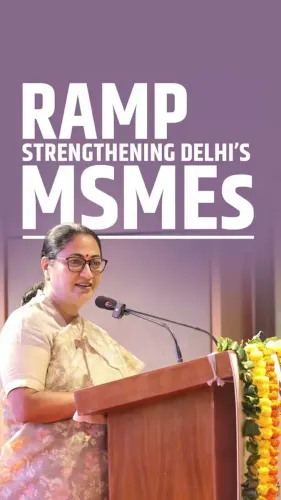
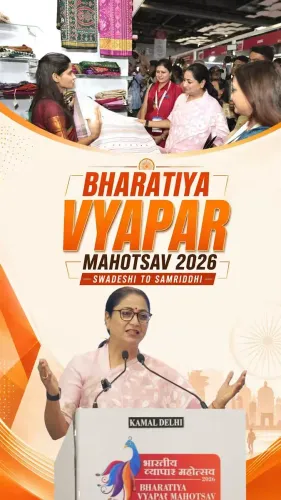
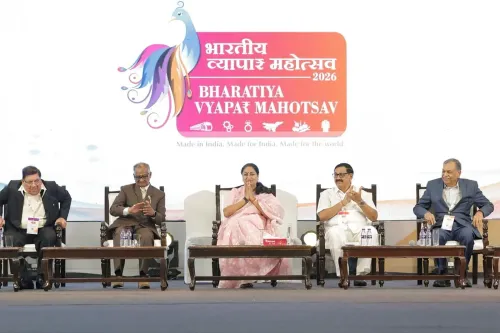
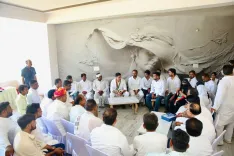
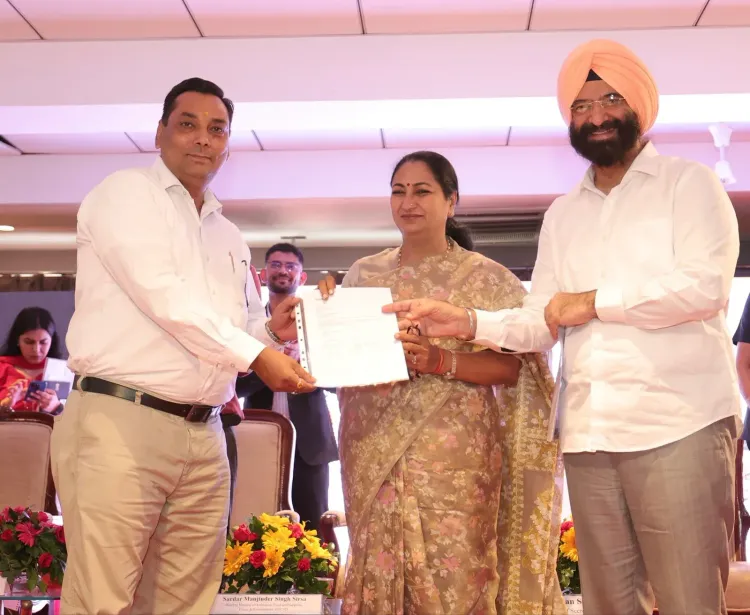
CM Rekha Gupta joins RAMP Mega Capacity Building event in Delhi
Synopsis
Delhi Chief Minister Rekha Gupta attended the RAMP scheme's Mega Capacity Building Programme on 20 August 2026, calling on investors, startups, and entrepreneurs to partner in developing Delhi's MSME sector under the Atmanirbhar Bharat framework.
Key Takeaways
Delhi CM Rekha Gupta participated in the RAMP Mega Capacity Building Programme on 20 August 2026 .
The RAMP scheme (Raising and Accelerating MSME Performance) is a World Bank-supported central programme approved in 2022 to boost MSME capabilities.
Gupta linked the event to PM Modi's Atmanirbhar Bharat initiative, announced in May 2020 , which placed MSMEs at the core of India's self-reliance drive.
Cabinet minister Manjinder Singh Sirsa , industry representatives, MSME entrepreneurs, and startup founders attended the event.
Gupta called on investors, entrepreneurs, and startups to actively participate in building a ' Viksit Delhi .' Delhi's focus areas for MSME growth include skills, technology, finance access, and market linkages.
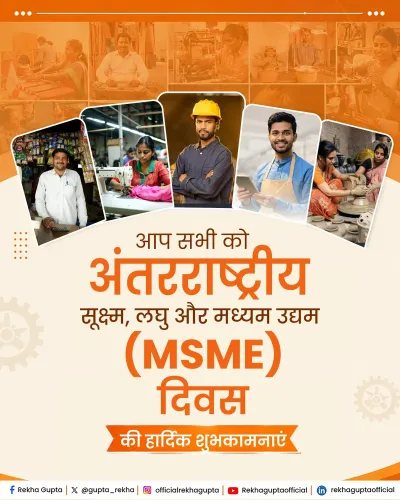
Small businesses are the spine of India's economy — and on Thursday, 20 August 2026, Delhi Chief Minister Rekha Gupta stepped into a room full of MSME entrepreneurs, startup founders, and industry representatives to make that case out loud. Attending the Mega Capacity Building Programme under the RAMP (Raising and Accelerating MSME Performance) scheme, Gupta called on investors and entrepreneurs to become active partners in building a 'Viksit Delhi.'
What RAMP promises Delhi's small enterprises
The RAMP scheme, which received cabinet approval in 2022 as a World Bank-supported programme, is designed to strengthen MSMEs through capacity building, easier access to finance, technology adoption, and market linkages. At its core, it is a delivery mechanism for the broader Atmanirbhar Bharat vision — announced by Prime Minister Narendra Modi in May 2020 — which placed MSMEs at the centre of India's self-reliance push with dedicated credit and policy support.
Gupta invoked that national framework directly, stating that under Modi's leadership, MSMEs are becoming the 'economic strength of Atmanirbhar Bharat.' For Delhi — a dense urban economy with a significant concentration of small manufacturers, traders, and service enterprises — the programme's focus on skills, technology, finance, and market access carries immediate, street-level relevance.
Sirsa, industry reps, and startup founders in the room
The event brought together a cross-section of Delhi's enterprise ecosystem. Cabinet colleague Manjinder Singh Sirsa attended alongside industry representatives, MSME entrepreneurs, and startup founders. The presence of both government and private-sector voices at the same table signals the state's intent to use RAMP's framework not just for policy announcements but for direct stakeholder engagement.
Gupta's call was explicit: investors, entrepreneurs, startups, and industry partners should 'come forward and become partners in building a Viksit Delhi.' The #ViksitDelhi framing mirrors the national Viksit Bharat development vocabulary, anchoring Delhi's industrial ambitions within the Centre's 2047 development horizon.
Delhi's role in last-mile MSME delivery
State-level events like this one are where national MSME policy meets ground reality. Central schemes often struggle with last-mile delivery — the gap between a cabinet-approved programme and an actual small business owner accessing credit or a new market. Delhi's participation in RAMP's capacity-building cycle is a signal that the city administration is positioning itself as an active conduit, not a passive recipient, of central enterprise policy.
The next test will be concrete: whether additional RAMP sessions follow in Delhi, and whether the state budget translates this momentum into measurable incentives for MSMEs and startups. A room full of founders is a start. Policy with teeth is the sequel.
Point of View
Reinforcing ideological continuity between state and national leadership. For a city that has historically seen friction between its government and the Centre over jurisdictional control, this convergence on MSME policy is notable. The real measure of intent, however, will come in subsequent budget allocations and the frequency of RAMP's on-ground delivery in Delhi's dense small-business clusters.
NationPress
5 Oct 2026
Frequently Asked Questions
What is the RAMP scheme in India?
RAMP stands for Raising and Accelerating MSME Performance. It is a central government scheme, backed by the World Bank and approved in 2022, aimed at strengthening MSMEs through capacity building, better access to finance, technology adoption, and market linkages.
What did Delhi CM Rekha Gupta say at the RAMP event?
CM Rekha Gupta said that MSMEs are becoming the economic strength of Atmanirbhar Bharat under PM Modi's leadership, and called on investors, entrepreneurs, startups, and industry partners to come forward and participate in building a Viksit Delhi.
Who attended the RAMP Mega Capacity Building Programme in Delhi?
Delhi CM Rekha Gupta, cabinet minister Manjinder Singh Sirsa, industry representatives, MSME entrepreneurs, and startup founders attended the event on 20 August 2026.
What is Atmanirbhar Bharat and how does it relate to MSMEs?
Atmanirbhar Bharat is PM Narendra Modi's self-reliance initiative announced in May 2020. It included dedicated credit and policy support for MSMEs, positioning them as key drivers of India's economic independence and employment generation.
What is Viksit Delhi?
Viksit Delhi is the Delhi government's development vision, aligned with the national Viksit Bharat framework, focused on building a prosperous, competitive capital city — including through MSME growth, startup support, and industrial investment.