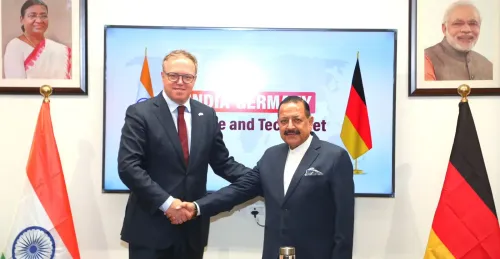
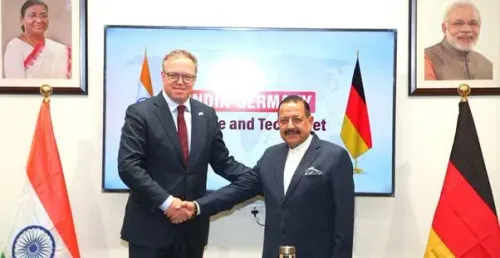
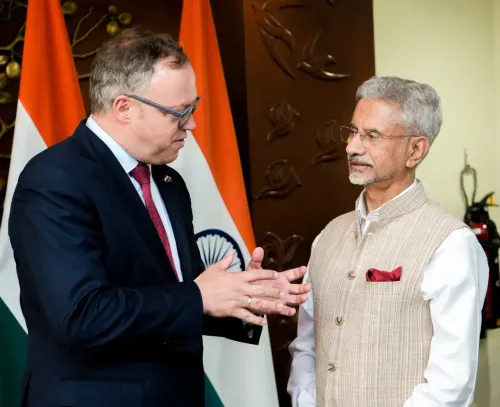
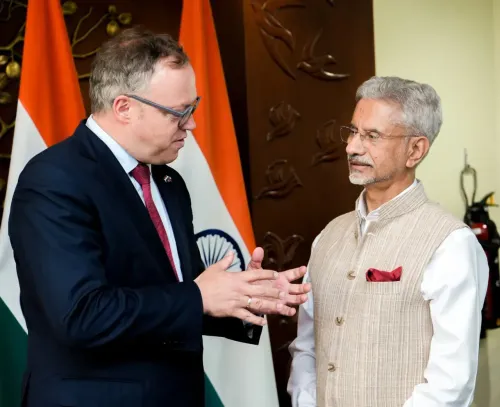
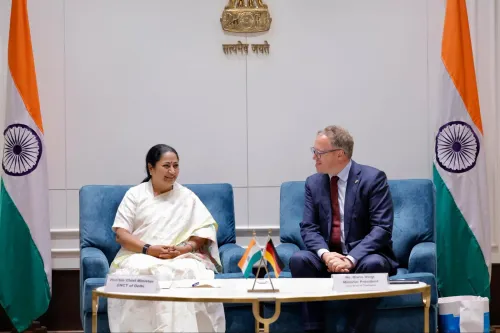
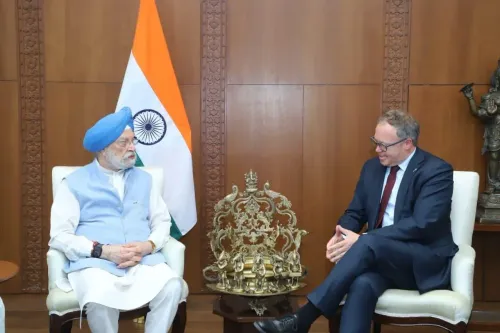
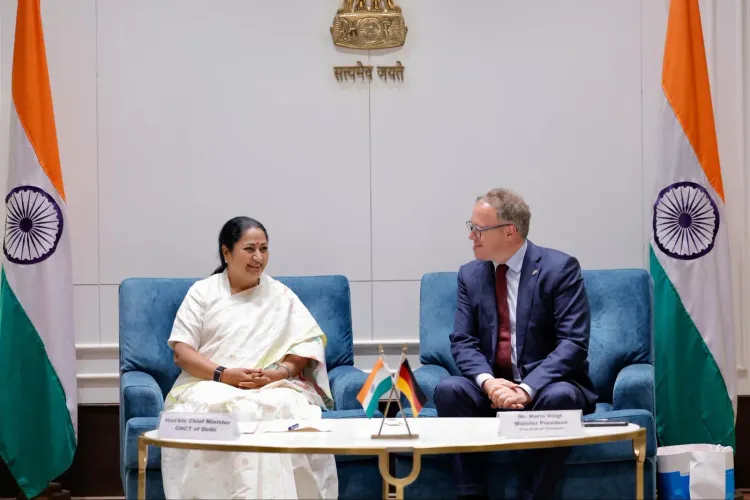
CM Rekha Gupta meets Thuringia Minister-President Mario Voigt
Synopsis
Delhi Chief Minister Rekha Gupta held talks with Thuringia Minister-President Mario Voigt on 1 June 2026, covering smart urban development, digital governance, skill development, and water and environmental technologies as part of the growing India-Germany partnership.
Key Takeaways
Delhi CM Rekha Gupta met Thuringia Minister-President Mario Voigt and his delegation on 1 June 2026 .
Six cooperation areas were discussed: smart urban development, digital governance, skill development, talent mobility, water and environmental technologies, and education.
The meeting builds on the India-Germany Strategic Partnership established in 2000 and annual Intergovernmental Consultations since 2011 .
A 2019 India-Germany Joint Declaration of Intent on sustainable urban development provides the formal policy framework for such engagements.
Delhi's outreach mirrors similar Indian state-level engagements with Bavaria , Baden-Württemberg , and North Rhine-Westphalia .
Possible follow-up MoUs between Delhi agencies and Thuringian institutions on water management and digital governance pilots are anticipated.
Delhi Chief Minister Rekha Gupta met Mario Voigt, Minister-President of the German state of Thuringia, on Monday, 1 June 2026, for discussions on deepening bilateral cooperation across smart urban development, digital governance, skill development, and environmental technologies.
Context
Gupta described the meeting as 'a productive interaction' with Voigt and his accompanying delegation, outlining six priority areas for cooperation: smart urban development and sustainable infrastructure, digital governance and innovation, skill development and talent mobility, mobility and water management, environmental technologies, and education and workforce development.
The Chief Minister framed the engagement within the broader India-Germany partnership, stating that 'under the leadership of Prime Minister Narendra Modi, the India-Germany partnership continues to grow stronger across diverse sectors,' and added that 'Delhi is proud to contribute to this shared journey of innovation, sustainability and human development.'
Policy Backdrop
India and Germany established a Strategic Partnership in 2000, later institutionalised through annual Intergovernmental Consultations beginning in 2011. In 2019, the two countries signed a Joint Declaration of Intent on sustainable urban development and smart cities cooperation, providing a formal framework for city- and state-level engagements of this kind.
Thuringia is a federal state in eastern Germany with established strengths in manufacturing, optics, and automotive supply chains. Mario Voigt, a CDU politician, has served as Minister-President of Thuringia and brings a focus on industrial and technological partnerships to his international engagements.
Delhi's outreach to a German Land (federal state) is part of a broader pattern of Indian sub-national diplomacy. Other Indian states have pursued similar engagements with Bavaria, Baden-Württemberg, and North Rhine-Westphalia, complementing federal-level ties and targeting German investment in infrastructure, green technology, and skills under frameworks such as Make in India and Atmanirbhar Bharat.
Stakeholders and Impact
Delhi's municipal agencies and urban development bodies stand to benefit from knowledge transfers on smart-city infrastructure and digital governance models that Thuringian institutions and German technology firms could provide. Skilled professionals on both sides are also potential beneficiaries through talent-mobility and workforce-development arrangements.
On the German side, Thuringian firms in water management, environmental technology, and digital sectors could gain access to Delhi's large urban market and ongoing infrastructure programmes. The meeting signals Delhi's intent to position itself as a gateway for German sub-national investment into India's capital region.
What's Next
Observers will watch for follow-up memoranda of understanding between Delhi agencies and Thuringian institutions, particularly in water management and digital governance pilots — areas flagged as priorities in the meeting. The next round of India-Germany Intergovernmental Consultations will also be a key moment to see whether state-level commitments from this meeting are elevated to the federal bilateral agenda.
The engagement reinforces Delhi's ambition to be an active participant in India's international economic diplomacy, with the Chief Minister signalling that the capital's smart-city and sustainability agenda aligns closely with the Modi government's foreign-policy priorities.
Point of View
Gupta is simultaneously advancing Delhi's international profile and aligning the BJP-governed capital with the Centre's Make in India and Atmanirbhar Bharat narratives. The choice of Thuringia — a mid-sized eastern German state with manufacturing depth rather than a headline economy like Bavaria — suggests a deliberate search for less-contested, more operationally focused partnerships. If MoUs follow, this meeting could serve as a replicable template for other Indian cities seeking German technological investment outside the traditional bilateral channels.
NationPress
15 Oct 2026
Frequently Asked Questions
Why did Delhi CM Rekha Gupta meet Mario Voigt?
Delhi Chief Minister Rekha Gupta met Thuringia Minister-President Mario Voigt on 1 June 2026 to explore cooperation in smart urban development, digital governance, skill development, water management, environmental technologies, and education.
What is the India-Germany Strategic Partnership?
India and Germany established a Strategic Partnership in 2000, later strengthened with annual Intergovernmental Consultations from 2011 and a 2019 Joint Declaration of Intent on sustainable urban development and smart cities.
What areas did Delhi and Thuringia agree to cooperate on?
The two sides discussed cooperation in smart urban development, sustainable infrastructure, digital governance, innovation, skill development, talent mobility, water management, environmental technologies, and workforce development.
How does Delhi's meeting with Thuringia fit into India's foreign policy?
It is part of India's broader sub-national diplomacy with German federal states, complementing federal-level ties and supporting objectives such as attracting German investment in infrastructure and skills under Make in India and Atmanirbhar Bharat.