CM Rekha Gupta Unveils 'Property Aadhaar Card' Plan for Delhi
Synopsis
Delhi Chief Minister Rekha Gupta has announced the 'Delhi Land Record Bill, 2026', which proposes a scientific survey of all Delhi properties and the issuance of a unique digital 'Property Aadhaar Card' to each, building on the Central government's SVAMITVA scheme already piloted in 30 Delhi villages.
Key Takeaways
Delhi CM Rekha Gupta announced the Delhi Land Record Bill, 2026 on 30 July 2026 .
Every property in Delhi will receive a unique 'Property Aadhaar Card' — a digital, authenticated ownership identifier.
A scientific survey of all of Delhi will be conducted to create digital land records.
The model is based on the Central government's SVAMITVA scheme , already piloted across 30 rural villages in Delhi since 2020 .
The stated goals are to make property transactions more convenient, transparent, and trustworthy .
The bill must still be introduced and debated in the Delhi Legislative Assembly before implementation begins.
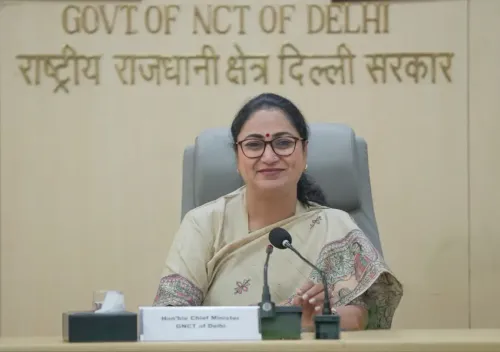
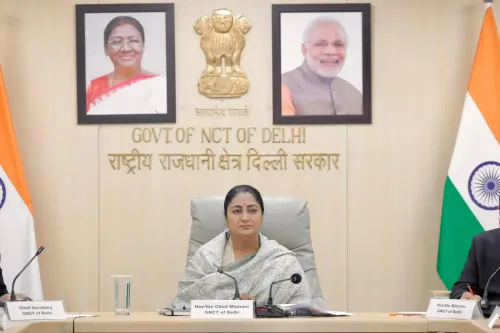
Every property in Delhi may soon carry its own digital identity — the same way every citizen carries an Aadhaar card. Delhi Chief Minister Rekha Gupta announced on Thursday, 30 July 2026 that the Delhi government is preparing to introduce the 'Delhi Land Record Bill, 2026', a sweeping move to digitise and authenticate property ownership records across the capital.
In her post, CM Gupta framed the initiative in deliberately accessible terms: 'जिस तरह आधार कार्ड ने हर नागरिक को एक विश्वसनीय पहचान दी' ['Just as Aadhaar gave every citizen a reliable identity'] — the same logic, she said, will now be applied to land. Under the proposed bill, a scientific survey of all of Delhi will be conducted, digital land records will be prepared, and each property will receive a unique 'Property Aadhaar Card'.
From 30 Villages to the Entire Capital
The plan does not start from scratch. CM Gupta pointed to the SVAMITVA scheme — the Central government's drone-survey programme launched in 2020 to map rural land parcels and issue property cards — as the proven template. The scheme has already been implemented across 30 rural villages in Delhi, providing a working proof of concept before the city-wide rollout. That on-the-ground experience, she said, forms the backbone of confidence behind scaling the model to all of Delhi. SVAMITVA, which stands for Survey of Villages and Mapping with Improvised Technology in Village Areas, used drone technology to create accurate spatial records in areas where land ownership was often contested or undocumented. Extending that methodology into an urban and peri-urban context like Delhi represents a significant escalation in ambition.What a 'Property Aadhaar Card' Would Change
The Aadhaar analogy is deliberate and politically potent. Aadhaar succeeded by giving India's vast, document-poor population a single verifiable credential. Property disputes, by contrast, remain one of India's most persistent legal headaches — clogging civil courts, enabling fraud, and blocking credit access for millions of homeowners who cannot prove clean title. A unique digital identifier for each property, backed by a scientific survey, would in principle make ownership verification faster, reduce scope for fraudulent double-registration, and make property-linked transactions — loans, sales, inheritance — more straightforward. CM Gupta specifically cited that the system will make property-related work 'more convenient, transparent, and trustworthy'. The next critical step is the bill's introduction and debate in the Delhi Legislative Assembly, followed by a phased rollout of surveys and card issuance. How quickly that legislative calendar moves — and how the survey methodology handles Delhi's dense mix of regularised colonies, unauthorised settlements, and contested land — will determine whether the Aadhaar analogy holds up in practice.Point of View
Allowing the BJP-led state government to claim ownership of a digitisation agenda already underway at the national level. Land record modernisation has been a stated priority of successive Indian governments for decades, but urban implementation has consistently lagged behind rural pilots due to the complexity of mixed land-use and informal settlements. If the Delhi Land Record Bill 2026 clears the Assembly and the survey methodology can handle the capital's layered property landscape, it could set a replicable template for other metros. The Aadhaar framing, however, sets a high bar — failure to deliver universal coverage would invite sharp political scrutiny.
NationPress
14 Sept 2026
Frequently Asked Questions
What is the Delhi Land Record Bill 2026?
The Delhi Land Record Bill 2026 is a proposed legislation announced by Delhi Chief Minister Rekha Gupta that would mandate a scientific survey of all properties in Delhi and issue each one a unique digital 'Property Aadhaar Card' to establish verified ownership records.
What is a Property Aadhaar Card?
A Property Aadhaar Card is a unique digital identifier proposed for every property in Delhi, similar in concept to the Aadhaar card for citizens. It is intended to authenticate ownership, reduce disputes, and make property transactions more transparent.
What is the SVAMITVA scheme and how is it connected?
SVAMITVA is a Central government scheme launched in 2020 that uses drone surveys to map rural land parcels and issue property cards. Delhi's proposed bill builds on its successful implementation in 30 rural villages in Delhi as a proven model.
Will the Delhi Land Record Bill 2026 apply to all areas of Delhi?
CM Rekha Gupta's announcement states the system will be implemented across all of Delhi, but the bill must first be introduced and passed in the Delhi Legislative Assembly before any rollout begins.
How will digital land records help Delhi property owners?
Digital land records backed by a scientific survey are intended to simplify ownership verification, reduce fraudulent registrations, speed up property sales and inheritance transfers, and improve access to property-linked credit.