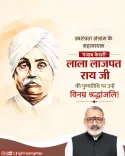
CM Rekha Gupta pays tribute to Lala Lajpat Rai on Martyrdom Day
Synopsis
Delhi Chief Minister Rekha Gupta paid tribute to freedom fighter Lala Lajpat Rai on his martyrdom anniversary, 17 November, honouring his leadership against the Simon Commission and his enduring legacy of Swadeshi, Swaraj, and national sacrifice.
Key Takeaways
Delhi CM Rekha Gupta posted a tribute to Lala Lajpat Rai on his Balidan Diwas, 17 November 2026 .
Lala Lajpat Rai, known as Punjab Kesari , died on 17 November 1928 from injuries suffered in a police lathi charge during anti-Simon Commission protests in Lahore .
The Simon Commission (1928) was boycotted across India because it included no Indian members.
Lajpat Rai was part of the celebrated Lal-Bal-Pal trio alongside Tilak and Bipin Chandra Pal.
His martyrdom directly inspired young revolutionaries including Bhagat Singh , sharpening the independence movement's resolve.
BJP leaders have consistently invoked Lajpat Rai's Swadeshi and Swaraj values in public messaging.
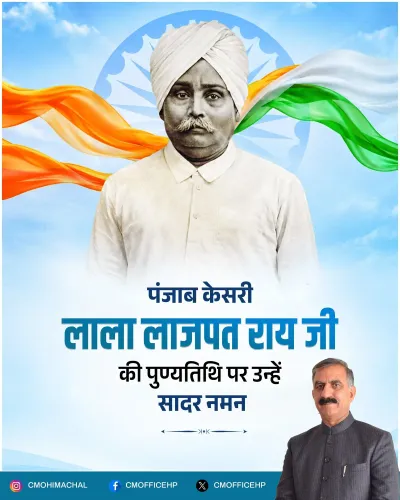
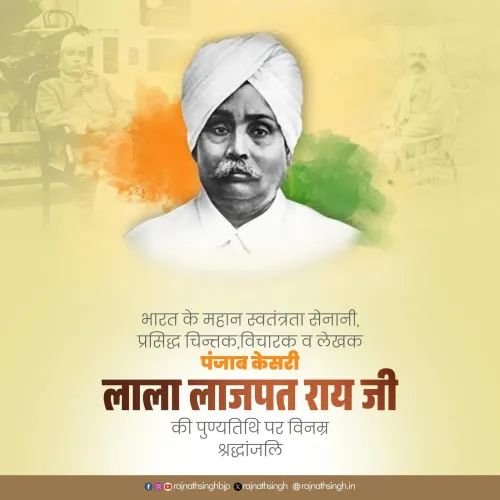
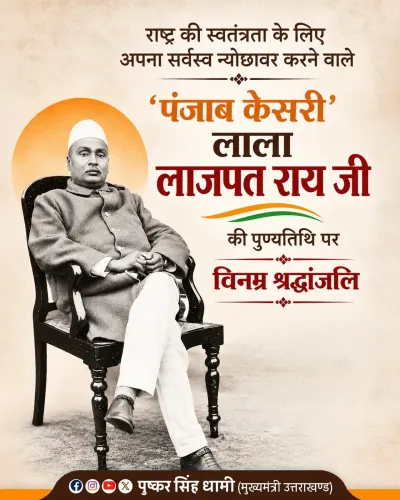
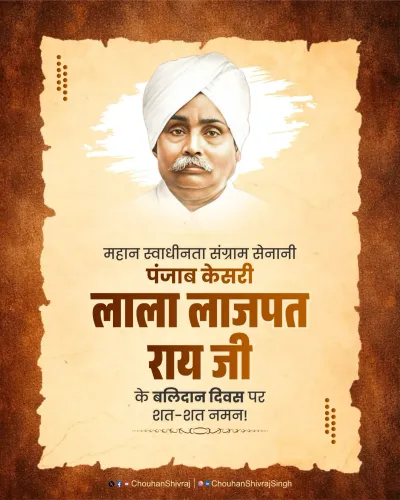
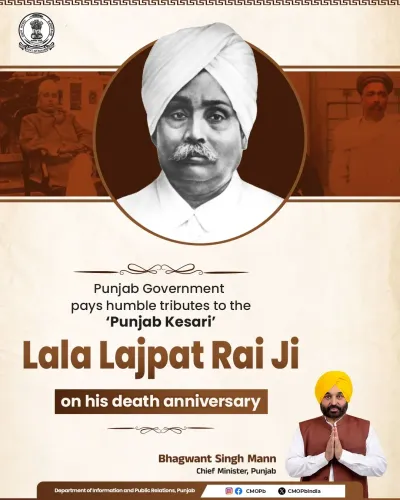
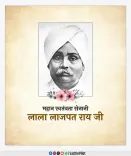
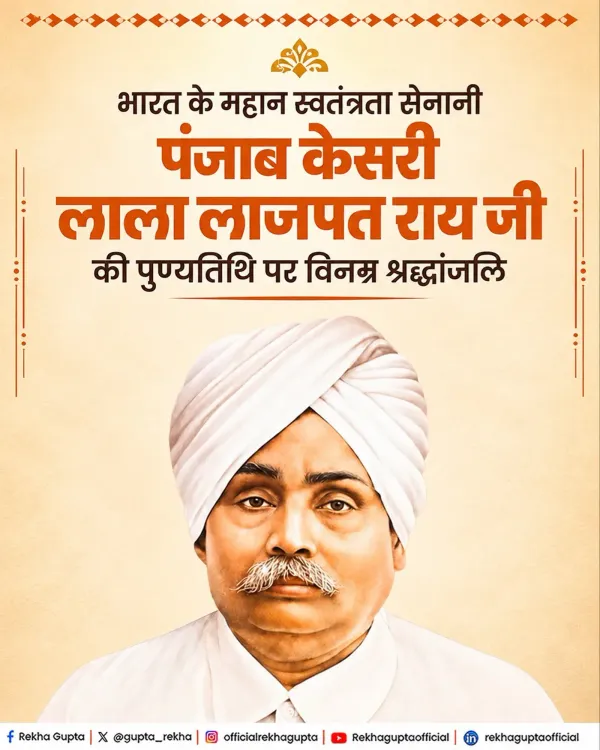
Ninety-eight years after a British lathi charge silenced one of India's loudest voices, Delhi Chief Minister Rekha Gupta marked Lala Lajpat Rai's martyrdom anniversary on 17 November with a heartfelt tribute on X, honouring the freedom fighter's defiance against colonial rule and the flame of independence he lit in an entire generation.
Writing in Hindi, CM Gupta described Lala Lajpat Rai — reverently called 'Punjab Kesari' (the Lion of Punjab) — as one who 'offered everything to break the chains of Mother India's subjugation.' She saluted his legacy of Swadeshi (self-reliance), Swaraj (self-rule), and Rashtrabhakti (patriotism), and recalled how his protest against the Simon Commission was an open challenge to the arrogance of foreign rule.
The lion who roared against the Simon Commission
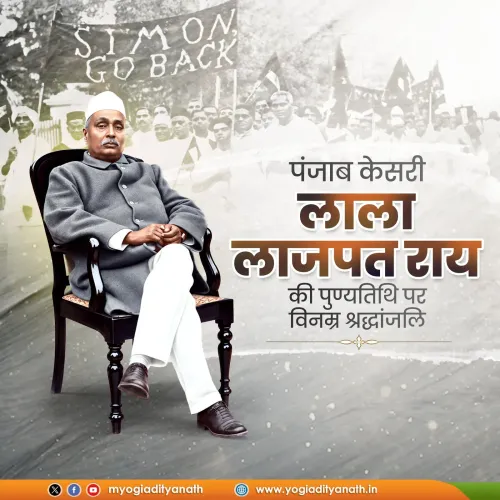
Lala Lajpat Rai, born 28 January 1865, was one of India's foremost mass mobilisers — the 'Lal' in the celebrated Lal-Bal-Pal trio alongside Bal Gangadhar Tilak and Bipin Chandra Pal. When the British government constituted the Simon Commission in 1928 — an all-British parliamentary panel tasked with reviewing constitutional reforms, with not a single Indian member — Lajpat Rai led the street resistance against it.
On 30 October 1928, at Lahore, police superintendent James Scott ordered a brutal lathi charge on the peaceful protesters. Lajpat Rai bore the blows directly and publicly declared: 'Every blow struck on me is a nail in the coffin of British imperialism.' He died on 17 November 1928 from injuries sustained that day — the date now observed each year as his Balidan Diwas (Martyrdom Day).
A sacrifice that ignited the next generation
CM Gupta's tribute underscores a truth historians have long recorded: Lajpat Rai's death did not extinguish the movement — it accelerated it. His martyrdom galvanised young revolutionaries, most notably Bhagat Singh, Sukhdev, and Rajguru, who resolved to avenge the killing and intensified armed resistance against British rule.
Gupta wrote that his sacrifice lit 'such a fierce flame of freedom in the youth of the country that it only strengthened the resolve to end the British Empire.' The tribute closes with the words 'koti-koti naman' — a crore-fold salute — to this great son of Mother India.
BJP's consistent invocation of the Lal-Bal-Pal legacy
Tributes to Lala Lajpat Rai on 17 November have become a fixture in Indian political calendars, with leaders across parties marking the day. BJP figures in particular have frequently invoked Lajpat Rai's emphasis on Swadeshi and Swaraj — values that resonate with the party's economic nationalism messaging. Annual memorial events are held at sites associated with the leader in Delhi and Punjab, keeping his legacy visible in public life.
Nearly a century on, the man who once shook the foundations of an empire continues to shape the vocabulary of Indian politics — and on his martyrdom day, that conversation shows no sign of fading.
Point of View
Allowing BJP leaders to position themselves at the centre of the national memory around 1928's most dramatic martyrdom. That Gupta emphasises the flame lit in India's youth, rather than purely electoral or policy themes, signals an effort to connect the party's contemporary appeal to younger voters with a foundational moment of sacrifice. Lajpat Rai's legacy remains genuinely non-partisan in popular memory, which makes such tributes both politically safe and symbolically potent.
NationPress
17 Nov 2026
Frequently Asked Questions
Who was Lala Lajpat Rai and why is he called Punjab Kesari?
Lala Lajpat Rai was a prominent Indian independence activist born on 28 January 1865 . He earned the title Punjab Kesari (Lion of Punjab) for his fierce leadership of mass movements against British rule, particularly in the Punjab region.
How did Lala Lajpat Rai die?
Lala Lajpat Rai died on 17 November 1928 from injuries sustained during a lathi charge ordered by British police at a protest against the Simon Commission in Lahore on 30 October 1928 .
What was the Simon Commission and why was it opposed?
The Simon Commission was a 1928 British parliamentary panel formed to review constitutional reforms in India. It was widely opposed and boycotted because it had no Indian members , seen as a direct insult to India's right to self-governance.
Why is 17 November observed as Balidan Diwas?
17 November is observed as Balidan Diwas (Martyrdom Day) in memory of Lala Lajpat Rai, who passed away on this date in 1928 after the injuries he sustained during the Simon Commission protests.
What did Delhi CM Rekha Gupta say about Lala Lajpat Rai?
CM Rekha Gupta described Lala Lajpat Rai as one who offered everything to break the chains of Mother India's subjugation, and said his sacrifice lit a fierce flame of freedom in India's youth that strengthened the resolve to end British rule.