CM Hemant Soren Announces Police Residential School, Health Facility
Synopsis
Chief Minister Hemant Soren announced on June 25, 2026 that Jharkhand will build a dedicated residential school and health facility for its police department, urging joint effort from both the force and the government to achieve these goals.
Key Takeaways
The Chief Minister's Office of Jharkhand announced a decision to build a separate residential school exclusively for the police department.
A dedicated health facility for police personnel is also to be established as part of the same announcement.
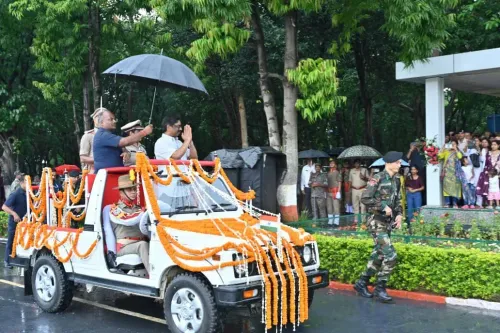
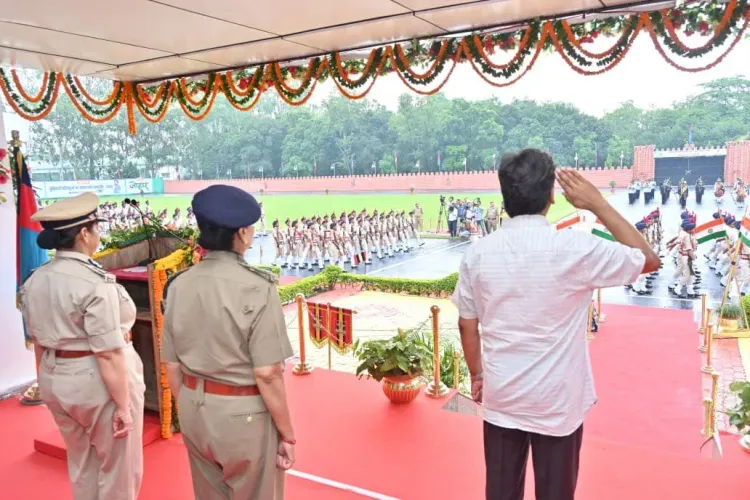
CM Hemant Soren addressed police jawans at a parade event, extending best wishes for their 'excellent parade.' Soren called for joint effort from both the government and police personnel to reach shared goals.
Both welfare measures target police families in Jharkhand , a state with significant internal security demands due to left-wing extremism in several districts.
Budgetary allocations and land acquisition details for the proposed facilities are yet to be announced.
The Chief Minister's Office of Jharkhand, citing remarks by Chief Minister Hemant Soren, announced on Thursday, June 25, 2026 that the state government has decided to establish a dedicated residential school and a separate health facility for the police department, with Soren urging both the force and the government to work together toward shared goals.
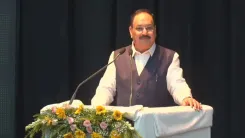
Addressing police personnel at what appeared to be a parade event, CM Soren said, 'पुलिस विभाग के लिए अलग से आवासीय विद्यालय बनाने का निर्णय लिया है' ('A decision has been taken to build a separate residential school for the police department'). He added that a dedicated health facility would also be established, and extended his best wishes to all jawans for an 'excellent parade.'
Context
The announcement was made during what the CMO's post indicates was a police parade ceremony, a routine occasion at which senior leadership reviews force readiness and announces welfare measures. Soren's remarks combined a forward-looking infrastructure commitment with a motivational message: 'निश्चित रूप से एक-एक करके हम अपनी मंजिलों तक पहुंचे' — 'Certainly, one by one, we will reach our destinations, and for that, both your effort and the government's effort are needed.'
The statement reflects a dual thrust: institutional investment in schooling and healthcare for police families, and an appeal for shared accountability between the force and the elected government.
Policy Backdrop
Jharkhand has historically faced significant internal security challenges, including left-wing extremism in its forested districts, making police welfare a recurring policy priority for successive state administrations. Chief Minister Hemant Soren, who leads the Jharkhand Mukti Morcha and has been in office since 2019, has periodically announced housing, training and welfare upgrades for the state's security forces.
Nationally, state police modernisation has been a focus since the early 2000s, with central schemes encouraging states to invest in residential infrastructure, health services and training facilities for personnel. A dedicated residential school would address the educational needs of police families, particularly those posted in remote or insurgency-prone areas where quality schooling is limited.
Stakeholders and Impact
The primary beneficiaries of both announcements — the residential school and the health facility — are Jharkhand Police personnel and their families. For jawans posted far from urban centres, access to quality education for children and reliable healthcare are persistent concerns that affect retention and morale.
A dedicated residential school would reduce dependence on civilian institutions, while a separate health facility would provide faster, force-specific medical access. Together, these measures are consistent with the broader pattern of state governments in insurgency-affected regions using welfare infrastructure to strengthen force cohesion and operational effectiveness.
What's Next
The concrete impact of these announcements will hinge on budgetary allocations and land acquisition decisions in upcoming Jharkhand Legislative Assembly sessions or in the state's annual police modernisation plans. Details on the location, scale and timeline of both the residential school and the health facility are yet to be made public.
If implemented as announced, these facilities would mark a meaningful expansion of dedicated welfare infrastructure for Jharkhand Police — a force that operates in one of India's most demanding security environments — and could set a template for other states balancing security demands with personnel welfare.
Point of View
The move also carries political utility — police welfare is a visible, populist commitment that resonates with a large, organised constituency. The emphasis on mutual effort ('both your effort and the government's') is a calibrated message that frames the state as a partner rather than a patron. Whether these commitments translate into funded, time-bound projects will be the real test — Jharkhand has a history of announced police welfare schemes that have moved slowly through implementation.
NationPress
25 Jun 2026
Frequently Asked Questions
What did CM Hemant Soren announce for Jharkhand Police?
CM Hemant Soren announced that the Jharkhand government has decided to build a dedicated residential school and a separate health facility for police department personnel and their families.
Why is a residential school being built for Jharkhand Police?
A dedicated residential school aims to provide quality education for children of police personnel, many of whom are posted in remote or insurgency-affected areas where access to good schooling is limited.
What health facility is being set up for Jharkhand Police?
The Jharkhand government has announced a separate health facility specifically for police personnel, intended to provide faster and more accessible medical care to the force.
When did CM Soren make this police welfare announcement?
The announcement was made on Thursday, June 25, 2026 , during what appeared to be a police parade event, as shared by the official Jharkhand Chief Minister's Office account on X.
What is the current status of the Jharkhand Police residential school project?
As of the announcement, the decision has been stated but specific details on location, scale, timeline and budgetary allocation for the residential school and health facility are yet to be made public.