CM Hemant Soren Hails Jharkhand Adivasi Mahotsav on World Indigenous Day
Synopsis
On World Indigenous Peoples' Day, Jharkhand CM Hemant Soren addressed the annual Adivasi Mahotsav, framing it as a resolve for tribal existence, identity and rights — anchored in the enduring demand for jal, jungle, zameen and self-rule under the Abua Dishum Abua Raj vision.
Key Takeaways
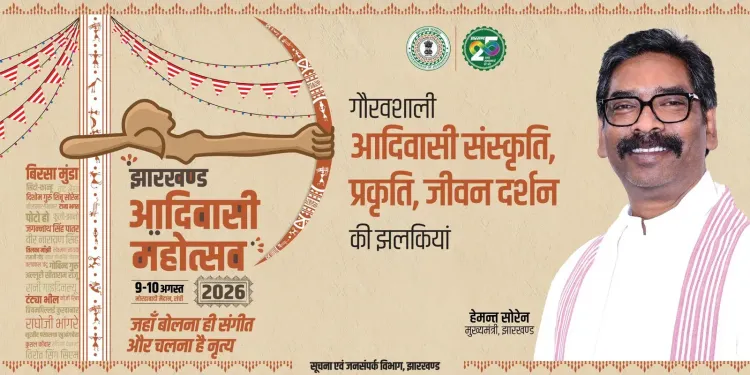
Jharkhand CM Hemant Soren marked the annual Adivasi Mahotsav on 9 August 2026 , coinciding with World Indigenous Peoples' Day .
Soren described the festival as a celebration not just of culture but of 'resolve towards existence, identity and rights.' He invoked the Abua Dishum, Abua Raj slogan — 'Our Land, Our Rule' — the foundational demand of the Jharkhand Mukti Morcha.
The post referenced jal, jungle, zameen (water, forest, land) — the core of tribal land-rights politics in Jharkhand.
Jharkhand was created in November 2000 after decades of tribal mobilisation for self-determination.
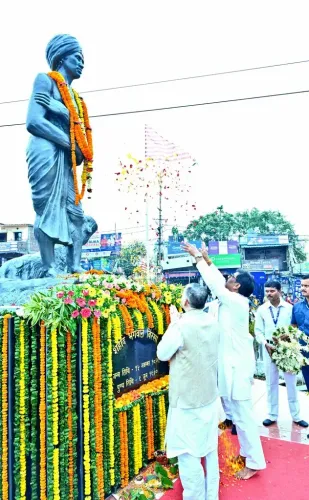
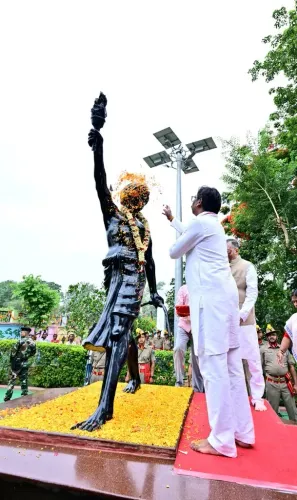
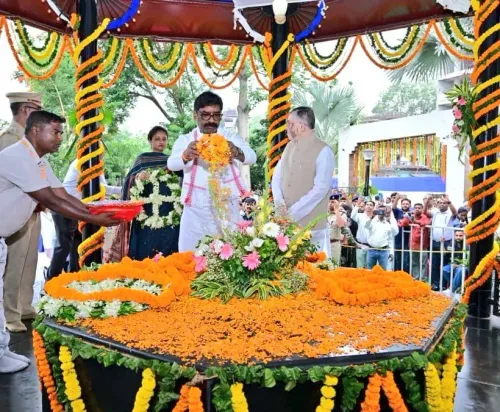
Soren paid tribute to tribal martyrs, situating the festival within a long history of indigenous resistance.
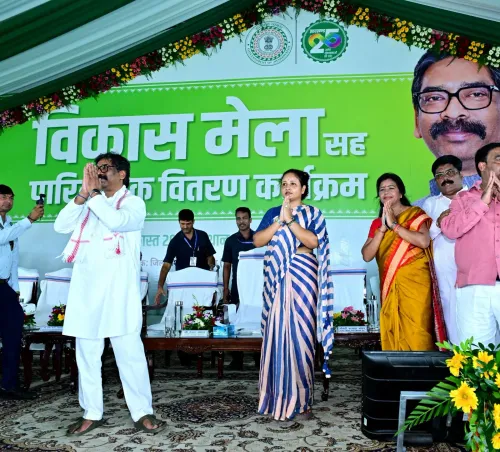
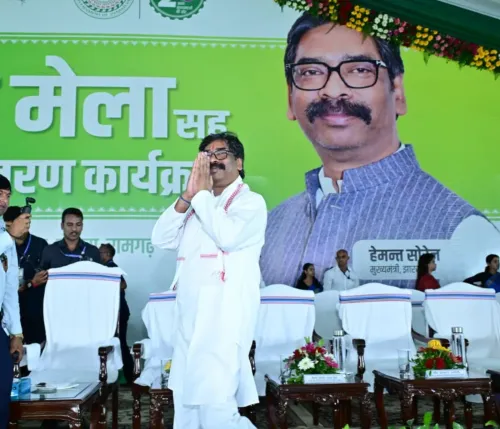
On the one day the world pauses to honour indigenous peoples, Jharkhand Chief Minister Hemant Soren used the occasion to do something more than celebrate — he framed an entire civilisational argument. Marking the Jharkhand Adivasi Mahotsav on World Indigenous Peoples' Day, 9 August 2026, Soren declared that the land of Jharkhand has given the world a philosophy where 'nature is worshipped, community is paramount, and culture is life itself.'
Posting in Hindi on X, Soren extended greetings with the traditional salutation Johar and welcomed all to the annual festival. 'This festival is not merely a celebration of our rich tribal culture, tradition and heritage,' he wrote, 'but also a celebration of our resolve towards our existence, identity and rights.' The message was warm in tone but deliberate in weight.
Abua Dishum, Abua Raj — the slogan that carries decades
The closing line of Soren's post was not decorative. Abua Dishum, Abua Raj — 'Our Land, Our Rule' in the Santali language — is the defining slogan of the Jharkhand Mukti Morcha, the party Soren leads as executive president. It is also the name of a flagship housing scheme his government launched, a deliberate act of branding that ties welfare delivery to the older demand for tribal self-determination. Jharkhand was carved out of Bihar in November 2000 after decades of tribal mobilisation centred on exactly this demand: that indigenous communities should govern their own land, forests and resources. The slogan did not retire after statehood. It sharpened.Jal, Jungle, Zameen — the rights still being fought
Soren's invocation of jal, jungle, zameen — water, forest, land — is a reference to a struggle that predates the state itself. The Scheduled Tribes and Other Traditional Forest Dwellers (Recognition of Forest Rights) Act, 2006 was a legislative attempt to record and protect community rights over forest land. In Jharkhand, with one of India's largest Scheduled Tribe populations, the implementation of that Act — and resistance to mining leases and land acquisition that cut across tribal holdings — remains a live political fault line. Soren did not announce a policy on Sunday. But by placing jal, jungle, zameen at the centre of a cultural festival address, he signalled that the Adivasi Mahotsav is not a folk fair — it is an annual staking of political ground.World Indigenous Peoples' Day and Jharkhand's global framing
9 August is observed globally as World Indigenous Peoples' Day, established by the United Nations to spotlight the rights, cultures and achievements of indigenous communities worldwide. For JMM-led governments in Jharkhand, aligning the state's premier tribal festival with this international date has been a consistent act of positioning — connecting a local identity assertion to a global rights framework. Soren closed with a tribute to the state's martyrs — 'Jharkhand ke veer shaheed amar rahein' ('Long live the brave martyrs of Jharkhand') — a nod to the generations of tribal leaders and activists whose resistance made the state possible. The kicker was 'Jai Jharkhand.' The martyrs are remembered. The slogan endures. The festival, Soren made clear, is where both live.Point of View
And a tribal festival doubles as a sovereignty statement. By pairing the international legitimacy of World Indigenous Peoples' Day with the domestic slogan Abua Dishum Abua Raj, the CM positions Jharkhand's tribal identity within a global rights framework — a move that strengthens his base while pre-empting any narrative that frames land and forest disputes as mere development friction. With forest-rights implementation and mining lease pressures still unresolved, this annual address is as much a political signal to New Delhi as it is a message to Jharkhand's Adivasi communities.
NationPress
9 Aug 2026
Frequently Asked Questions
What is the Jharkhand Adivasi Mahotsav?
The Jharkhand Adivasi Mahotsav is an annual state festival celebrating the culture, traditions and heritage of Jharkhand's indigenous tribal communities. It is held on or around World Indigenous Peoples' Day on 9 August.
What does Abua Dishum Abua Raj mean?
'Abua Dishum, Abua Raj' is a Santali phrase meaning 'Our Land, Our Rule.' It is the founding slogan of the Jharkhand Mukti Morcha and represents the tribal demand for self-governance and control over indigenous land and resources.
Why is World Indigenous Peoples' Day observed on 9 August?
The United Nations designated 9 August as World Indigenous Peoples' Day to mark the first meeting of the UN Working Group on Indigenous Populations in 1982. It is observed globally to highlight indigenous rights, cultures and challenges.
What is jal jungle zameen in the context of Jharkhand?
'Jal, jungle, zameen' — water, forest, land — is the central demand of tribal rights movements in Jharkhand and across India, asserting that indigenous communities must have control over the natural resources on which their lives and livelihoods depend.
When was Jharkhand formed and why?
Jharkhand was carved out of Bihar on 15 November 2000 after decades of tribal mobilisation demanding a separate state that would give indigenous communities greater control over their land, forests and political representation.