CM Hemant Soren Pays Tribute to Birsa Munda
Synopsis
Jharkhand Chief Minister Hemant Soren on 9 June 2026 invoked the Ulgulan legacy of Birsa Munda, honouring the 19th-century tribal leader as a symbol of Adivasi self-respect, cultural identity, and the struggle for rights — a tribute consistent with the JMM's foundational political narrative.
Key Takeaways
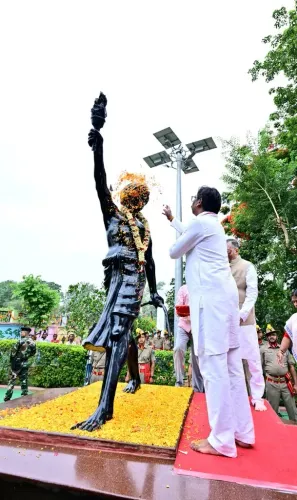
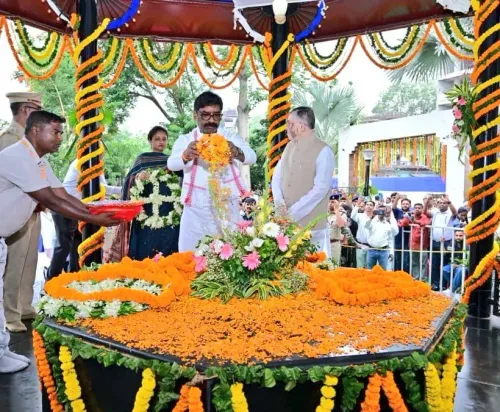
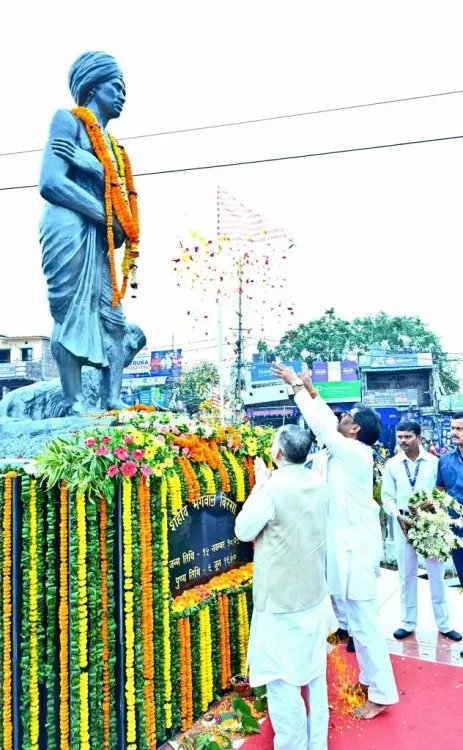
Hemant Soren posted a tribute to Birsa Munda on 9 June 2026 , accompanied by two images.
He invoked the Ulgulan rebellion of 1899–1900 , calling Birsa Munda the symbol of Adivasi self-respect and the 'torch of struggle.' Birsa Munda , known as Dharti Aaba , led the Chotanagpur uprising against British colonial forest laws and tribal exploitation.
Jharkhand was formed on 15 November 2000 , a date that also marks Birsa Munda Jayanti , cementing his legacy in the state's identity.
The tribute reinforces the JMM's political positioning as the inheritor of Adivasi rights movements in central India.
Major state commemorations tied to Birsa Munda are expected around 15 November each year.
Jharkhand Chief Minister Hemant Soren on Tuesday, 9 June 2026, paid homage to tribal icon Birsa Munda, invoking the spirit of the Ulgulan movement and calling the 19th-century leader a symbol of Adivasi identity, culture, and the struggle for rights.
Context
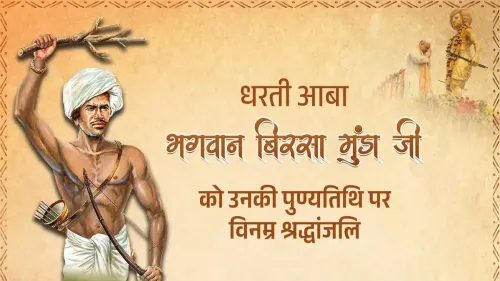
Posting on X, Soren wrote in Hindi: 'Ulgulan ki chetna, sangharsh ki mashaal aur jan-jan ke swabhiman ke pratik Dharti Aaba Bhagwan Birsa Munda' — translating to: 'The consciousness of Ulgulan, the torch of struggle, and the symbol of the self-respect of every person, Dharti Aaba Bhagwan Birsa Munda.' He added that Birsa Munda's life and sacrifice 'will always inspire generations to come,' closing with the salutation 'Jai Birsa!'
The post was accompanied by two images. The tribute underscores Soren's consistent positioning of his government and the Jharkhand Mukti Morcha (JMM) as inheritors of the Adivasi rights tradition that Birsa Munda embodied.
Policy Backdrop
Birsa Munda, revered as Dharti Aaba (Father of the Earth), led the Ulgulan rebellion of 1899–1900 in the Chotanagpur region against British colonial forest laws and the exploitation of tribal communities. His movement became a foundational reference point for Adivasi political identity across central India.
The creation of Jharkhand as a separate state on 15 November 2000 — a date that also marks Birsa Munda Jayanti, his birth anniversary — was itself the culmination of decades of Adivasi assertion rooted in that legacy. The JMM, founded in 1972, has consistently invoked Birsa Munda's memory to frame its politics around tribal land rights, cultural autonomy, and resistance to displacement.
Stakeholders and Impact
For Jharkhand's large Adivasi population — who constitute a significant share of the state's electorate — such tributes carry both cultural and political weight. Soren, as executive president of the JMM, uses the imagery of Birsa Munda to reinforce the party's identity as a guardian of tribal rights against encroachment on land and forest resources.
Tribal youth organisations and cultural bodies across Jharkhand, Odisha, West Bengal, and Chhattisgarh — states with significant Munda and Ho communities — regard Birsa Munda as a pan-Adivasi symbol, giving such commemorations resonance well beyond the state's borders.
What's Next
The most significant marker on the Jharkhand government's calendar tied to Birsa Munda remains 15 November, which simultaneously observes Birsa Munda Jayanti and Jharkhand Foundation Day. State-level events, policy announcements, and welfare scheme launches for Adivasi communities are typically clustered around that date each year.
Tuesday's tribute signals that the Soren administration will continue to anchor its political narrative in the Ulgulan tradition — a framing that is likely to intensify as the state approaches any major electoral or legislative cycle.
Point of View
Soren signals to Adivasi constituencies that tribal cultural sovereignty remains central to his administration's self-understanding. This framing also serves as a preemptive assertion in a state where multiple political actors compete for Adivasi support. The consistency of such tributes across the JMM's leadership suggests a deliberate, long-term narrative strategy rather than reactive commemoration.
NationPress
23 Oct 2026
Frequently Asked Questions
Who is Birsa Munda and why is he important in Jharkhand?
Birsa Munda was a 19th-century Adivasi leader from the Chotanagpur region who led the Ulgulan rebellion of 1899–1900 against British colonial forest laws and tribal exploitation. He is revered as 'Dharti Aaba' (Father of the Earth) and is a foundational symbol of Adivasi identity; Jharkhand's formation day on 15 November also marks his birth anniversary.
What is the Ulgulan movement?
The Ulgulan was an armed uprising led by Birsa Munda in 1899–1900 in present-day Jharkhand, directed against British colonial authorities and landlords who had encroached on tribal lands and forests. The word 'Ulgulan' means 'great tumult' or 'rebellion' in the Mundari language.
Why did Hemant Soren pay tribute to Birsa Munda in June 2026?
Chief Minister Hemant Soren posted the tribute on 9 June 2026, honouring Birsa Munda's legacy of Adivasi cultural assertion and resistance. The exact occasion for the June post was not specified; tributes to Birsa Munda are a recurring feature of JMM political communication throughout the year.
What is the Jharkhand Mukti Morcha and its connection to Birsa Munda?
The Jharkhand Mukti Morcha is a regional political party founded in 1972 that advocates for tribal rights and was central to the movement for a separate Jharkhand state. The party, led by Hemant Soren, positions itself as the political inheritor of Birsa Munda's legacy of Adivasi autonomy and resistance.
When is Birsa Munda Jayanti celebrated?
Birsa Munda Jayanti is celebrated on 15 November each year, which also marks Jharkhand Foundation Day — the date the state was formally carved out in 2000. It is the most significant day for state-level commemorations of his legacy.