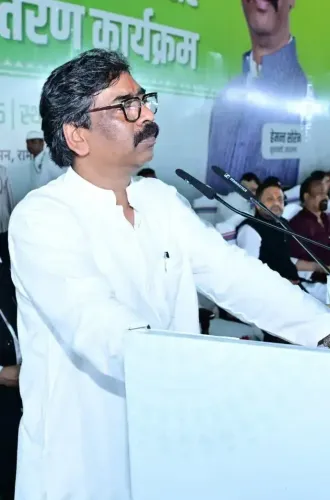
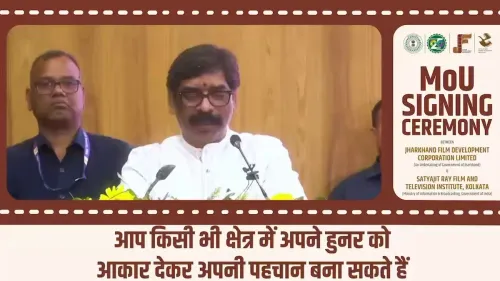
CM Hemant Soren seeks youth input on Jharkhand exam reforms
Synopsis
Jharkhand CM Hemant Soren says over 8,500 students have submitted suggestions on examination reform through the state's 'Chhatron Ki Baat' portal, covering OMR handling, exam calendars, JPSC processes, and transparency — and he is urging more youth to participate.
Key Takeaways
Over 8,500 students have submitted suggestions on Jharkhand's exam reform portal samvad.jharkhand.gov.in as of 11 August 2026.
The campaign, 'Chhatron Ki Baat — Chhatron Ke Saath' , covers OMR sheets, exam calendars, scorecards, question-paper integrity, and technology use.
Reforms are explicitly scoped to include the Jharkhand Public Service Commission (JPSC) within constitutional limits.
CM Hemant Soren framed the exercise as a jan-bhaagidaari (people's participation) reform, not a top-down government action.
The key watch-point is whether suggestions translate into concrete rule or calendar changes in the 2026–27 JPSC exam cycle .
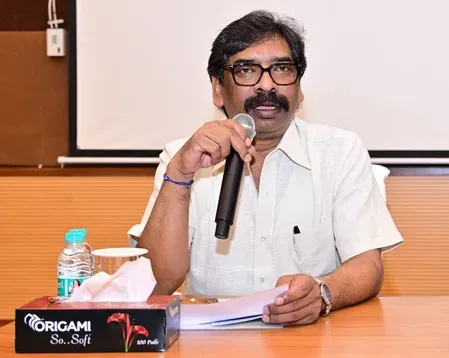
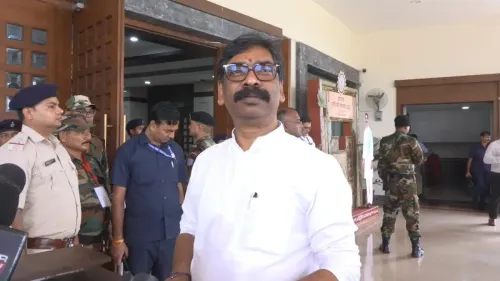
More than 8,500 young people across Jharkhand have already responded — and Chief Minister Hemant Soren wants more. On Tuesday, 11 August 2026, Soren used X to amplify his government's open consultation drive on examination reform, urging students to keep their suggestions coming and framing the exercise as a generational compact, not a bureaucratic exercise.
What 8,500 voices are saying
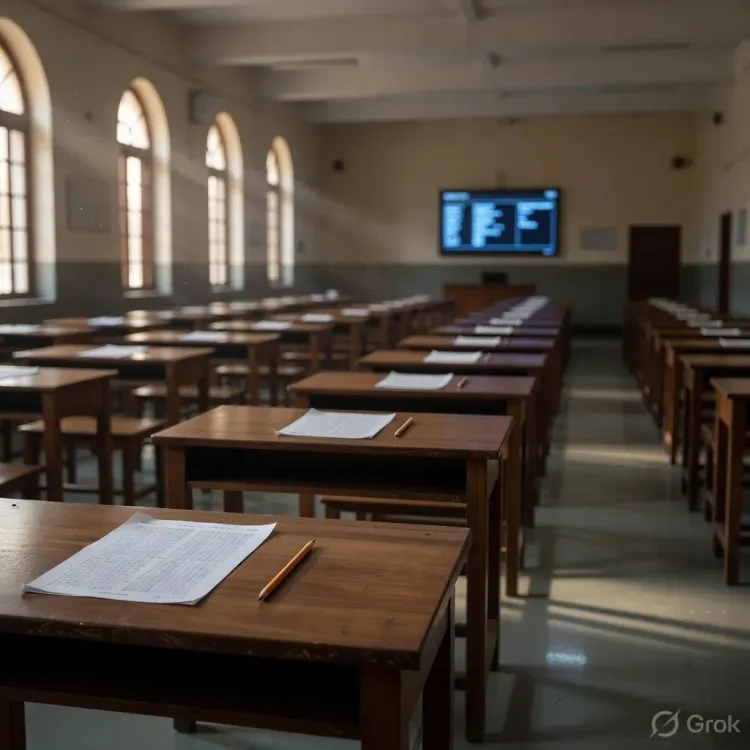
The suggestions pouring into the state portal samvad.jharkhand.gov.in span the full arc of examination anxiety: OMR sheet handling, exam calendars, scorecards, question-paper integrity, process transparency, better use of technology, and constitutional reforms within both state commissions — including the Jharkhand Public Service Commission (JPSC). That breadth matters. These are not vague complaints; they are the specific pressure points that have derailed careers and eroded trust in state recruitment for years.
Soren's post — addressed with the Jharkhand greeting 'Johar' — translated the scale plainly: 'Your one suggestion will not just improve today's examination system, but will contribute to building a better future for thousands and lakhs of young people of Jharkhand.'
Co-creation as the pitch — and the promise
The CM was explicit that the campaign, titled 'Chhatron Ki Baat — Chhatron Ke Saath' ('Students' Voice — With Students'), is designed to produce reforms that are 'more transparent, impartial, secure, credible and accountable' for present and future generations. Crucially, he positioned the outcome not as a government diktat but as a jan-bhaagidaari — a people's participation — reform. That framing is deliberate: it shares ownership of the outcome with the students themselves, raising the political cost of inaction and the political reward of follow-through.
Several Indian states have run similar digital consultation exercises with youth in recent years, responding to recurring scandals around paper leaks, opaque merit lists, and arbitrary exam schedule changes. Jharkhand's version stands out for channelling suggestions through a dedicated state portal, creating a documented record that can be audited against eventual policy changes.
The JPSC question — and what comes next
The explicit mention of the JPSC is the sharpest signal in the post. The commission has faced sustained criticism from civil-services aspirants over delayed results and procedural inconsistencies. Any reform that touches JPSC rules, exam calendars, or technology infrastructure in the 2026–27 examination cycle will be the real test of whether this consultation converts into consequence. Soren's appeal to keep suggestions flowing suggests the window is still open — and the government is watching the numbers climb.
Point of View
Soren is pursuing a dual political strategy: building a youth-participation narrative ahead of future electoral cycles while creating institutional pressure on the JPSC — a body that has long been a flashpoint for aspirant anger in Jharkhand. The 'co-created reform' framing is increasingly common among state governments seeking to defuse examination-scandal fallout without appearing defensive. The critical variable is execution: consultation exercises that produce no visible policy change tend to deepen cynicism faster than no consultation at all, making the 2026–27 JPSC cycle a high-stakes accountability test for the Soren government.
NationPress
11 Aug 2026
Frequently Asked Questions
What is the 'Chhatron Ki Baat — Chhatron Ke Saath' campaign?
It is a Jharkhand government initiative inviting students to submit suggestions for improving the state's examination system through the portal samvad.jharkhand.gov.in. The campaign covers areas like OMR handling, exam calendars, transparency, and JPSC reforms.
How many students have given suggestions on Jharkhand exam reform?
As of CM Hemant Soren's post on 11 August 2026, over 8,500 students had submitted suggestions through the state's official consultation portal.
What is samvad.jharkhand.gov.in?
It is the official Jharkhand government portal set up to collect student suggestions on examination reform as part of the 'Chhatron Ki Baat' campaign.
What reforms are being considered for JPSC?
Student suggestions include improvements to OMR sheet handling, exam scheduling, scorecard transparency, question-paper integrity, and technology use — all within constitutional limits applicable to the Jharkhand Public Service Commission.
Why is Hemant Soren focusing on exam reform in Jharkhand?
State public service commission examinations across India have faced recurring criticism over paper leaks, delays, and opacity. Soren has framed the reform drive as a people's participation exercise to build a more transparent and accountable examination system for current and future generations.