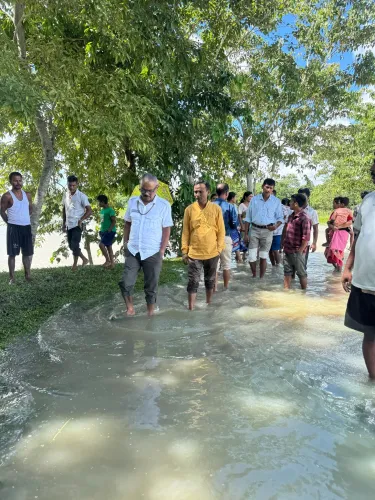
CM Himanta announces ₹15,000 flood relief for every hit family in Assam
Synopsis
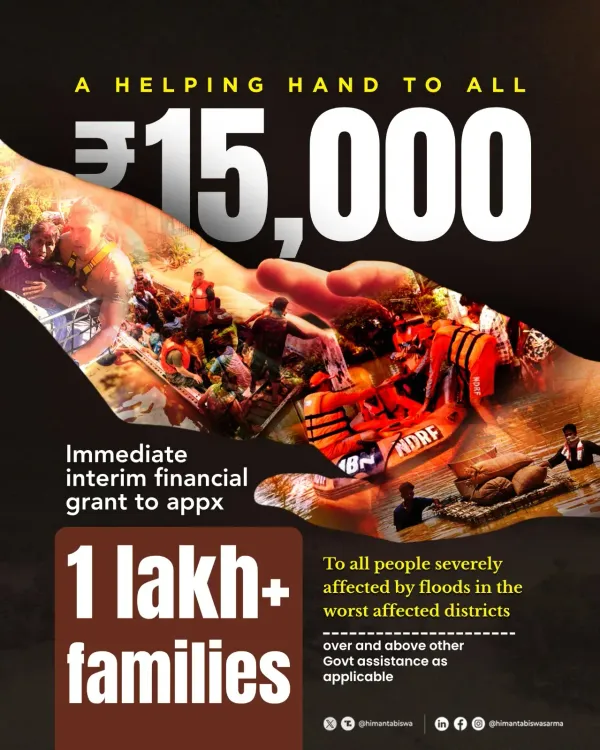
Assam Chief Minister Himanta Biswa Sarma has announced ₹15,000 in immediate interim flood relief for every affected family in the state's worst-hit districts, explicitly covering ASHA workers, Mid Day Meal workers, and government employees — a broad-net SDRF-backed response to the state's annual monsoon flooding crisis.
Key Takeaways
Every flood-affected family in Assam's worst-hit districts will receive ₹15,000 as immediate interim assistance.
The relief explicitly covers government employees, ASHA workers, and Mid Day Meal workers — categories often excluded from disaster payments.
The announcement was made by Chief Minister Himanta Biswa Sarma on 29 July 2026 .
Assam faces recurrent annual flooding from the Brahmaputra and Barak valley river systems every monsoon season.
Interim cash payments are drawn from the State Disaster Response Fund (SDRF) ; a subsequent NDRF request from the central government may follow.
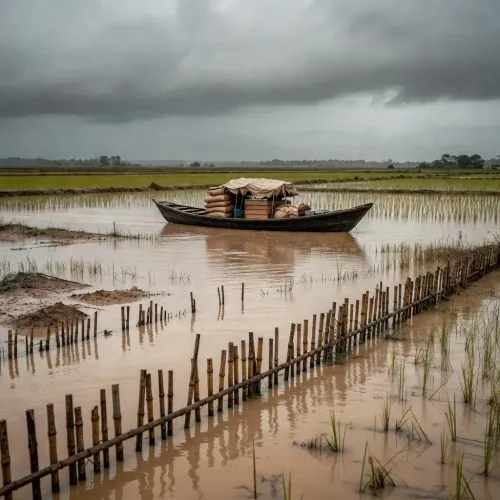
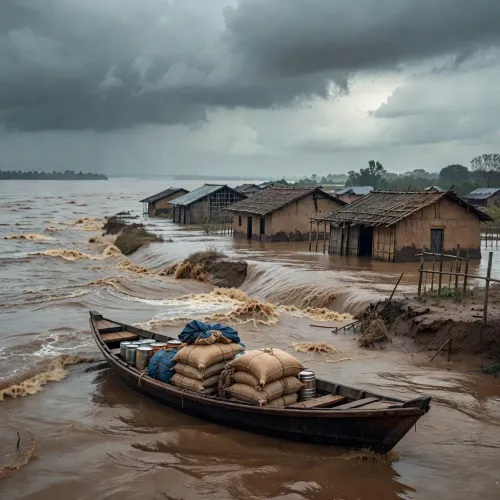
When the Brahmaputra swells, it does not discriminate — and neither, Assam Chief Minister Himanta Biswa Sarma has declared, will the state's relief. On Wednesday, 29 July 2026, Sarma announced that every flood-affected family in the worst-hit districts of Assam will receive ₹15,000 as immediate interim assistance — and that the net will be cast wide enough to include government employees, ASHA workers, and Mid Day Meal workers.
Who qualifies — and why the inclusion of workers matters
The announcement is notable for who it explicitly names. ASHA workers — the frontline health volunteers who are often among the first responders during any rural crisis — and Mid Day Meal workers, a largely female, low-income workforce, are specifically listed as eligible. Government employees, who are frequently excluded from disaster ex-gratia payments on the assumption that their salaries continue, are also brought in. The message is deliberate: no category of flood-hit household in the identified districts is to be turned away on a technicality.Assam's annual flood calculus and the SDRF framework
Assam's monsoon flooding is not a surprise — it is a calendar event. The Brahmaputra and Barak valley river systems breach their banks with near-clockwork regularity each year, displacing hundreds of thousands of families and submerging farmland, roads, and homes. Successive state governments have responded through the State Disaster Response Fund (SDRF), which authorises interim ex-gratia cash transfers to affected households as the first line of financial relief while longer-term reconstruction is assessed. The ₹15,000 figure represents the immediate, unconditional cash floor — money that reaches families before damage surveys are completed and before any central government disbursement is negotiated.What comes next: district rollout and NDRF watch
The immediate question is operational: how quickly the payments reach families in the worst-hit districts, and whether the state subsequently approaches the central government for supplemental assistance from the National Disaster Response Fund (NDRF). A formal NDRF request typically follows a joint central-state damage assessment and would unlock a second, larger tranche of relief. The speed and reach of the ₹15,000 disbursement will be the first test of the government's delivery machinery this flood season. For now, the signal from Dispur is clear: the state is moving on cash relief before the floodwaters have fully receded — and it is not waiting for paperwork to decide who counts as a victim.Point of View
000 relief package signals a political as much as an administrative choice — these are constituencies that BJP governments have increasingly sought to court in the Northeast. By moving on cash disbursement before damage surveys are finalised, Sarma is also following a pattern of visible, fast-turnaround welfare signalling that has become a BJP governance template ahead of any electoral cycle. The NDRF watch is the real policy variable: if Assam seeks central funds, it will reveal the scale of damage the state itself assesses as beyond SDRF capacity. The breadth of eligible categories here may also set a precedent that future Assam governments find difficult to narrow.
NationPress
29 Jul 2026
Frequently Asked Questions
How much flood relief will Assam families get in 2026?
Every flood-affected family in the worst-hit districts of Assam will receive ₹15,000 as immediate interim assistance, as announced by Chief Minister Himanta Biswa Sarma on 29 July 2026.
Are ASHA workers eligible for Assam flood relief?
Yes. Chief Minister Sarma's announcement explicitly lists ASHA workers as eligible for the ₹15,000 interim flood relief, alongside Mid Day Meal workers and government employees.
What is the SDRF and how does it fund flood relief in Assam?
The State Disaster Response Fund (SDRF) is a central-state funded pool that authorises state governments to make immediate cash transfers to disaster-affected households. Assam uses SDRF allocations to pay interim ex-gratia relief during annual flood emergencies.
Which districts in Assam are worst hit by floods in 2026?
Chief Minister Sarma's announcement refers to the 'worst hit districts' without specifying them by name in this statement. The precise list of identified districts had not been independently confirmed at the time of the announcement.
Can government employees claim Assam flood relief?
Yes. The 29 July 2026 announcement by CM Himanta Biswa Sarma specifically includes government employees among those eligible for the ₹15,000 interim flood assistance — a notable departure from some past relief frameworks that excluded salaried state staff.