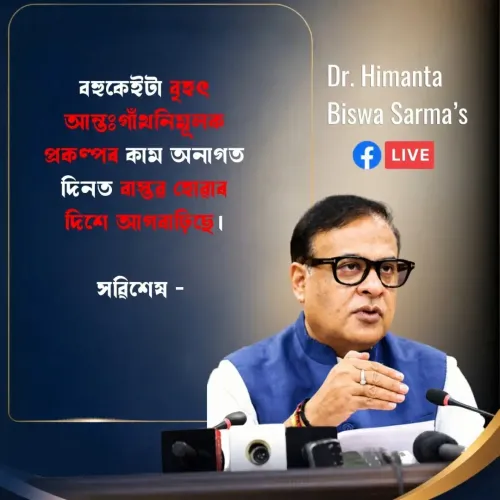
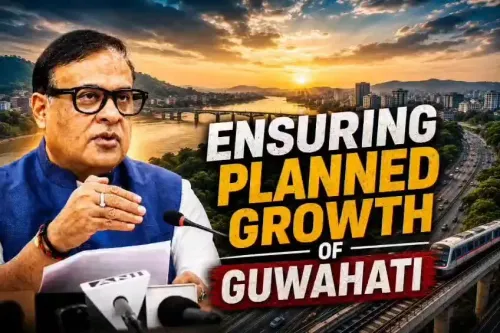
CM Himanta Announces Metro Rail Along Guwahati Ring Road
Synopsis
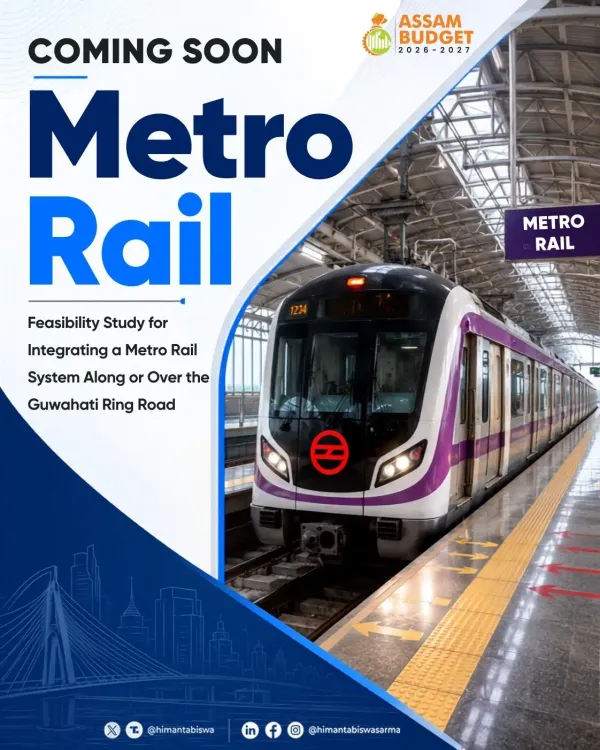
Assam Chief Minister Himanta Biswa Sarma announced a new metro rail system along the Guwahati Ring Road under Assam Budget 2026, with feasibility studies to begin soon. The project aims to ease urban congestion and improve ease of living for Guwahati residents.
Key Takeaways
Assam CM Himanta Biswa Sarma announced a new metro rail system along the Guwahati Ring Road on 10 July 2026 .
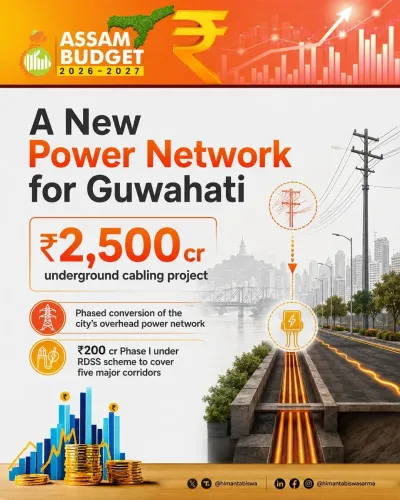
The project is part of the Assam Budget 2026 and targets improved urban mobility and ease of living.
Feasibility studies are set to commence shortly as the immediate next step.
The Guwahati Ring Road is a circumferential highway designed to reduce city-centre congestion.
The proposal aligns with a broader Northeast India trend of urban-transport investments under central schemes such as AMRUT and PM Gati Shakti .
Post-feasibility, the project would require central appraisal and likely a mix of state funds, central grants, and PPP financing.
Assam Chief Minister Himanta Biswa Sarma announced on Friday, 10 July 2026 that a new metro rail system will be developed along the Guwahati Ring Road corridor, with feasibility studies set to commence shortly as part of the Assam Budget 2026 commitments.
Context
In his post, CM Sarma stated that the metro rail project is aimed at facilitating 'seamless travel and enhance Ease of Living' for residents of Guwahati. The announcement is linked directly to the Assam Budget 2026, signalling that the proposal has received budgetary recognition at the state level. The immediate next step, as indicated, is the launch of feasibility studies for the project.
The Guwahati Ring Road is a major circumferential highway designed to reduce congestion in the city centre and improve regional connectivity. Overlaying a metro rail system on this corridor would represent a significant escalation in the urban-mobility ambitions of the state government.
Policy Backdrop
Since 2021, Assam's annual budgets have consistently included urban-mobility upgrades for Guwahati, encompassing proposals such as elevated corridors and bus-rapid-transit systems. The metro rail announcement follows this pattern of incremental but escalating transport investments in the state capital.
Across the Northeast, state governments have accelerated urban-transport proposals under central frameworks such as AMRUT and PM Gati Shakti, responding to rapid city growth. A metro or light-rail feasibility exercise of this nature would typically be followed by appraisal at the central government level and potential participation through public-private partnership structures. Assam's approach mirrors similar exercises announced in other state capitals in recent years.
Stakeholders and Impact
Guwahati commuters and urban residents stand to be the primary beneficiaries if the project advances beyond the feasibility stage. The city has experienced rapid population growth and increasing vehicular congestion, making sustainable mass-transit solutions a pressing civic need.
The announcement also carries significance for contractors, urban planners, and central-government agencies that would need to be engaged once a feasibility report is produced. Any metro project of this scale would require substantial capital investment, likely necessitating a blend of state funds, central grants, and external financing.
What's Next
The immediate milestone to watch is the release of the terms of reference for the feasibility study, which will define the scope, alignment options, and cost estimates for the proposed metro corridor. Following the study, the state government would be expected to present a detailed project report for central appraisal.
Should the feasibility study confirm viability, Assam could seek inclusion under a centrally-sponsored metro scheme or pursue a PPP model. The outcome of this study will determine the project's timeline and funding structure, making it the critical near-term indicator of how seriously this proposal will be pursued.
Point of View
Who has used infrastructure announcements as a consistent governance narrative since 2021, this fits a pattern of positioning Assam as a Northeast development leader. The Budget 2026 tag is significant: it suggests ring-fenced intent rather than a loose aspiration. The real test will be how quickly the feasibility terms of reference are issued and whether central funding conversations begin in parallel.
NationPress
10 Jul 2026
Frequently Asked Questions
What is the Guwahati Ring Road metro rail project?
It is a proposed metro rail system to run along the Guwahati Ring Road corridor, announced by Assam CM Himanta Biswa Sarma on 10 July 2026 as part of Assam Budget 2026. Feasibility studies are yet to begin.
When will the Guwahati metro rail project start?
No construction start date has been announced. The immediate next step is the commencement of feasibility studies, after which a detailed project report and central appraisal would follow.
What is the Guwahati Ring Road?
The Guwahati Ring Road is a major circumferential highway project around Guwahati designed to reduce city-centre traffic congestion and improve regional connectivity.
Is the Guwahati metro part of Assam Budget 2026?
Yes, CM Sarma's announcement was tagged to Assam Budget 2026, indicating the metro rail proposal has received budgetary recognition at the state level.
How will the Guwahati metro rail be funded?
No funding details have been announced yet. Projects of this scale in the Northeast typically involve a combination of state funds, central government grants under schemes like AMRUT, and potential public-private partnership structures.