CM Himanta Backs 189-Acre Campus for 52-Student Inaugural Batch
Synopsis
Assam CM Himanta Biswa Sarma congratulated the inaugural batch of 52 students from 18 states joining a new higher-education institution, and pledged that construction of its 189-acre permanent campus is proceeding at full pace and will be completed at the earliest.
Key Takeaways
Assam CM Himanta Biswa Sarma greeted the inaugural batch of 52 students from 18 states on 21 July 2026 .
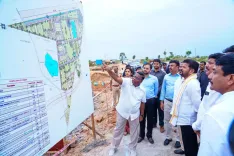
Construction of a permanent campus on over 189 acres is currently underway in Assam .
The multi-state student composition signals national reach from the institution's very first admission cycle.
The campus project is part of Assam's broader strategy to become a higher-education destination for students from across India.
The Government of Assam has pledged to undertake all measures to complete the campus at the earliest.
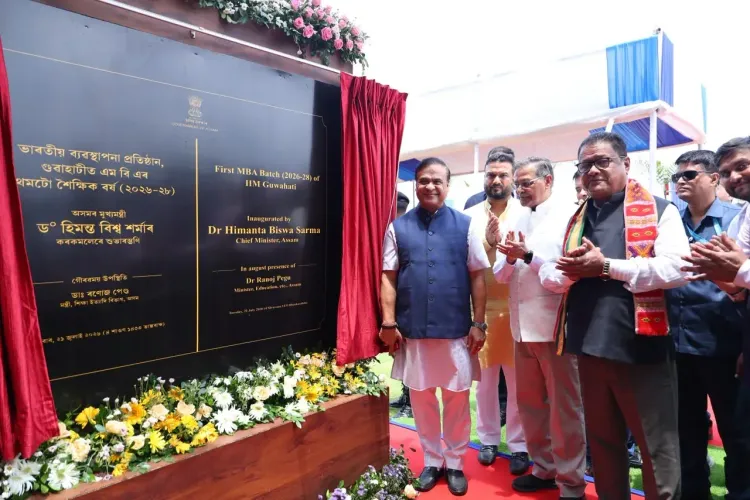
Assam Chief Minister Himanta Biswa Sarma on Tuesday, 21 July 2026, extended his best wishes to the inaugural batch of 52 students from 18 states beginning a new phase of their academic careers, and reaffirmed the Government of Assam's commitment to completing a permanent campus spread over more than 189 acres, where construction is currently underway.
Context
The Chief Minister's message came as a reply on X (formerly Twitter), congratulating the first-ever student cohort of a new higher-education institution in Assam. The batch of 52 students, drawn from as many as 18 states across India, marks the institution's operational launch even as its permanent infrastructure remains under construction. CM Sarma stated that work on the campus 'is underway in full swing' and that the government 'will undertake all measures to complete it soon.'
Policy Backdrop
Assam has been systematically expanding its higher-education footprint since the late 2010s, when the state legislature passed acts establishing new universities — including Bhattadev University and Rabindranath Tagore University — to increase seat capacity beyond the resident population. Under CM Sarma's leadership since May 2021, this thrust has intensified, with the state acquiring large land parcels and channelling both central and state funds into greenfield campus construction. The explicit strategic goal has been to position Assam as a regional education destination capable of attracting students from across India, not merely from the North-East.
The 189-acre campus under development is consistent with that scale of ambition. Large-footprint campuses of this kind typically accommodate residential halls, research facilities, and sports infrastructure alongside academic blocks, enabling institutions to compete with established central universities for out-of-state enrolments.
Stakeholders and Impact
The most immediate beneficiaries are the 52 inaugural students, who will begin their programmes before the permanent campus is ready, likely operating from interim facilities. The multi-state composition of the batch — spanning 18 states — signals that the institution has already achieved national reach in its very first admission cycle, a significant early indicator for a nascent campus.
For Assam, a successful rollout strengthens the state's case for continued central government funding for North-East education infrastructure. CM Sarma, who also convenes the North-East Democratic Alliance (NEDA), has a political interest in showcasing the region's development credentials to a national audience. Broader stakeholders include prospective students from underserved states who may find new access to quality higher education in the region.
What's Next
The key milestones to watch are the phased completion of the 189-acre campus, funding disbursements tied to construction progress, and the announcement of subsequent admission cycles that will determine whether early enrolment diversity is sustained. Academic programme expansion and faculty recruitment will be critical to the institution's credibility as it transitions from an inaugural cohort to a fully operational university. The Government of Assam's ability to deliver the campus on schedule will be a test of the state's infrastructure execution capacity — and a marker of CM Sarma's broader higher-education agenda ahead of future electoral cycles.
Point of View
And a national gallery that tracks North-East development. By emphasising that 18 states are represented in a cohort of just 52 students, the post frames Assam not as a peripheral state but as a national education magnet — a reputational shift the BJP-led government has been engineering since 2021. The 189-acre campus commitment also functions as a accountability peg: having stated publicly that work is 'in full swing,' the administration will face scrutiny if construction milestones slip. Taken together, the post fits a consistent pattern in which infrastructure announcements are used to project governance momentum ahead of electoral cycles in the North-East.
NationPress
21 Jul 2026
Frequently Asked Questions
How many students are in the inaugural batch at the new Assam campus?
The inaugural batch comprises 52 students drawn from 18 states across India, as confirmed by Assam CM Himanta Biswa Sarma on 21 July 2026.
How big is the new university campus being built in Assam?
The permanent campus under construction in Assam covers an area of over 189 acres . The Government of Assam has pledged to complete it at the earliest.
What is Assam's strategy for higher education expansion?
Under CM Himanta Biswa Sarma, Assam has been developing large greenfield campuses and establishing new universities to attract students from across India, positioning the state as a regional education hub.
What did CM Himanta Biswa Sarma say about the new campus?
CM Sarma stated that work on the permanent campus 'is underway in full swing' and that the Government of Assam 'will undertake all measures to complete it soon.'
Which universities has Assam established in recent years?
Assam's legislature passed acts establishing institutions including Bhattadev University and Rabindranath Tagore University during 2017–2019 to expand higher-education capacity in the state.