CM Himanta backs anti-cheating exam bill, hails Modi's merit push
Synopsis
Assam CM Himanta Biswa Sarma has endorsed the Public Examinations (Prevention of Unfair Means) Amendment Bill, 2026, calling its stringent anti-cheating penalties a major step in PM Modi's drive to build a merit-based future for India's youth.
Key Takeaways
Assam CM Himanta Biswa Sarma publicly backed the Public Examinations (Prevention of Unfair Means) Amendment Bill, 2026 on July 31, 2026 .
The bill prescribes stringent penalties for anyone who attempts to compromise public examinations.
It amends the original Public Examinations (Prevention of Unfair Means) Act, 2024 , passed after high-profile paper leaks including the NEET controversy.
Enforcement focus will fall on the 2026-27 examination cycle for UPSC , SSC , and NTA .
Sarma framed the legislation as part of PM Narendra Modi 's broader push for meritocracy in public recruitment and admissions.
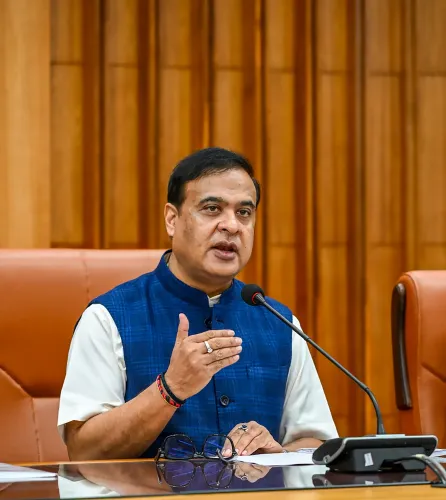
A new legislative strike against exam fraud has drawn strong backing from Assam Chief Minister Himanta Biswa Sarma, who on Friday, July 31, 2026, praised the passage of the Public Examinations (Prevention of Unfair Means) Amendment Bill, 2026 as a defining moment for India's meritocratic promise to its youth.
What the bill targets — and why it matters now
The amendment builds on the original Public Examinations (Prevention of Unfair Means) Act, 2024, which Parliament passed in response to a wave of high-profile paper leaks that shook public confidence in national competitive exams. The NEET controversy was the most visible flashpoint — but it was part of a broader pattern of organised malpractice that put millions of aspirants at a disadvantage and exposed deep vulnerabilities in India's examination infrastructure.
The 2026 amendment tightens that framework further, prescribing what Sarma called 'stringent penalties' for anyone who attempts to compromise public evaluations. His post put it plainly: 'dishonesty will find NO place in our public evaluation system.'
Sarma's endorsement in the NEDA context
Himanta Biswa Sarma, who also serves as convenor of the North-East Democratic Alliance (NEDA), has consistently positioned himself as a vocal amplifier of the BJP's governance agenda — particularly reforms that resonate with aspirational youth in the North-East, a region with a large population of competitive exam aspirants. His framing of the bill as part of Prime Minister Narendra Modi's 'multiple reforms' signals the Centre's intent to make exam integrity a political signature, not just a bureaucratic fix.
What exam bodies and aspirants should watch next
The immediate focus now shifts to enforcement. The rules governing the amended legislation will determine how it applies to the 2026-27 examination cycle for bodies including UPSC, SSC, and the National Testing Agency (NTA) — the very institutions whose credibility took the hardest hits in recent years. Notification of those rules, and the speed with which they are operationalised, will be the real test of the bill's bite.
For the millions of students who prepare for years only to face a compromised exam, this amendment is more than policy. It is a direct answer to a question they have been asking loudly: does the system actually protect honest effort?
Point of View
BJP leaders like Sarma are attempting to convert a defensive moment into a proactive governance narrative. Whether the amendment's enforcement machinery matches its rhetoric will determine if it becomes a genuine policy legacy or another unfulfilled promise to India's exam-going millions. The involvement of a senior regional leader like Sarma also signals the party's intent to make exam integrity a pan-India electoral asset, particularly among aspirational youth in states where competitive exams are the primary ladder out of poverty.
NationPress
14 Sept 2026
Frequently Asked Questions
What is the Public Examinations (Prevention of Unfair Means) Amendment Bill 2026?
It is a 2026 amendment to India's 2024 law against malpractice in public examinations, introducing stricter penalties for those who attempt to cheat or compromise national competitive exams.
Why was the original Public Examinations Act passed in 2024?
Parliament passed the original Act in 2024 to address a series of high-profile paper leaks and organised cheating incidents — most notably around the NEET exam — that eroded public trust in India's examination system.
Which exam bodies will be affected by the 2026 amendment?
The amendment is expected to apply to major public examination bodies including UPSC, SSC, and the National Testing Agency (NTA) during the 2026-27 examination cycle.
What did Assam CM Himanta Biswa Sarma say about the exam bill?
Sarma called the bill 'a very significant step' in PM Modi's push for meritocracy, stating that it sends a clear message that 'dishonesty will find NO place in our public evaluation system.'
How does this bill connect to India's National Education Policy?
The anti-cheating legislation forms part of broader Central government efforts under the National Education Policy framework to promote transparency and merit-based selection in public recruitment and admissions.