CM Himanta backs Fast Track Courts for NEET paper leak cases

Synopsis
Assam CM Himanta Biswa Sarma announced on 23 July 2026 that fast-track courts will be set up to expedite trials in NEET paper leak cases, citing PM Modi's directive to concerned departments. He warned that no one who plays with the futures of young people will be spared.
Key Takeaways
Fast-track courts will be established specifically to handle all pending cases related to the NEET question paper leak.
PM Narendra Modi has directed the concerned departments to take the necessary steps to implement this decision.
CM Himanta Biswa Sarma framed the move as the highest priority of the double-engine government toward protecting youth interests.
The announcement follows the NEET-UG 2024 paper leak controversy, which had triggered a CBI investigation and nationwide student protests.
The government has issued a clear warning that those who compromise the futures of young aspirants will not be spared.
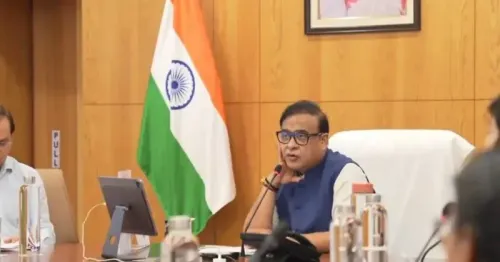
Assam Chief Minister Himanta Biswa Sarma announced on Thursday, 23 July 2026 that fast-track courts will be established to expedite trials in all cases related to the NEET question paper leak, ensuring swift punishment for the guilty. He stated that Prime Minister Narendra Modi has directed the concerned departments to take the necessary steps in this regard.
Context
Posting in Assamese, CM Sarma declared that the interests and futures of the country's youth are the 'highest priority' of the double-engine government. His post stated: 'নীটৰ প্রশ্নকাকত ফাদিলৰ সকলো গোচৰত দোষীক শীঘ্ৰে শাস্তি প্ৰদান কৰাৰ বাবে গোচৰসমূহ দ্ৰুত নিষ্পত্তিৰ বাবে ফাষ্ট ট্ৰেক আদালত স্থাপন কৰা হ'ব' — ('Fast-track courts will be set up for the speedy disposal of all cases related to the NEET question paper leak, so that the guilty are punished quickly.')
He concluded with an unambiguous warning: 'In plain terms, no one who wants to play with the future of young people will be spared.'
Policy Backdrop
The announcement follows the controversy surrounding the NEET-UG 2024 paper leak allegations, which triggered nationwide protests by medical aspirants and prompted the central government to order a Central Bureau of Investigation (CBI) probe. Expert committees were also constituted to review and strengthen examination security protocols across the country.
The National Eligibility cum Entrance Test (NEET) is the sole gateway for undergraduate medical admissions across India, making its integrity critical for lakhs of students who prepare for years. Irregularities in the exam drew sharp public and political scrutiny in 2024, with demands for systemic reform and accountability.
Fast-track courts have previously been deployed by the government in other high-profile cases involving public trust, including crimes against women and financial fraud, and are seen as a mechanism to deliver timely justice without burdening regular court dockets.
Stakeholders and Impact
The primary beneficiaries of this move are medical aspirants across India — a population running into several lakhs annually — who have long demanded accountability for those who compromised the sanctity of the examination. The announcement signals that both the central and Assam state governments are aligned in treating exam malpractice as a serious criminal matter.
For the accused in pending NEET leak cases, the establishment of fast-track courts means trials are expected to proceed at a significantly accelerated pace compared to the regular judicial process. The directive from PM Modi to relevant departments adds institutional weight to the commitment.
What's Next
Attention will now turn to the rollout timeline for the proposed fast-track courts and whether the central government issues a formal notification detailing their jurisdiction and structure. Further directives on broader entrance examination reforms — including enhanced security for NEET and other national-level tests — are also anticipated ahead of the next academic cycle. The political messaging from the BJP's double-engine governance model on youth welfare is expected to remain prominent in the months ahead.
Point of View
Arriving well after the peak of public anger over the 2024 controversy but framed as decisive action. By invoking a direct directive from PM Modi, CM Sarma reinforces the narrative of a responsive, youth-focused administration — a message with clear resonance ahead of electoral cycles. The fast-track court mechanism, if operationalised swiftly, could help rebuild institutional credibility around national entrance examinations, but the real test will be in the speed and transparency of the trials themselves. This move also continues a broader pattern of the BJP deploying fast-track judicial mechanisms as a visible symbol of governance resolve on issues of high public salience.
NationPress
23 Jul 2026
Frequently Asked Questions
What did CM Himanta Biswa Sarma say about NEET paper leak cases?
CM Himanta Biswa Sarma announced that fast-track courts will be set up to ensure speedy trials and swift punishment for all those found guilty in NEET question paper leak cases, and that PM Modi has directed the relevant departments to take necessary action.
What are fast-track courts and how will they help in NEET cases?
Fast-track courts are special judicial bodies designed to dispose of cases more quickly than regular courts. In the context of NEET paper leak cases, they are intended to accelerate trials so that the guilty receive punishment without prolonged delays.
What happened in the NEET paper leak controversy?
Allegations of a question paper leak in the NEET-UG 2024 examination triggered nationwide protests by medical aspirants. The central government ordered a CBI investigation and formed expert committees to review examination security protocols.
What is the double-engine government model referenced by CM Sarma?
The 'double-engine government' is a BJP term referring to states where both the state government and the central government are led by the BJP, implying coordinated and faster policy implementation.
What is NEET and why is it important for students?
NEET, or the National Eligibility cum Entrance Test, is the single national entrance examination for undergraduate medical admissions across India. Lakhs of students appear for it each year, making its integrity critical to fair access to medical education.