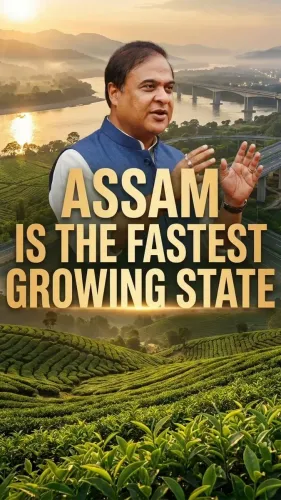
CM Himanta bets on bamboo to power Assam's bio-economy
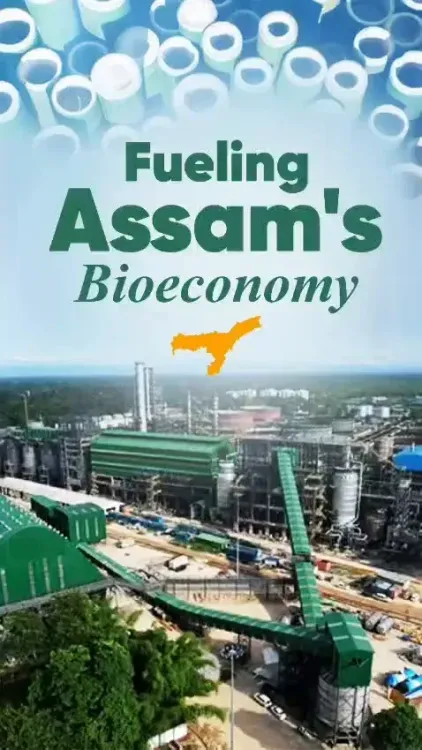
Synopsis
Assam Chief Minister Himanta Biswa Sarma has called bamboo the state's 'green gold' and outlined a value-chain strategy to lift rural incomes and build a globally competitive bio-economy, anchoring the push in the National Bamboo Mission's restructured framework.
Key Takeaways
CM Himanta Biswa Sarma on 2 July 2026 declared bamboo central to Assam's bio-economy strategy.
He described bamboo as 'green gold' with the potential to create rural livelihoods and drive sustainable industry.
The push builds on the National Bamboo Mission , restructured in 2018 to develop the complete bamboo value chain from cultivation to market.
Bamboo farmers and rural MSMEs are the primary intended beneficiaries of the value-chain initiative.
Assam aims to convert its bamboo resources into global export opportunities , positioning the state within India's wider bio-economy framework.
Concrete next steps to watch include new processing cluster rollouts and fresh state budget allocations for bamboo infrastructure.
Assam Chief Minister Himanta Biswa Sarma on Thursday, 2 July 2026, outlined his government's push to build a full bamboo value chain that converts the state's abundant forest resource into rural livelihoods and a globally competitive sustainable industry, describing bamboo as 'green gold'.
Context
Assam is among India's most bamboo-rich states, with the plant covering significant stretches of its forest and agricultural fringe land. For generations, rural communities — particularly in hilly and tribal belts — have harvested bamboo for subsistence, yet the absence of organised processing infrastructure has meant the crop's commercial potential has gone largely unrealised.
Chief Minister Sarma's post frames bamboo not merely as a forest product but as the centrepiece of a bio-economy strategy: one that links smallholder growers to modern processing units and, ultimately, to export markets. His use of the phrase 'green gold' signals an intent to rebrand bamboo from a subsistence crop to a strategic industrial commodity.
Policy Backdrop
The push draws on the architecture of the National Bamboo Mission, a central government scheme first launched in 2006-07 and substantially restructured in 2018 to develop the complete bamboo value chain — from cultivation and harvesting to value addition, branding, and market linkages. The restructured mission explicitly encourages states to develop bamboo clusters that connect traditional growers to contemporary processing facilities.
Assam has pursued bamboo sector reforms since 2021 as part of a broader post-election economic agenda centred on natural resource-based industries. The state's approach mirrors wider efforts across northeastern India to position bamboo as a sustainable, renewable alternative to timber and single-use plastics — materials that face growing regulatory and market headwinds globally.
India's national bio-economy strategy, which seeks to convert the country's biological resources into industrial feedstock and export earnings, provides an additional policy tailwind. Bamboo's fast growth cycle, carbon sequestration properties, and versatility across sectors — from construction and textiles to biofuel and packaged goods — make it a natural fit for this framework.
Stakeholders and Impact
Bamboo farmers and rural micro, small and medium enterprises (MSMEs) stand to gain most directly from an organised value chain. A functioning chain would allow growers to command higher prices for raw bamboo while processing units generate downstream employment in cutting, treatment, and manufacturing.
Tribal and forest-fringe communities in Assam's hill districts, who have historically depended on bamboo for both income and construction material, could see a meaningful improvement in livelihoods if processing clusters are established within reach of their harvesting zones. Organised export promotion would further amplify returns by linking Assam's supply to global demand for sustainable materials.
What's Next
Observers will watch for concrete follow-through: the rollout of new bamboo processing clusters, fresh allocations in Assam's state budget for value-chain infrastructure, and any export promotion measures targeting international markets for bamboo-derived products. The Chief Minister's framing — 'turning strength into global economic opportunity' — suggests ambitions that extend well beyond domestic consumption.
If the value-chain vision is operationalised at scale, Assam could emerge as a model for other bamboo-rich northeastern states seeking to monetise natural endowments without compromising ecological balance — a test case for India's broader bio-economy aspirations.
Point of View
' he is signalling to investors and policymakers that Assam intends to compete in premium, eco-conscious markets rather than merely supply raw material. The framing also serves a political purpose: it anchors rural welfare and economic modernisation in a single narrative ahead of any future electoral cycle. Whether the vision translates into measurable outcomes will depend on the speed and scale of processing infrastructure that actually reaches bamboo-growing communities.
NationPress
1 Oct 2026
Frequently Asked Questions
What is Assam CM Himanta Biswa Sarma's bamboo bio-economy plan?
CM Himanta Biswa Sarma has announced a strategy to build a complete bamboo value chain in Assam — from cultivation by smallholder farmers to industrial processing and global exports — describing bamboo as 'green gold' that can drive rural livelihoods and sustainable economic growth.
What is the National Bamboo Mission and how does it relate to Assam?
The National Bamboo Mission is a central government scheme, first launched in 2006-07 and restructured in 2018, that funds bamboo cultivation, value addition, and market linkages. Assam, as a bamboo-rich northeastern state, has been a focus state under this mission and has pursued bamboo sector reforms since 2021.
How will Assam's bamboo push benefit farmers?
An organised bamboo value chain would allow farmers to command higher prices for raw bamboo, while downstream processing units would generate additional rural employment. Tribal and forest-fringe communities, who have historically relied on bamboo for income, stand to gain the most directly.
Why is bamboo called 'green gold' in Assam?
The term 'green gold' reflects bamboo's combination of ecological value — fast growth, carbon sequestration, biodiversity support — and its commercial versatility across construction, textiles, biofuel, and packaged goods, making it a high-value, renewable resource if properly processed and marketed.
What should we watch for next in Assam's bamboo sector?
Key developments to monitor include the rollout of new bamboo processing clusters, fresh allocations in Assam's state budget for value-chain infrastructure, and any export promotion initiatives targeting international buyers of sustainable bamboo-derived products.