CM Himanta Biswa Sarma attends AIF Workshop in Guwahati

Synopsis
Chief Minister Himanta Biswa Sarma attended Assam's State-level Agriculture Infrastructure Fund Workshop in Guwahati on 25 July 2026, bringing together farmers, FPOs and financial institutions. The AIF scheme offers loans up to ₹2 crore with a 3% interest subvention for seven years to build post-harvest infrastructure across the state.
Key Takeaways
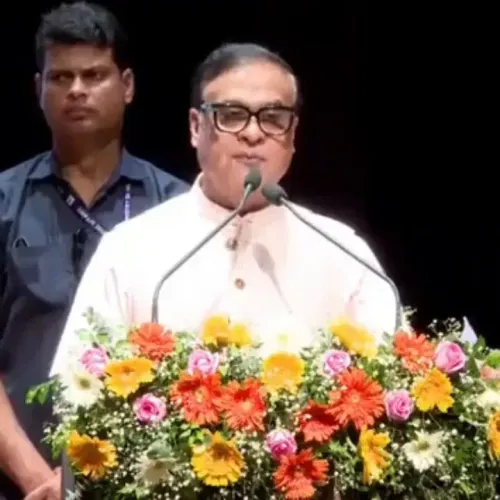
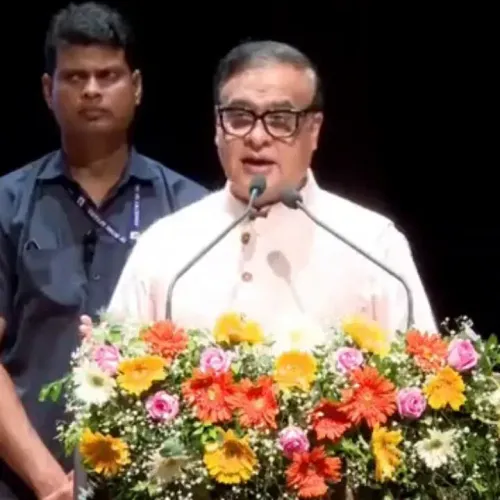
Himanta Biswa Sarma attended the State-level AIF Workshop at Jyoti-Bishnu International Auditorium, Guwahati on 25 July 2026 .
The Agriculture Infrastructure Fund (AIF) provides loans of up to ₹2 crore per project with a 3% annual interest subvention for up to seven years .
The scheme also provides credit guarantee support for eligible projects, lowering the collateral burden on small farmers and FPOs.
Targeted infrastructure includes warehouses, cold storage, drones, solar-powered irrigation pumps and primary processing facilities .
The workshop brought together farmers, FPOs, cooperatives, self-help groups, agri-entrepreneurs and financial institutions under one roof.
The AIF was launched under the Atmanirbhar Bharat package in 2020-21 with a national corpus of ₹1 lakh crore .
The Chief Minister's Office of Assam announced on Saturday, 25 July 2026, that Chief Minister Dr. Himanta Biswa Sarma attended the State-level Agriculture Infrastructure Fund (AIF) Workshop and Awareness Programme at the Jyoti-Bishnu International Auditorium, Guwahati, underscoring the government's push to modernise and future-proof the state's agriculture sector.
Context
The workshop brought together a broad cross-section of agricultural stakeholders — farmers, Farmer Producer Organisations (FPOs), cooperatives, self-help groups, agri-entrepreneurs and financial institutions — to build awareness around the AIF scheme. The scheme offers loans of up to ₹2 crore per project, a 3% annual interest subvention for up to seven years, and credit guarantee support for eligible projects. Assam's participation in such a structured, state-level awareness event signals an effort to close the gap between scheme design and actual beneficiary uptake on the ground.
Policy Backdrop
The Agriculture Infrastructure Fund was first announced in the Union Budget 2020-21 as part of the Atmanirbhar Bharat package, backed by a national corpus of ₹1 lakh crore. The scheme's central objective is to build farm-gate and post-harvest infrastructure across India, enabling farmers to reduce losses and capture more value from their produce. State-level workshops of this kind form part of the central government's broader strategy to operationalise the scheme in major agricultural states by connecting eligible beneficiaries directly with participating financial institutions.
Assam, a northeastern state whose agricultural base spans tea, rice, jute and a growing horticulture and fisheries sector, stands to benefit significantly from investments in post-harvest infrastructure. The CMO's post highlighted that the AIF initiative for Assam will channel investments into warehouses, cold storage facilities, drones, solar-powered irrigation pumps and primary processing units — assets that directly address the state's post-harvest value-chain gaps.
Stakeholders and Impact
For Assam's farmers and FPOs, the AIF scheme represents a structured financing pathway that was previously difficult to access without adequate awareness or institutional support. The inclusion of cooperatives and self-help groups in the workshop broadens the scheme's potential reach beyond individual farmers to collective agricultural enterprises, which are better positioned to invest in large infrastructure like cold chains and processing units. Financial institutions present at the event play a critical role in translating scheme eligibility into actual disbursements on the ground.
The CMO's post noted that the initiative will 'unlock greater value for the state's farmers' by strengthening post-harvest infrastructure. For a state where a significant share of agricultural produce is lost between harvest and market, investments in cold storage and warehousing could materially improve farmer incomes over time.
What's Next
The immediate measure of success will be the pace at which Assam's AIF allocation is utilised — that is, how many eligible projects secure loans and begin construction of the targeted infrastructure. Analysts and agricultural policy observers will watch for follow-up state budget provisions that could provide matching grants or complementary support to AIF-funded projects. Dr. Himanta Biswa Sarma's personal attendance at the workshop sends a political signal that the state government intends to actively drive uptake, rather than leave awareness efforts to district-level administrators alone. The workshop model, if replicated at the district level across Assam, could significantly accelerate the scheme's on-ground impact.
Point of View
Where post-harvest losses remain a structural challenge, the emphasis on cold storage and primary processing aligns with a longer-term push to move farmers up the value chain. The real test, however, will be whether the workshop translates into measurable loan disbursements and completed infrastructure projects within the fiscal year.
NationPress
25 Jul 2026
Frequently Asked Questions
What is the Agriculture Infrastructure Fund (AIF) scheme in India?
The Agriculture Infrastructure Fund is a central government scheme launched in 2020-21 under the Atmanirbhar Bharat package, offering loans of up to ₹2 crore per project, a 3% annual interest subvention for up to seven years, and credit guarantee support to build post-harvest and farm-gate infrastructure across India.
What did CM Himanta Biswa Sarma announce at the Guwahati AIF workshop?
CM Dr. Himanta Biswa Sarma attended the State-level AIF Workshop in Guwahati on 25 July 2026 to reaffirm the government's commitment to modernising Assam's agriculture sector, highlighting loans, interest subvention and investments in warehouses, cold storage, drones and solar-powered irrigation pumps.
How much interest subvention does the AIF scheme offer?
The AIF scheme provides a 3% annual interest subvention on loans for up to seven years, significantly reducing the cost of borrowing for farmers, FPOs, cooperatives and agri-entrepreneurs investing in post-harvest infrastructure.
Who is eligible to apply for AIF loans in Assam?
Farmers, Farmer Producer Organisations (FPOs), cooperatives, self-help groups and agri-entrepreneurs are among the eligible beneficiaries under the Agriculture Infrastructure Fund scheme in Assam.
What infrastructure can be built using AIF loans?
AIF loans can be used to build or upgrade warehouses, cold storage facilities, primary processing units, solar-powered irrigation pumps and to procure agricultural drones, all aimed at reducing post-harvest losses and adding value to farm produce.