Priyanka Gandhi Hails Youth for Forcing Govt to 'Bend'
Synopsis
Congress general secretary and Wayanad MP Priyanka Gandhi Vadra on 25 July 2026 posted a rallying message crediting India's youth with forcing a government she called 'undemocratic and oppressive' to yield, urging young citizens to stay 'strong and brave always.'
Key Takeaways
Congress general secretary Priyanka Gandhi Vadra pinned a post on 25 July 2026 hailing India's youth for compelling the government to 'bend to the will of the people.' She described the ruling dispensation as 'undemocratic and oppressive' — language consistent with Congress opposition messaging since 2014 .
The post directly addressed young Indians, calling them 'the soul of our beautiful nation' and urging them to remain 'strong and brave.' The message was accompanied by a video and pinned to her profile, signalling the party's intent to sustain its visibility.
The Congress has used similar framing during the 2019 CAA protests and the 2020-21 farm law agitation , both of which saw significant youth participation.
Vadra holds organisational charge of Uttar Pradesh for the Congress, making youth outreach in that state a key political variable going forward.
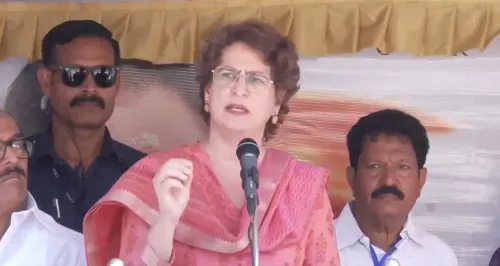
Congress general secretary Priyanka Gandhi Vadra on Saturday, 25 July 2026, saluted India's youth for what she described as forcing an 'undemocratic and oppressive government' to yield to the will of the people, in a pinned post on X that has drawn wide attention across the political spectrum.
Context
Vadra's post, pinned to her profile for maximum visibility, addressed young Indians directly: 'The youth of India have started to take our country back from those who tried to suppress their voice.' She called the day — 25 July 2026 — a historic moment in which the government was 'forced to bend to the will of the people of India.' The post accompanied a video, the contents of which could not be independently verified at the time of publication.
The Indian National Congress general secretary, who also serves as Lok Sabha MP from Wayanad, Kerala, closed her message with a direct appeal to young citizens: 'Don't ever let your spirit be oppressed, you are the soul of our beautiful nation, stay strong and brave always.'
Policy Backdrop
The framing of youth protest as democratic resistance has been a recurring feature of Congress communication since at least 2014. The party positioned itself similarly during nationwide agitations against the Citizenship Amendment Act in 2019 and the farm laws between 2020 and 2021, both of which generated sustained street-level mobilisation before the latter was eventually repealed.
Opposition figures have consistently used social media to draw a contrast between what they characterise as constitutional values upheld by the Congress and what they describe as the ruling dispensation's intolerance of dissent. Vadra's post follows this established pattern, deploying language of democratic restoration and generational agency.
Stakeholders and Impact
The message is aimed squarely at Indian youth, a demographic that makes up a substantial share of the electorate and has been increasingly active in civic and protest movements. By addressing them as 'the soul of our beautiful nation,' Vadra seeks to affirm their political agency and consolidate opposition sentiment among younger voters.
The post's pinned status signals that the Indian National Congress considers this moment — and the youth mobilisation it references — to be a defining political inflection point worth sustaining in public discourse beyond the news cycle of a single day.
What's Next
Political observers will watch whether this message translates into organised youth outreach at the state level, particularly in Uttar Pradesh, where Vadra holds organisational charge for the Congress. Any forthcoming parliamentary session debates on digital rights, protest legislation, or civil liberties are likely to see the opposition amplify this narrative further.
The durability of the momentum Vadra references will depend on whether the specific government concession she alludes to produces tangible policy change — and whether the youth coalitions involved sustain their coordination beyond the immediate moment of apparent victory.
Point of View
' she converts an unspecified event into a narrative of democratic victory, with the youth cast as protagonists. This mirrors the Congress playbook during the farm-law repeal of 2021, when the party sought retrospective credit for protest momentum it did not wholly lead. The message's emotional register — 'soul of our beautiful nation,' 'stay strong and brave' — is calibrated to sustain youth identification with the opposition rather than with any single issue. Whether this translates into electoral or organisational capital will depend on the credibility of the underlying event she references and how quickly the party grounds the rhetoric in concrete demands.
NationPress
25 Jul 2026
Frequently Asked Questions
What did Priyanka Gandhi say about India's youth on 25 July 2026?
Priyanka Gandhi Vadra said India's youth had 'started to take our country back' from those who tried to suppress their voice, and that an 'undemocratic and oppressive government' had been forced to bend to the will of the people. She called young Indians 'the soul of our beautiful nation' and urged them to stay 'strong and brave always.'
Why did Priyanka Gandhi pin this post on X?
Pinning a post keeps it at the top of a profile regardless of newer activity. The Congress general secretary likely pinned the message to maximise its reach and signal that the party considers the moment — and youth mobilisation — a defining political milestone worth sustained attention.
What government action is Priyanka Gandhi referring to?
The specific government decision or concession she references on 25 July 2026 has not been independently verified in available reporting. Her post describes it as the government being 'forced to bend to the will of the people,' but does not name a specific policy or order.
How does this fit into Congress's broader political strategy?
The Congress has consistently framed youth protests as democratic resistance to the BJP-led government since at least 2014, employing similar language during the CAA protests in 2019 and the farm-law agitation in 2020-21. This post follows that established pattern of positioning the party as a champion of youth voice and constitutional values.
What is Priyanka Gandhi Vadra's current political role?
Priyanka Gandhi Vadra is General Secretary of the Indian National Congress in charge of Uttar Pradesh, and a Lok Sabha Member of Parliament representing the Wayanad constituency in Kerala.