CM Himanta Biswa Sarma Briefs Media on Assam Floods
Synopsis
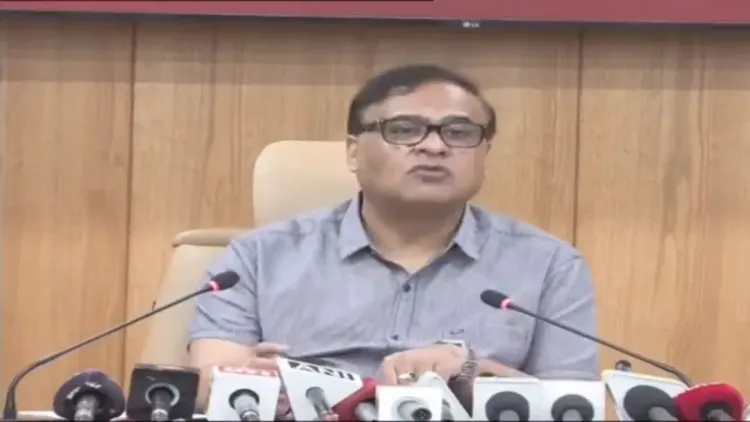
Chief Minister Himanta Biswa Sarma briefed the media on 24 July 2026 on Assam's ongoing flood crisis, responding to a wide range of journalist queries. The annual monsoon flooding of the Brahmaputra and Barak river systems poses a recurring challenge for the state's administration and millions of residents.
Key Takeaways
Himanta Biswa Sarma held a media briefing on 24 July 2026 specifically on the prevailing flood situation in Assam .
The CM fielded a 'wide range of queries' from journalists, signalling broad public concern about the crisis.
Assam's floods are driven annually by the Brahmaputra and Barak river systems during the monsoon season.
Flood management in Assam involves embankment construction, relief distribution, and coordination with central agencies including the NDMA .
Key groups affected include riverine residents, displaced families, and farmers with submerged crops.
Relief distribution, embankment works, and central government coordination remain the immediate priorities to watch.
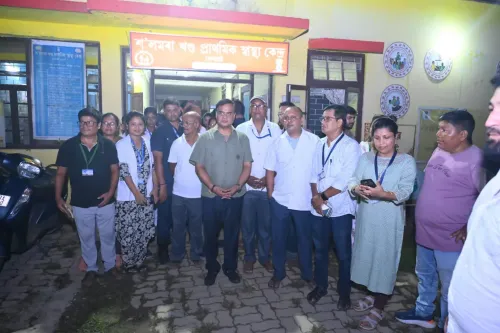
The Chief Minister's Office of Assam announced on Friday, 24 July 2026, that Chief Minister Dr. Himanta Biswa Sarma held a media briefing to address the ongoing flood situation in the state, fielding a wide range of questions from journalists on the crisis.
Context
Assam's annual monsoon flooding is among the most severe recurring natural disasters in India. The Brahmaputra and Barak river systems swell every year between June and September, inundating districts, displacing communities, and damaging agricultural land. Media briefings by the Chief Minister are a standard part of the state's disaster communication cycle, offering the public direct updates on relief and response operations.
Dr. Himanta Biswa Sarma, who has served as Chief Minister since 2021, has regularly used such press interactions to outline the administration's immediate priorities and seek public cooperation during flood emergencies.
Policy Backdrop
Flood management in Assam has been a policy priority for successive state governments dating back to the 1950s. Embankment construction, river dredging, and coordinated relief distribution have formed the core of the state's response architecture, supplemented by central government schemes and funding from national disaster management bodies.
The state administration routinely coordinates with central agencies — including the National Disaster Management Authority (NDMA) and the Army — for logistics, rescue operations, and material support during peak flood periods. Strengthening of embankments along the Brahmaputra remains a long-standing demand from riverine communities.
Stakeholders and Impact
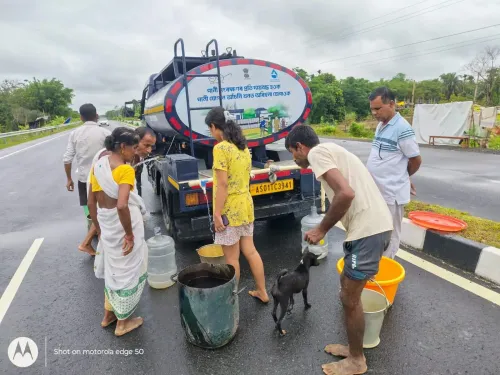
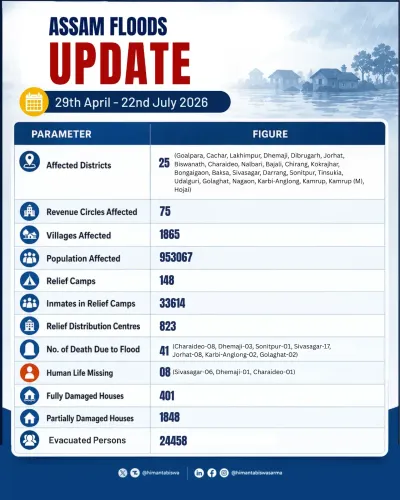
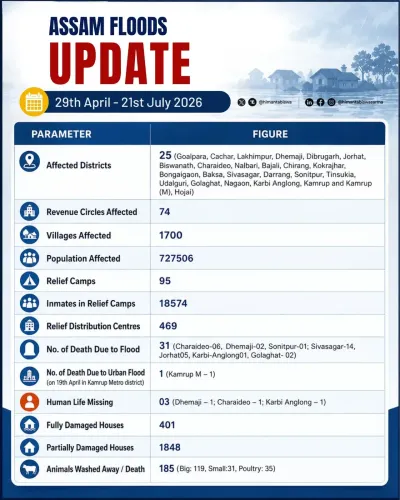
The groups most directly affected by Assam's floods are the millions of residents in low-lying riverine districts, along with farmers whose standing crops are submerged during the monsoon season. Loss of livestock, damage to roads and bridges, and displacement of families to relief camps are recurring consequences that the administration must address each year.
Journalists present at the briefing raised a 'wide range of queries,' according to the Chief Minister's Office, reflecting the breadth of public concern — from relief distribution and shelter availability to infrastructure damage and long-term mitigation plans.
What's Next
In the coming weeks, attention will focus on the pace of relief material distribution to affected districts, any new announcements regarding embankment repair or river management works, and the extent of coordination with central agencies for additional financial or logistical support.
As the monsoon season continues, further media briefings are likely, with the administration expected to provide updated figures on displaced persons, crop damage, and infrastructure losses as the situation evolves across Assam.
Point of View
Visible leadership rather than routine departmental updates. For a state that loses lives, crops, and infrastructure every monsoon, the quality of relief delivery and any new infrastructure commitments announced in the aftermath will be the real measure of the administration's response. The broader policy arc — decades of embankment-building with limited success in taming the Brahmaputra — continues to shadow every such press conference.
NationPress
24 Jul 2026
Frequently Asked Questions
Why is Assam facing floods in July 2026?
Assam experiences severe flooding every monsoon season, typically between June and September, due to the swelling of the Brahmaputra and Barak river systems. Heavy upstream rainfall causes rivers to breach embankments and inundate low-lying districts across the state.
What did CM Himanta Biswa Sarma say about the Assam floods?
On 24 July 2026, Chief Minister Dr. Himanta Biswa Sarma addressed the media on the prevailing flood situation in Assam and responded to a wide range of queries from journalists, according to the Chief Minister's Office. Specific details of his statements have not been independently confirmed.
How does the Assam government respond to floods every year?
The Assam government typically combines immediate relief — including food, shelter, and evacuation — with longer-term measures such as embankment repair and coordination with central agencies like the National Disaster Management Authority for additional support.
Who is most affected by Assam floods?
Riverine communities in low-lying districts are most affected, along with farmers whose crops are submerged. Families displaced to relief camps and those who lose livestock and property bear the greatest immediate burden each monsoon season.
What is being done for flood management in Assam long term?
Successive Assam governments have pursued embankment construction, river dredging, and centrally funded flood management schemes since the 1950s. However, the scale and unpredictability of the Brahmaputra mean that long-term mitigation remains an ongoing policy challenge.