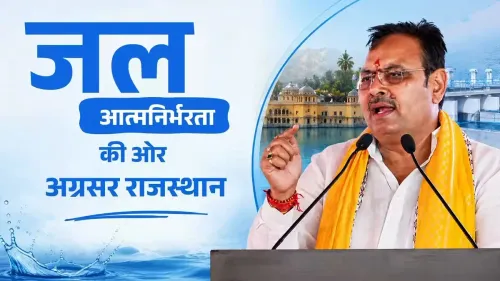
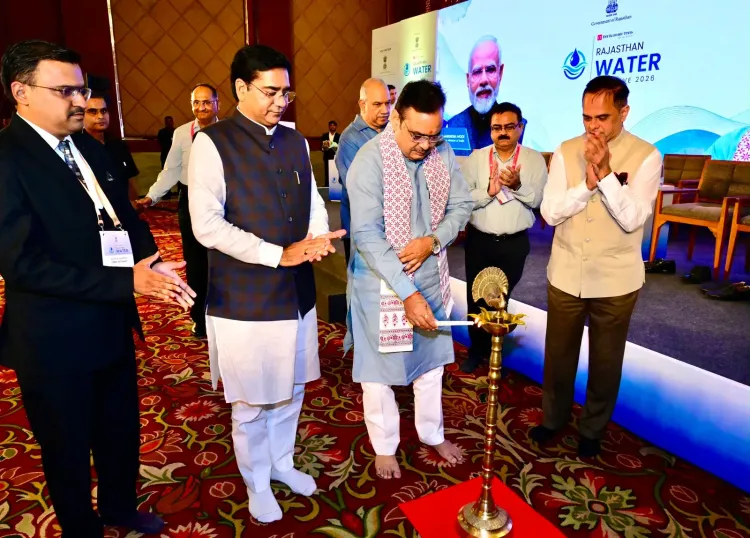
CM Bhajanlal addresses Rajasthan Water Conclave 2026 in Jaipur
Synopsis
Chief Minister Bhajanlal Sharma addressed the Rajasthan Water Conclave 2026 in Jaipur on 24 July, highlighting the Ramjal Setu Link Project and the Yamuna Water Agreement as landmark steps toward water self-sufficiency, and declaring Rajasthan's ambition to become a national model for water management.
Key Takeaways
CM Bhajanlal Sharma addressed the Rajasthan Water Conclave 2026 in Jaipur on 24 July 2026 .
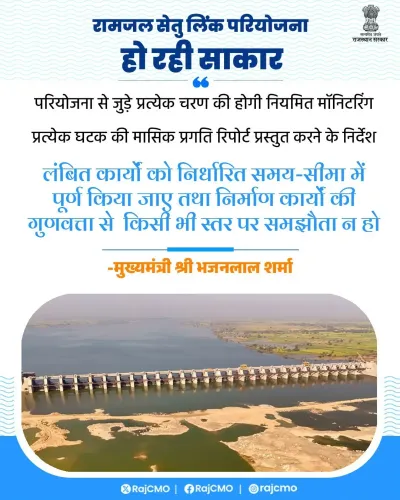
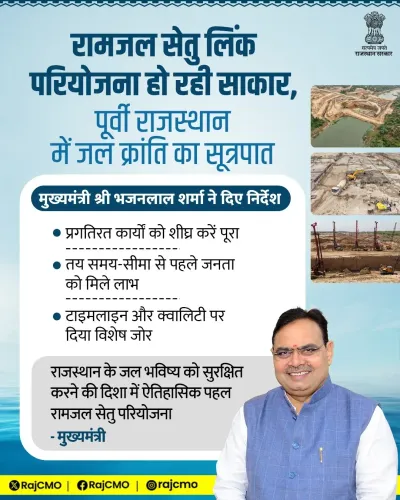
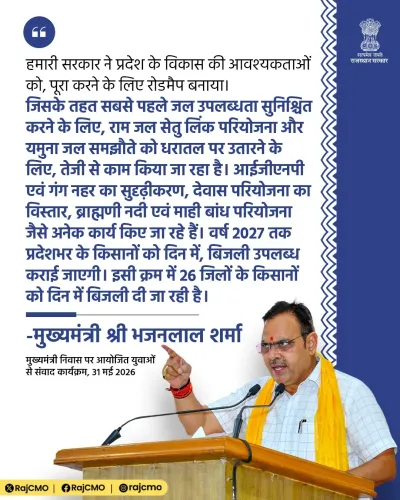
The Chief Minister cited the Ramjal Setu Link Project and the Yamuna Water Agreement as 'unprecedented' achievements in water supply.
The government has pursued jal aatmanirbharta (water self-sufficiency) as a core priority since taking office in December 2023 .
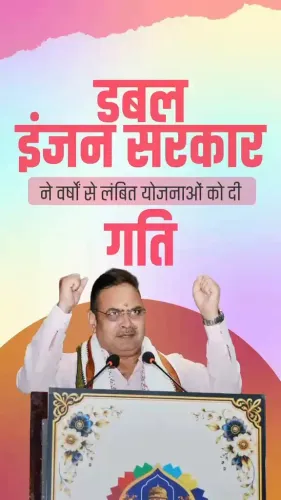
Efforts are framed under the 'double engine government' model, with aligned state and central BJP administrations under PM Narendra Modi .
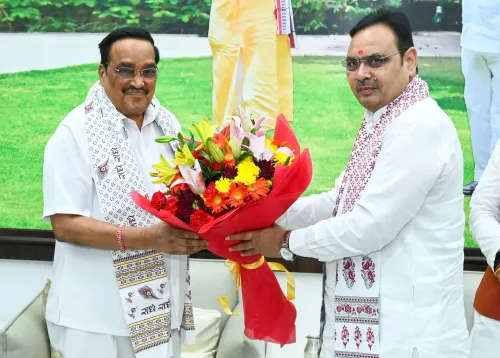
CM Sharma interacted with water-conservation experts and institutions to gather innovations and suggestions for future policy.
Rajasthan aims to become a national model for water management and water harvesting , according to the Chief Minister.
Chief Minister Bhajanlal Sharma addressed the 'Rajasthan Water Conclave 2026' in Jaipur on Friday, 24 July 2026, asserting that the state government has taken significant steps toward water self-sufficiency since assuming office, with visible results on the ground.
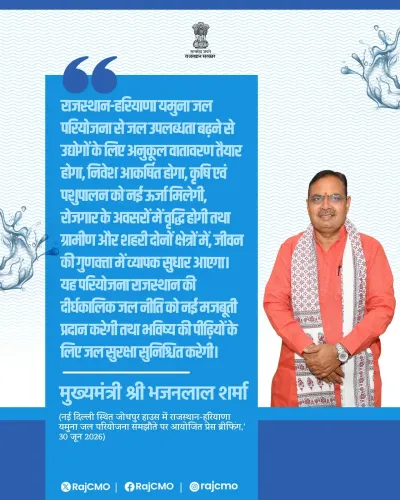
Addressing the conclave, CM Sharma stated — 'Ramjal Setu Link Pariyojana se lekar, Yamuna Jal Samjhaute jaise abhootpoorv karyon ko moort roop dekar' ('By giving concrete shape to unprecedented works ranging from the Ramjal Setu Link Project to the Yamuna Water Agreement') — the foundation of a new Rajasthan is being laid in the field of water supply.
Context
The Rajasthan Water Conclave 2026 brought together institutions and subject experts working in the field of water conservation. CM Sharma engaged directly with these stakeholders, gathering their experiences, innovations, and suggestions. The event underscores the state government's intent to build a participatory framework for water governance.
Policy Backdrop
Rajasthan is among India's most water-stressed states, with large swathes of the Thar Desert and semi-arid zones facing chronic shortages. The Ramjal Setu Link Project is a major inter-basin water transfer initiative aimed at channelling surplus river water to deficit regions within the state. The Yamuna Water Agreement, described by the Chief Minister as 'unprecedented', represents a significant interstate compact to secure additional water allocations for Rajasthan.
The ruling government, which took office in December 2023, has framed water self-sufficiency — jal aatmanirbharta — as a core governance priority. These efforts are positioned under the broader 'double engine government' framework, referring to aligned BJP governments at the state and central levels.
Stakeholders and Impact
Prime Minister Narendra Modi's leadership was cited by CM Sharma as central to the 'double engine' push that he says is driving these water initiatives forward. Rural communities in water-scarce districts, farmers dependent on irrigation, and urban populations in cities like Jaipur, Jodhpur, and Bikaner stand to be the primary beneficiaries if the stated projects are executed at scale. Experts and civil-society organisations present at the conclave provided on-ground feedback that the Chief Minister said would inform future policy.
What's Next
CM Sharma declared that through these efforts, Rajasthan will emerge as a national model for water management and water harvesting in the years ahead. The government's stated ambition — backed by both the Ramjal Setu project pipeline and the Yamuna compact — signals continued investment in large-scale water infrastructure. How swiftly these projects move from foundation-laying to full operationalisation will determine whether Rajasthan can credibly claim that national-model status.
Point of View
The administration is attempting to convert long-gestating infrastructure promises into tangible political capital. Rajasthan's chronic water scarcity makes this a high-stakes domain: success would be a genuine governance achievement, but delays in project execution could just as easily become an opposition talking point. The invocation of PM Modi's leadership signals that the state is keen to draw central resources and visibility toward these initiatives.
NationPress
24 Jul 2026
Frequently Asked Questions
What is the Rajasthan Water Conclave 2026?
The Rajasthan Water Conclave 2026 is a state-level policy event held in Jaipur where Chief Minister Bhajanlal Sharma engaged with water-conservation institutions and experts to discuss innovations, experiences, and policy suggestions for improving water management in Rajasthan.
What is the Ramjal Setu Link Project in Rajasthan?
The Ramjal Setu Link Project is a major inter-basin water transfer initiative in Rajasthan aimed at channelling surplus river water to water-deficit regions within the state, cited by CM Bhajanlal Sharma as a key step toward water self-sufficiency.
What is the Yamuna Water Agreement for Rajasthan?
The Yamuna Water Agreement is an interstate compact described by CM Bhajanlal Sharma as 'unprecedented', designed to secure additional Yamuna river water allocations for Rajasthan to address its chronic water shortages.
What does 'double engine government' mean in Rajasthan's water policy context?
'Double engine government' refers to the alignment of BJP governments at both the Rajasthan state level under CM Bhajanlal Sharma and at the Centre under PM Narendra Modi, which the state government argues enables faster policy execution and resource mobilisation for projects like water infrastructure.
Will Rajasthan become a national model for water management?
CM Bhajanlal Sharma has stated that through initiatives like the Ramjal Setu Link Project and the Yamuna Water Agreement, Rajasthan aims to become a national model for water management and water harvesting, though full realisation depends on the pace of project implementation.