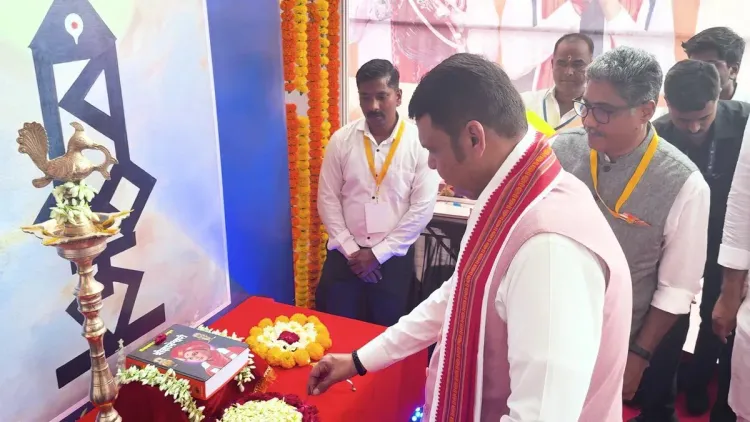
CM Fadnavis inaugurates Sanwadwari pavilion at Pandharpur Wari
Synopsis
Chief Minister Devendra Fadnavis inaugurated the 'Sanwadwari: Shri Dnyaneshwari' pavilion at Pandharpur on 24 July 2026, using the Ashadhi Wari pilgrimage to publicise over 30 Maharashtra government schemes through LED chariots, street theatre, and exhibitions.
Key Takeaways
CM Devendra Fadnavis inaugurated the Sanwadwari: Shri Dnyaneshwari pavilion at Pandharpur on 24 July 2026 during the Ashadhi Wari pilgrimage.
The pavilion was organised by the Directorate of Information and Public Relations (DIPR) to disseminate government schemes to Warkari pilgrims.
More than 30 state and central government schemes are being publicised, covering agriculture, health, housing, education, and skill development.
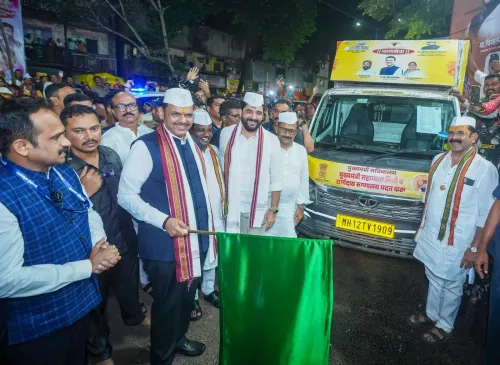
Outreach tools include LED display chariots , street theatre , and interactive exhibitions tailored to the pilgrimage audience.
Key schemes highlighted include the Punyashlok Ahilyadevi Holkar Shetkari Karjamukti Yojana 2026 , Mukhyamantri Majhi Ladki Bahin Yojana , and Jalyukt Shivar Abhiyan .
MLA Samadhan Autade and former MLA Prashant Paricharkar were present at the inauguration.
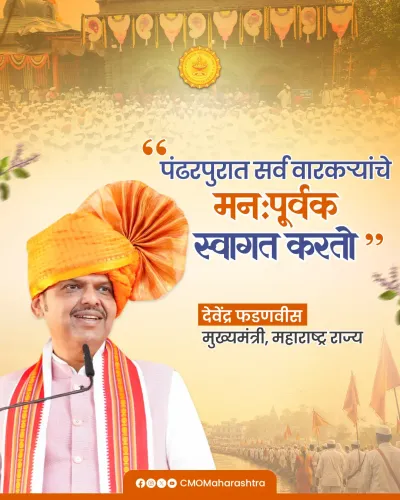
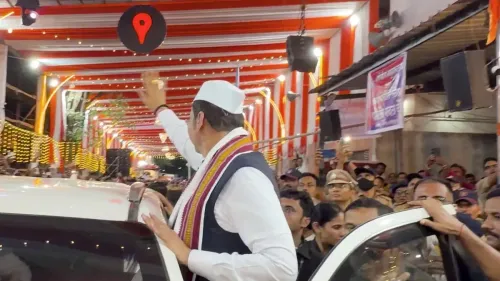
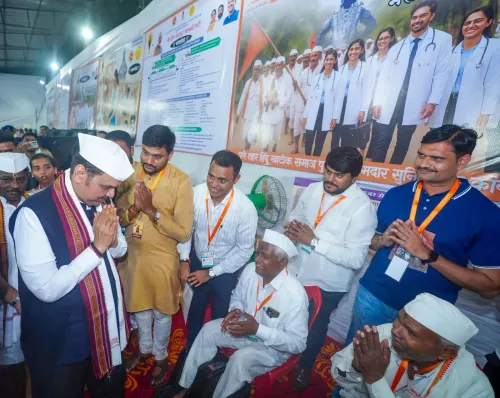
The Chief Minister's Office of Maharashtra announced on Friday, 24 July 2026 that Chief Minister Devendra Fadnavis inaugurated the 'Sanwadwari: Shri Dnyaneshwari' ('Dialogue Pilgrimage: Shri Dnyaneshwari') special pavilion at Pandharpur, organised by the state's Directorate of Information and Public Relations (DIPR) on the occasion of the Ashadhi Wari pilgrimage.
Context
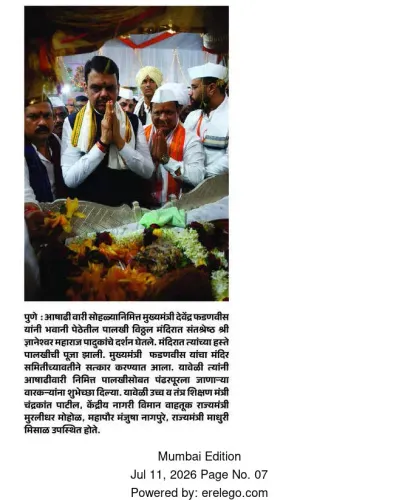
The Ashadhi Wari is one of Maharashtra's largest annual religious gatherings, drawing lakhs of Warkari pilgrims to Pandharpur in Solapur district to pay obeisance at the revered Vithoba temple. The state government used the congregation as a platform to set up the Sanwadwari pavilion — literally a 'dialogue pilgrimage' — aimed at bringing government welfare schemes directly to rural citizens who may otherwise have limited access to official communication channels.
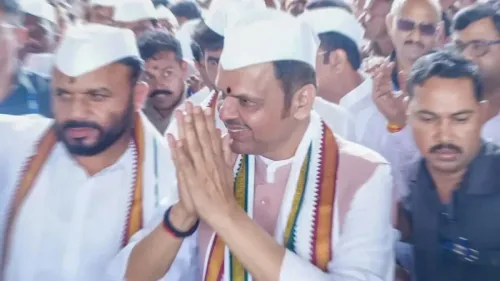
CM Fadnavis was joined at the inauguration by MLA Samadhan Autade and former MLA Prashant Paricharkar, along with other dignitaries.
Policy Backdrop
The Sanwadwari pavilion is designed to publicise more than 30 government schemes spanning agriculture, health, housing, education, skill development, and social welfare. Outreach tools include LED display chariots, street theatre (path natya), and interactive exhibitions — methods that blend contemporary communication with the cultural idiom of the Wari.
Among the schemes being highlighted are the Punyashlok Ahilyadevi Holkar Shetkari Karjamukti Yojana 2026 (farmer loan waiver), Mukhyamantri Majhi Ladki Bahin Yojana, Maharashtra Mahila Shetkari Sakshamikaran (women farmer empowerment), Namo Shetkari Mahasanman Nidhi Yojana, and the Maharashtra Krishi Artificial Intelligence Dhoran (Maharashtra Agriculture AI Policy). Housing schemes including Pradhan Mantri Awas Yojana 2.0, Ramai Awas Yojana, and Shabari Awas Yojana are also part of the outreach, alongside the Jalyukt Shivar Abhiyan — the water conservation mission first launched in 2015 — and the Mahatma Jyotirao Phule Jan Arogya Yojana health scheme.
Education-focused initiatives include the National Education Policy 2020, the PM YASASVI Scholarship Yojana, and Ashramshala (tribal residential school) facilities, reflecting a broad cross-sectoral push.
Stakeholders and Impact
The primary audience is the Warkari community — largely composed of farmers, agricultural labourers, rural women, and youth from across Maharashtra — who converge on Pandharpur in vast numbers during the Ashadhi Wari. Maharashtra governments have historically leveraged such large religious gatherings for direct administrative outreach, recognising that rural populations reached through cultural events are more likely to engage with scheme information than through conventional media alone.
Schemes such as Mukhyamantri Yuva Karya Prashikshan Yojana (youth work training), Kaushalya Vikas va Guntavnuk (skill development and investment), Pradhan Mantri Gram Sadak Yojana, and Maharashtra Rozgar Hami Yojana are specifically aimed at younger pilgrims and rural workers. The Divyang Dhoran (disability policy) and Kamgar Kalyan Yojana (labour welfare) broaden the reach to vulnerable groups.
What's Next
The government's stated objective is to make dialogue between the administration and citizens 'more effective' through the Sanwadwari initiative — 'Shasan ani Janata yanchyatil Sanwad adhik prabhavi karnyacha udesh' ('the aim of making communication between government and the public more effective'). Observers will track whether scheme enrolment figures in Solapur and neighbouring districts rise in the weeks following the Wari, and whether the DIPR expands the Sanwadwari format to other major pilgrimages or rural fairs across the state.
Point of View
Effectively side-stepping the reach limitations of formal channels in rural areas. By deploying LED chariots and street theatre at the Ashadhi Wari — an event that draws lakhs of citizens who are also primary beneficiaries of agricultural and social welfare schemes — the Fadnavis administration is attempting to close the last-mile communication gap that has historically plagued scheme implementation. The breadth of the scheme list, spanning agriculture AI policy to tribal housing, signals an intent to project governance comprehensiveness ahead of potential electoral cycles. Whether the pavilion translates into measurable enrolment gains will be the real test of this outreach model.
NationPress
24 Jul 2026
Frequently Asked Questions
What is the Sanwadwari pavilion inaugurated by CM Fadnavis at Pandharpur?
The Sanwadwari: Shri Dnyaneshwari pavilion is a special outreach pavilion set up by the Maharashtra government's Directorate of Information and Public Relations at Pandharpur during the Ashadhi Wari pilgrimage to inform Warkari pilgrims about over 30 state and central government schemes.
Which schemes are being promoted at the Sanwadwari pavilion in Pandharpur?
Over 30 schemes are being promoted, including Mukhyamantri Majhi Ladki Bahin Yojana, Punyashlok Ahilyadevi Holkar Shetkari Karjamukti Yojana 2026, Namo Shetkari Mahasanman Nidhi, Jalyukt Shivar Abhiyan, Mahatma Jyotirao Phule Jan Arogya Yojana, Pradhan Mantri Awas Yojana 2.0, and the Maharashtra Agriculture AI Policy, among others.
What is Ashadhi Wari and why is it significant for this event?
Ashadhi Wari is a major annual pilgrimage in Maharashtra where lakhs of Warkari devotees walk to the Vithoba temple in Pandharpur. The government chose this gathering to maximise outreach to rural farmers, women, and youth who are the primary beneficiaries of its welfare schemes.
What is the Punyashlok Ahilyadevi Holkar Shetkari Karjamukti Yojana 2026?
It is a farmer loan waiver scheme being publicised by the Maharashtra government at the Sanwadwari pavilion. Specific provisions and the exact launch status of the 2026 scheme have not been fully detailed in official public records available at this time.
How is the Maharashtra government reaching pilgrims at the Ashadhi Wari?
The government is using LED display chariots, street theatre (path natya), and interactive exhibitions at the Sanwadwari pavilion in Pandharpur to create awareness about government schemes among Warkari pilgrims in an accessible and culturally resonant format.