CM Himanta briefs media on Assam flood situation, vows war-footing relief
Synopsis
Chief Minister Himanta Biswa Sarma addressed the media on 24 July 2026 to update the public on Assam's flood situation, confirming that some areas remain inaccessible but that boats and essential supplies are being mobilised from other districts on a war footing.
Key Takeaways
Himanta Biswa Sarma held a media briefing on 24 July 2026 on the ongoing flood situation in Assam .
The Chief Minister confirmed that 'a few areas remain inaccessible' due to flooding.
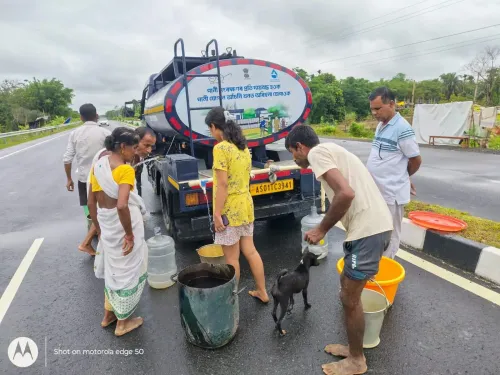
Additional boats, relief materials, and essential supplies are being mobilised from other districts of Assam .
The administration is described as working 'on a war footing' to reach every affected location.
CM Himanta expressed confidence that cut-off areas will receive assistance 'at the earliest.' Consolidated damage figures and potential central assistance requests are expected once all areas are assessed.
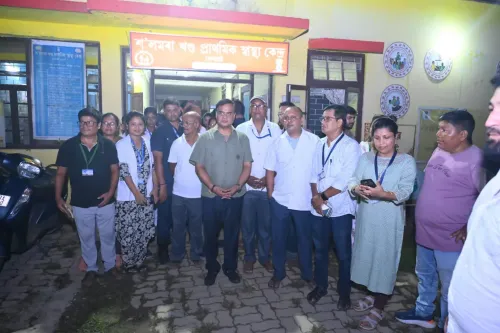
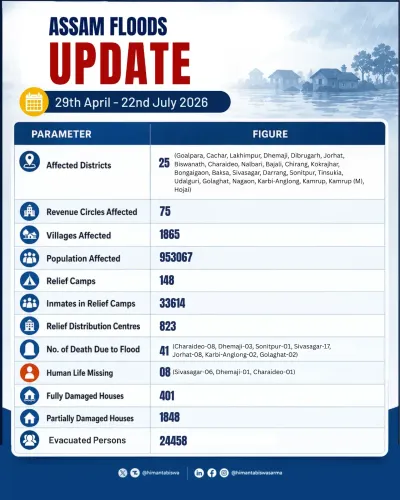
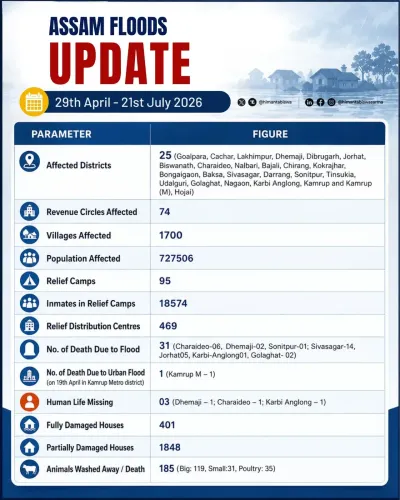
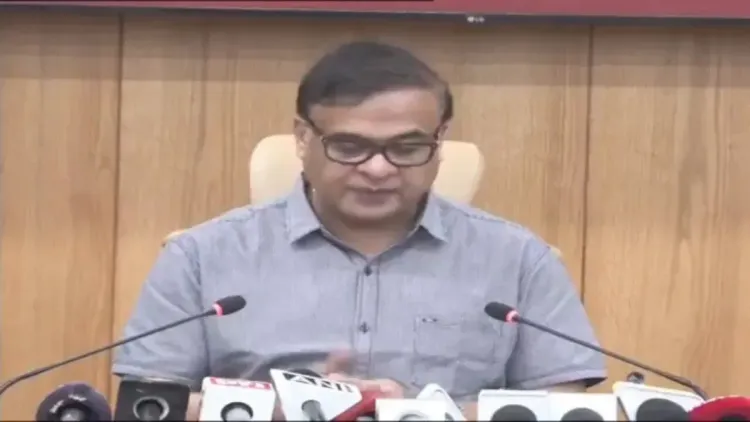
The Chief Minister's Office of Assam announced on Friday, 24 July 2026 that Chief Minister Dr. Himanta Biswa Sarma addressed the media to provide a latest assessment of losses from the ongoing flood situation across the state, stating that while some areas remain cut off, the administration is operating on a war footing to reach every affected location.
Context
Speaking to reporters, CM Himanta acknowledged that 'a few areas remain inaccessible' but assured that relief efforts are being scaled up urgently. Additional boats, relief materials, and essential supplies are being mobilised from other districts of Assam to bridge the gap. He expressed confidence that assistance will reach the remaining cut-off areas 'at the earliest.'
The Chief Minister's media address follows a standard protocol that the Assam administration observes during peak monsoon flooding — issuing regular public updates on inaccessible zones and loss assessments to maintain transparency and public confidence.
Policy Backdrop
Assam's geography, defined by the Brahmaputra and Barak river systems, makes it one of India's most flood-vulnerable states. Seasonal inundation has been a recurring challenge for successive state governments, with major flood years such as 2012 and 2020 prompting large-scale inter-district resource redeployment — the same mechanism now being activated.
The Assam State Disaster Management Authority (ASDMA) coordinates relief, rescue, and damage assessment during such events. Boat deployment from unaffected districts and rapid supply mobilisation are established first-response tools, while longer-term embankment and drainage infrastructure work typically proceeds at a slower pace.
Stakeholders and Impact
The most immediately affected are flood-hit villagers in low-lying and riverine areas who remain cut off from road access and regular supply chains. District administrations across Assam are the operational backbone of the current relief push, tasked with coordinating logistics on the ground.
The inter-district mobilisation of boats and supplies signals that the scale of flooding has stretched local resources in the worst-hit areas, requiring the state to draw on capacity from regions that are currently less affected. Flood-affected communities depend on the speed of this redeployment for food, medicine, and safe evacuation where needed.
What's Next
The administration is expected to release consolidated damage figures covering losses to life, livestock, crops, and infrastructure once all inaccessible areas are reached and assessed. Any formal request for central government assistance or a declaration seeking additional National Disaster Response Force deployment would typically follow such a consolidated survey.
Observers will also watch for announcements on embankment repairs and drainage improvements once the immediate relief phase stabilises — a cycle that has defined Assam's post-flood governance calendar for decades.
Point of View
But the explicit acknowledgement of inaccessible areas is notable for its candour. Assam's annual flood cycle has historically tested the credibility of state administrations, and timely, transparent communication has become as important a tool as the boats themselves. The coming days, when consolidated loss figures emerge, will be the real test of whether the administrative response matched the rhetorical urgency.
NationPress
24 Jul 2026
Frequently Asked Questions
What did CM Himanta Biswa Sarma say about the Assam floods today?
CM Himanta Biswa Sarma addressed the media on 24 July 2026 and stated that while a few areas remain inaccessible, the administration is working on a war footing, with additional boats and supplies being mobilised from other districts to reach cut-off locations.
Which areas of Assam are affected by floods in 2026?
The Chief Minister's statement did not specify individual districts by name, but confirmed that some areas remain inaccessible, indicating multiple flood-affected zones across the state. Consolidated area-wise figures are expected after assessments are complete.
How is the Assam government responding to the flood situation?
The state administration is deploying additional boats and mobilising relief materials and essential supplies from districts that are less affected, aiming to reach all cut-off communities at the earliest.
What is the Assam State Disaster Management Authority's role in flood relief?
The Assam State Disaster Management Authority coordinates relief, rescue, and damage assessment during flood events, working alongside district administrations to deploy resources and compile loss data.
When will Assam flood damage figures be released?
Consolidated damage figures covering losses to life, crops, livestock, and infrastructure are typically released after inaccessible areas are reached and assessed. No specific date has been announced yet.