CM Himanta Briefs PM Modi on Assam Floods, Gets Assurance of Full Central Support

Synopsis
Prime Minister Narendra Modi telephoned Assam Chief Minister Himanta Biswa Sarma on 25 July 2026 to get a first-hand briefing on the devastating Assam floods. Modi expressed condolences over lives lost and assured the state of the highest priority and full central support for relief, rehabilitation, and rebuilding efforts.
Key Takeaways
Prime Minister Narendra Modi personally telephoned Assam CM Himanta Biswa Sarma on 25 July 2026 to enquire about the flood situation.
Modi sought details on the extent of devastation, ongoing relief operations, and ground-level challenges.
The Prime Minister expressed deep condolences over the loss of lives and property in Assam .
Modi assured that the calamity is being accorded 'the highest priority' by the Government of India .
The Centre committed to extending 'every possible support' for relief, rehabilitation, and rebuilding in Assam .
The call follows an established pattern of central outreach during Northeast monsoon disasters, with potential NDRF deployments and fund releases expected next.
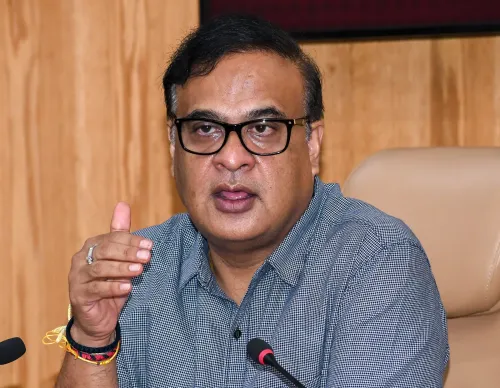
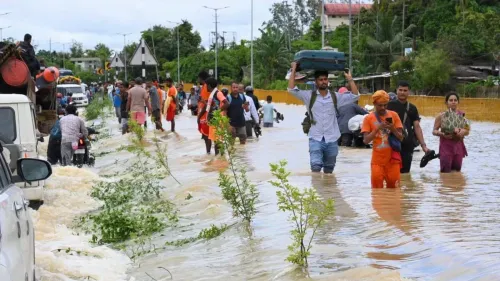
Assam Chief Minister Himanta Biswa Sarma on Saturday, 25 July 2026, disclosed that Prime Minister Narendra Modi telephoned him to seek a first-hand account of the ongoing Assam floods, including the scale of devastation, the status of relief operations, and the challenges being faced on the ground. The Prime Minister expressed deep condolences over the loss of lives and property and assured the people of Assam that the calamity is being accorded 'the highest priority' by the Government of India, with every possible support committed for relief, rehabilitation, and rebuilding.
Context
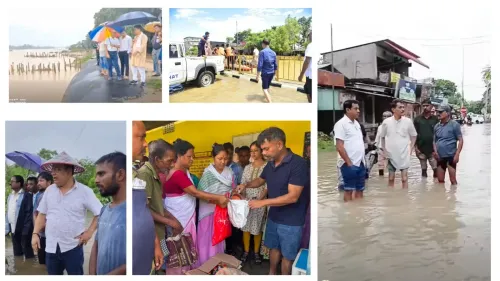
Chief Minister Sarma stated that he briefed the Prime Minister on measures being undertaken by the Assam state government and efforts to reach every affected family. In his post on X, Sarma conveyed that the people of Assam are 'deeply grateful' to the Prime Minister for his 'reassurance and steadfast support during this difficult time.' The call was also tagged to @PMOIndia, signalling formal communication between the state and the Prime Minister's Office.
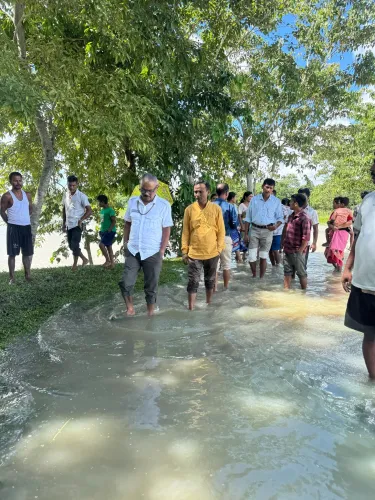
Assam is among India's most flood-prone states, with the Brahmaputra and Barak river systems inundating large swathes of the state during the monsoon season virtually every year. Annual flooding displaces lakhs of residents, damages agricultural land, and strains state administrative and financial resources.
Policy Backdrop
The Centre-state coordination framework for disaster response is governed by the Disaster Management Act, 2005, which established the National Disaster Response Fund (NDRF) and the State Disaster Response Fund (SDRF) as the primary financial instruments for relief and reconstruction. In 2020, following severe floods in Assam, the central government released immediate assistance from the National Disaster Response Fund after a Prime Ministerial review — a precedent that observers will watch for in the current situation.
The National Disaster Response Force (NDRF), a central paramilitary force, is routinely deployed to Assam during flood emergencies for rescue, evacuation, and relief distribution. The Prime Minister's personal outreach to Chief Minister Sarma fits an established pattern of direct central leadership engagement with state governments during major monsoon disasters in the Northeast, a pattern that has been especially visible since 2014.
Stakeholders and Impact
Flood-affected families across Assam are the primary stakeholders awaiting accelerated relief and rehabilitation support. The state administration, already engaged in active relief operations, will be looking to the Centre for supplementary funding and additional deployment of NDRF battalions to augment its own response capacity.
As convenor of the North-East Democratic Alliance (NEDA), Chief Minister Sarma occupies a politically significant position in the region. The Prime Minister's direct call and public assurance of central support carry both administrative and political weight for the BJP-led state government, reinforcing the Centre's commitment to NEDA partner states during crises.
What's Next
The immediate focus will be on whether the Government of India formalises its support through a release of funds from the National Disaster Response Fund, additional NDRF battalion deployments, or a special rehabilitation package for Assam. A central team visit to assess flood damage — a standard step before NDRF releases — may also be expected in the coming days.
The Prime Minister's assurance that the calamity is being accorded 'the highest priority' sets a high bar for the pace and scale of central intervention. How quickly that translates into measurable ground-level action will determine the political and humanitarian impact of this exchange.
Point of View
Making any delay in fund releases or NDRF deployment politically costly. For Sarma, broadcasting the call on X serves the dual purpose of reassuring flood-affected constituents and demonstrating his direct access to the Prime Minister. The exchange also sets the stage for a formal damage-assessment process and potential National Disaster Response Fund disbursement, the pace of which will be closely watched by opposition parties in Assam.
NationPress
25 Jul 2026
Frequently Asked Questions
Why did PM Modi call Assam CM Himanta Biswa Sarma?
Prime Minister Narendra Modi called Assam Chief Minister Himanta Biswa Sarma on 25 July 2026 to enquire about the ongoing Assam floods, seek an update on the scale of devastation and relief operations, and assure the state of full central government support.
What did PM Modi promise Assam regarding the floods?
PM Modi assured the people of Assam that the flood calamity is being accorded the highest priority by the Government of India and that every possible support will be extended for relief, rehabilitation, and rebuilding efforts.
What is the National Disaster Response Fund and how does it help Assam?
The National Disaster Response Fund, established under the Disaster Management Act 2005, is a central government fund used to provide financial assistance to states when their own State Disaster Response Fund resources are overwhelmed by calamities such as the annual Assam floods.
How often does Assam face severe flooding?
Assam faces severe monsoon flooding virtually every year, primarily due to the Brahmaputra and Barak river systems overflowing their banks, displacing lakhs of residents and causing widespread damage to agriculture and infrastructure.
What is NEDA and what is Himanta Biswa Sarma's role in it?
The North-East Democratic Alliance (NEDA) is a BJP-led political alliance of parties governing states in India's Northeast. Himanta Biswa Sarma, the Chief Minister of Assam, serves as its convenor, making him a key political figure coordinating BJP's regional strategy.