CM Himanta Celebrates Bhaona as Assam's Sanatan Heritage
Synopsis
Assam CM Himanta Biswa Sarma celebrated Bhaona — the ancient Vaishnavite theatrical tradition rooted in Srimanta Sankardev's legacy — as a living expression of Sanatan Dharma and Assam's civilisational pride, reinforcing his government's cultural-identity messaging in the Northeast.
Key Takeaways
Bhaona is a traditional Assamese theatrical form rooted in the Bhagavata Purana , created within the devotional movement of Srimanta Sankardev in the 15th–16th century.
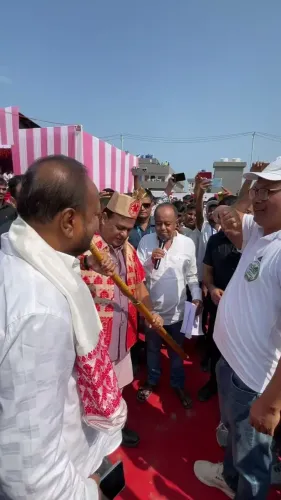
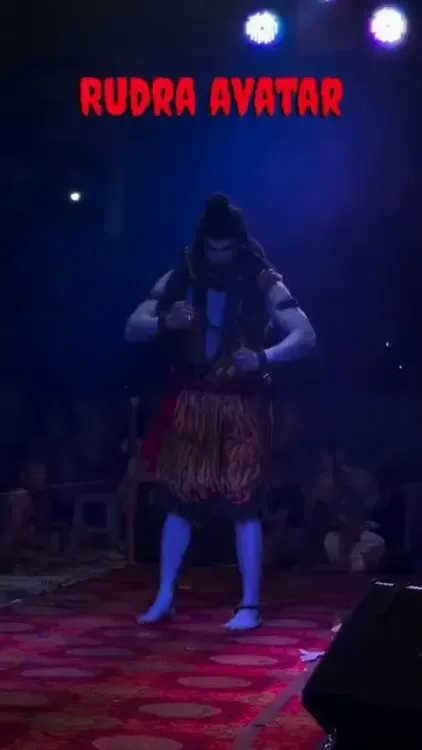
CM Himanta Biswa Sarma shared a Bhaona video on 2 November 2026 , calling it 'intrinsically linked to Sanatan Dharm.' Sarma framed the performance as emblematic of Assam's 'roots, heritage, and pride' — consistent with his government's broader cultural-identity messaging.
The BJP-led Assam government has repeatedly linked indigenous northeastern traditions to the wider framework of Sanatan Dharma .
Bhaona is performed in namghars (Vaishnavite prayer halls) and remains a living community ritual across the Brahmaputra valley.
State-supported heritage festivals featuring Bhaona remain a key vehicle for the Sarma government's cultural outreach.
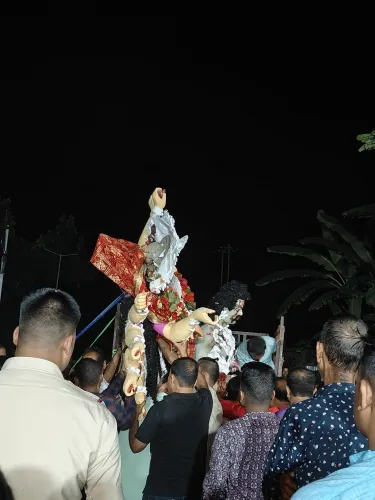
A centuries-old theatrical tradition stepped back into the spotlight on Monday, 2 November 2026, when Assam Chief Minister Himanta Biswa Sarma shared a video of Bhaona — the ancient Vaishnavite performance art of Assam — declaring it 'intrinsically linked to Sanatan Dharm' and a living embodiment of the state's roots, heritage, and pride.
What is Bhaona — and why does it matter?
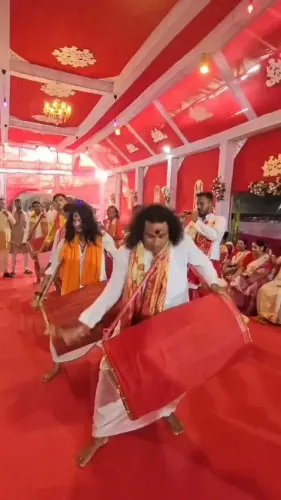
Bhaona is a traditional Assamese theatrical form rooted in the Bhagavata Purana and other Vaishnavite texts. Its origins trace directly to the reformist saint-scholar Srimanta Sankardev, the 15th–16th century polymath who reshaped Assamese spiritual and cultural life through devotional literature, music, and drama. Performed typically inside the sacred precincts of namghars (Vaishnavite prayer halls), Bhaona weaves together dance, dialogue, music, and elaborate costumes to bring divine narratives to life — making theology accessible, communal, and celebratory at once.
The tradition has survived centuries of political change across the Brahmaputra valley, remaining a connective thread between Assam's village communities and their shared cosmology. It is simultaneously folk art, moral instruction, and community ritual — three things in one performance.
Sarma's message: culture as identity politics
Chief Minister Sarma has consistently framed Assam's indigenous practices within the broader vocabulary of Sanatan Dharma — a pattern visible across his public messaging since taking office. By invoking Bhaona in this register, he positions a distinctly northeastern cultural form not as regional folklore but as a living strand of pan-Hindu civilisational heritage. The Northeast, long characterised by its plurality and syncretic traditions, becomes, in this framing, a witness to — not an exception from — India's ancient spiritual continuum.
That framing carries political weight. The BJP-led state government has made cultural identity central to its outreach in a region where tribal diversity, Christian communities, and indigenous belief systems coexist with Vaishnavite Hinduism. Highlighting Bhaona is a way of asserting that Assam's oldest cultural bedrock is Hindu — and proud of it.
Sankardev's legacy, seven centuries on
Any serious account of Bhaona must return to Srimanta Sankardev. His eka sarana naam dharma (the path of singular devotion) reimagined Assamese society in the 15th century, producing not just theology but an entire arts ecosystem — the borgeet (devotional songs), the ankiya naat (one-act plays of which Bhaona is the staged form), and the sattra (monastic institution) system that still anchors Vaishnavite life across the valley. That a sitting Chief Minister is amplifying this legacy in 2026 underlines how deeply Sankardev's cultural architecture remains politically legible, not just spiritually resonant.
State-supported cultural festivals and heritage events continue to be a vehicle for Bhaona's wider visibility — something worth watching as the Sarma government maps out its cultural programme going forward.
Point of View
He signals that the Northeast is not a cultural outlier but a living proof of India's ancient heritage. This matters politically: in a region defined by ethnic plurality and historical anxieties about demographic change, anchoring identity in a pre-political spiritual tradition is a unifying — and strategically useful — move. The post also sustains Sarma's image as a culturally literate leader, not just an administrative one.
NationPress
2 Nov 2026
Frequently Asked Questions
What is Bhaona in Assamese culture?
Bhaona is a traditional Assamese theatrical performance rooted in Vaishnavite devotion, drawing narratives from texts like the Bhagavata Purana. It was developed by the saint-scholar Srimanta Sankardev in the 15th–16th century and is typically performed inside namghars — Vaishnavite prayer halls — combining dance, music, dialogue, and elaborate costumes.
Who created Bhaona and what is its historical origin?
Bhaona was created as part of the devotional arts movement of Srimanta Sankardev, the 15th–16th century Assamese saint-polymath. His one-act play form, the ankiya naat, is the literary source; Bhaona is the full staged performance of these works, which spread across Assam through the sattra monastic institution system he established.
Why is CM Himanta Biswa Sarma linking Bhaona to Sanatan Dharma?
Sarma has consistently framed Assam's indigenous cultural traditions within the vocabulary of Sanatan Dharma, consistent with the BJP-led state government's emphasis on Hindu cultural identity in the Northeast. By doing so, he positions Bhaona not as regional folklore but as a living strand of India's broader Hindu civilisational heritage.
What is a namghar in Assam?
A namghar is a Vaishnavite community prayer hall found across Assam, serving as the primary social and spiritual centre of a village. It is the traditional venue for Bhaona performances, congregational prayer, and community decision-making — functioning as both temple and village assembly hall.
What is Srimanta Sankardev's contribution to Assamese culture?
Srimanta Sankardev (15th–16th century) was the foundational figure of Assamese cultural and spiritual life. He introduced the eka sarana naam dharma devotional path, composed borgeet (devotional songs), created the ankiya naat theatrical tradition (the source of Bhaona), and established the sattra monastic system — an entire civilisational architecture that continues to shape Assam today.