CM Himanta: Dima Hasao mines to yield ₹1,014 cr/yr for tribal council

Synopsis
Assam CM Himanta Biswa Sarma announced that 13 transparent limestone block auctions in Dima Hasao will generate ₹84,500 crore over 50 years, with 60 percent — roughly ₹1,014 crore yearly — going directly to the Dima Hasao Autonomous Council, bypassing state and central fund routing.
Key Takeaways
13 limestone blocks in Dima Hasao were auctioned transparently to top cement companies.
Total projected revenue: ₹84,500 crore over 50 years , approximately ₹1,690 crore per year .
60 percent of auction proceeds — around ₹1,014 crore annually — flows directly to the Dima Hasao Autonomous Council .
The council is a Sixth Schedule constitutional body with guaranteed powers over tribal affairs and local governance.
Dima Hasao , formerly North Cachar Hills , was a conflict zone until peace accords with the Dima Halam Daogah (DHD) were reached in the 2000s .
CM Sarma frames the direct revenue stream as structural fiscal autonomy — ending the council's dependence on grants from Dispur or Delhi .
A district that once made headlines for insurgency is now being held up as a model for mineral-led tribal autonomy. Assam Chief Minister Himanta Biswa Sarma on Monday, November 2, 2026, announced that transparent limestone block auctions in Dima Hasao will channel roughly ₹1,014 crore every year directly to the Dima Hasao Autonomous Council — no routing through Dispur or Delhi, no bureaucratic waiting.
Thirteen limestone blocks, fifty years of guaranteed revenue
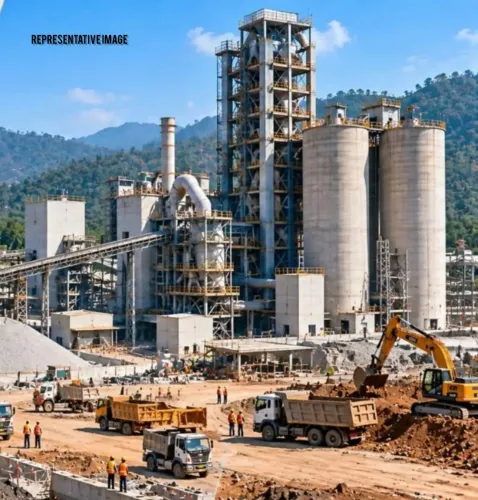
The numbers are striking. According to CM Sarma, 13 limestone blocks were auctioned transparently to top cement companies, locking in a projected ₹84,500 crore over 50 years — roughly ₹1,690 crore annually. The defining feature of the deal: 60 percent of that revenue flows directly to the Dima Hasao Autonomous Council, translating to the ₹1,014 crore per year figure the Chief Minister highlighted. The remaining share is distributed between state and central pools under the standard mineral revenue framework.
Dima Hasao — formerly known as North Cachar Hills — sits in the hill ranges of southern Assam and holds some of the region's richest limestone deposits. For decades, those deposits sat largely untapped as the district wrestled with the armed conflict of the Dima Halam Daogah (DHD), a militant group that signed ceasefire and peace accords with the government through the 2000s. The transition from conflict zone to investment destination is precisely the transformation CM Sarma is citing.
Sixth Schedule autonomy — and what 'real autonomy' means in rupees
The Dima Hasao Autonomous Council is a Sixth Schedule body under the Indian Constitution, meaning it has guaranteed legislative and executive powers over tribal affairs, land management, and local administration. In theory, that autonomy is substantial. In practice, Sixth Schedule councils have historically depended heavily on grants from state and central governments to fund even basic services — making them vulnerable to political cycles and fiscal squeezes in Guwahati or New Delhi.
Sarma's argument is that a direct revenue stream from natural resource auctions breaks that dependency. 'That's real autonomy: no waiting on Dispur or Delhi for every rupee,' he wrote, positioning the mineral proceeds as a structural fiscal backstop — not a one-time grant, but a 50-year annuity built into the auction terms themselves.
Transparent auctions as a post-insurgency development template
The Assam government has in recent years pushed competitive, transparent bidding for mineral blocks across the state as a revenue strategy — replacing older, opaque allocation processes that critics linked to both revenue leakage and local grievance. In tribal hill districts, where the relationship between extractive industry and indigenous communities has historically been contentious, the framing of the auction proceeds as community revenue rather than state revenue is politically significant.
CM Sarma directly took on critics — 'armchair activists,' in his phrasing — who argue that large-scale resource extraction damages indigenous areas. His counter: Dima Hasao itself is the rebuttal. A district that spent a generation fighting an insurgency partly rooted in marginalisation and underdevelopment is now set to receive over a thousand crore rupees a year from the very limestone beneath its hills — on terms the local autonomous council controls.
The rollout of the 60 percent revenue-share mechanism and any environmental and community impact assessments tied to the limestone operations will be the real test of whether the model delivers as promised — but the political statement is already clear and loud.
Point of View
The BJP-led government in Guwahati is attempting to neutralise a longstanding grievance in tribal hill districts: that formal autonomy means little without independent financial muscle. The move also fits a broader Northeast-wide pattern under CM Sarma's leadership of NEDA, where post-insurgency integration is pursued through economic inclusion rather than purely through security frameworks. The 50-year horizon of the auction lock-in is the most consequential detail — it outlasts any single government and, if honoured, would structurally alter the council's fiscal position for a generation.
NationPress
2 Nov 2026
Frequently Asked Questions
What is the Dima Hasao Autonomous Council?
The Dima Hasao Autonomous Council is a Sixth Schedule constitutional body in Assam that governs tribal affairs, land, and local administration in Dima Hasao district, formerly known as North Cachar Hills.
How much money will Dima Hasao get from the limestone auctions?
According to CM Himanta Biswa Sarma, 60 percent of the auction revenue — roughly ₹1,014 crore per year — will go directly to the Dima Hasao Autonomous Council from 13 limestone block deals worth a projected ₹84,500 crore over 50 years.
Why was Dima Hasao affected by insurgency?
Dima Hasao experienced armed conflict linked to the Dima Halam Daogah (DHD), a militant group rooted in demands for greater autonomy and development for the district's tribal communities. Peace accords and ceasefires in the 2000s ended the major phase of insurgency.
What is the Sixth Schedule of the Indian Constitution?
The Sixth Schedule provides for autonomous district councils in tribal areas of Northeast India — including Assam, Meghalaya, Tripura, and Mizoram — granting them legislative and executive powers over specified subjects like land, forests, and local customs.
What does Himanta Biswa Sarma mean by 'real autonomy' for Dima Hasao?
CM Sarma argues that genuine autonomy requires independent revenue — not grants dependent on state or central government approvals. By routing 60 percent of mining proceeds directly to the local council, he says the district no longer needs to wait on Dispur or Delhi for funds.