CM Himanta highlights Assam's ancient rock-cut Shiva temples
Synopsis
Assam CM Himanta Biswa Sarma spotlighted Biswanath Ghat — a rock-cut Shiva temple site on the Brahmaputra known as Gupta Kashi — invoking the Shalastambha and Ahom dynasties while drawing comparisons with Ellora and Mahabalipuram after a personal visit.
Key Takeaways
Biswanath Ghat on the Brahmaputra is a rock-cut Shaivite site historically called Gupta Kashi , with over a thousand years of continuous worship.
The Shalastambha dynasty (circa 7th–10th centuries CE ) originally carved the shrines to Mahadev into the rock.
The Ahom rulers ( 13th–19th centuries ) later restored and maintained the temples, ensuring dynastic continuity of patronage.
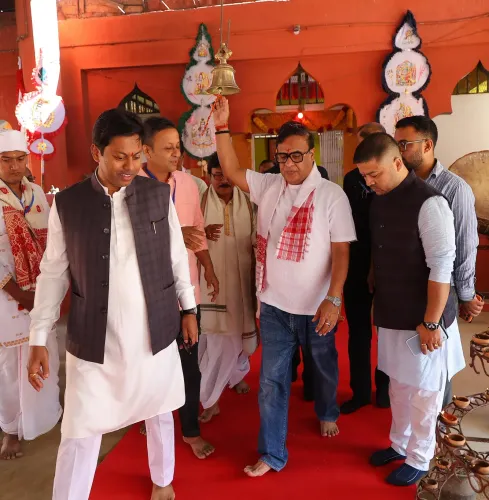
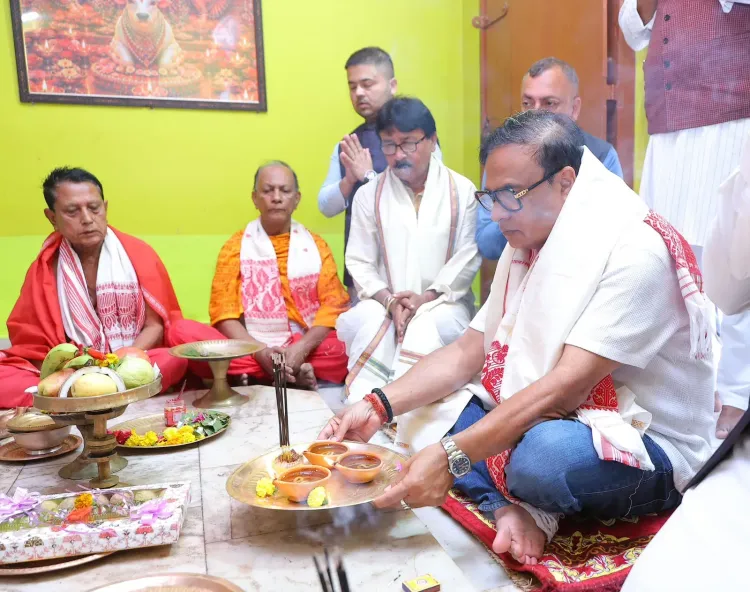
CM Himanta Biswa Sarma visited the site last week and offered prayers for Assam's peace and prosperity .
Sarma explicitly compared the site to Ellora and Mahabalipuram , positioning Assam within India's mainstream rock-cut heritage tradition.
Long before Ellora's caves drew pilgrims and Mahabalipuram's shore temples became icons of Indian civilisation, chisels were cutting through riverside rock on the Brahmaputra. Assam Chief Minister Himanta Biswa Sarma has turned a spotlight on Biswanath Ghat — the state's own rock-cut Shaivite sanctuary — recounting a personal visit last week where he offered prayers for Assam's peace and prosperity.
A thousand years of Shiva worship on the Brahmaputra
Biswanath Ghat, historically revered as Gupta Kashi (the hidden Kashi), stands on the northern bank of the Brahmaputra in present-day Biswanath district, Assam. The site's sacred architecture traces back to the Shalastambha dynasty, rulers of the ancient Kamarupa kingdom who governed the region roughly between the 7th and 10th centuries CE. It was these kings who first carved shrines to Mahadev directly into the rock — an act of devotion that placed Assam firmly within India's ancient tradition of monolithic temple-making.
The Ahom rulers, who commanded Assam from the 13th century through to the early 19th century, later took on the mantle of restoration, reinforcing what the Shalastambha kings had begun. That unbroken arc of patronage — over a full millennium — is precisely the point Sarma underscores: 'For over a millennium, Biswanath has been a centre of Shiv Bhakti,' he writes, calling it one of the most scenic places he knows and 'a personal favourite.'
Placing Assam beside Ellora and Mahabalipuram
The Chief Minister's framing is deliberate. By opening with references to Ellora (Maharashtra) and Mahabalipuram (Tamil Nadu) — two of India's best-known UNESCO-listed rock-cut heritage sites — he draws a direct cultural parallel, arguing that Assam's Brahmaputra-bank shrines belong in the same conversation. The Northeast has long sat at the margins of mainstream heritage tourism; invoking those pan-Indian landmarks is a pointed act of repositioning.
The Gupta Kashi epithet itself carries enormous Shaivite weight. Kashi (Varanasi) is Hinduism's preeminent city of Lord Shiva; a site bearing that suffix signals a belief that the divine presence there is equal in sanctity, if more hidden. Sarma closed his post with the salutation Har Har Mahadev — the battle cry and devotional chant of Shiva worshippers — anchoring the message in living faith rather than mere archaeology.
Heritage promotion as governance signal
The post arrives at a moment when several northeastern states are actively seeking to claim space on India's cultural tourism map. Sarma's public identification with Biswanath Ghat as a 'personal favourite' adds an informal endorsement that official tourism campaigns rarely achieve. Analysts watching the state have noted a pattern: Sarma regularly uses social media to surface lesser-known Assamese heritage sites, weaving religious devotion with a broader argument for the region's civilisational depth. The reference to possible future conservation or festival investment at such sites is a natural next chapter — though no specific announcement was made in this post.
Point of View
Ancient node of Hindu civilisation rather than a peripheral addition to India's cultural map. By invoking Ellora and Mahabalipuram, he implicitly argues for parity in heritage funding and tourist attention. The religious idiom (Gupta Kashi, Har Har Mahadev) also reinforces a Shaivite cultural identity that plays well with his core political constituency. Longer term, such high-profile endorsements from a sitting Chief Minister typically precede state budget allocations or central government nominations for conservation and tourism projects.
NationPress
16 Nov 2026
Frequently Asked Questions
Where is Biswanath Ghat located in Assam?
Biswanath Ghat is situated on the northern bank of the Brahmaputra river in Biswanath district , Assam. It is historically known as Gupta Kashi and is one of the state's most significant Shaivite pilgrimage sites.
Why is Biswanath Ghat called Gupta Kashi?
The name Gupta Kashi means 'the hidden Kashi,' signifying a belief that the site carries the same sanctity as Kashi (Varanasi) — the most sacred city of Lord Shiva in Hinduism — but in a less widely known, riverbank setting.
Which dynasty built the rock-cut temples at Biswanath Ghat?
The original rock shrines were carved by the Shalastambha dynasty , rulers of the ancient Kamarupa kingdom who governed the region roughly between the 7th and 10th centuries CE . The temples were later restored by the Ahom rulers .
What did Himanta Biswa Sarma do at Biswanath Ghat?
Assam Chief Minister Himanta Biswa Sarma visited Biswanath Ghat last week and offered prayers for Assam's peace and prosperity, as he stated in a post on 16 November 2026 .
How is Biswanath Ghat similar to Ellora and Mahabalipuram?
Like Ellora (Maharashtra) and Mahabalipuram (Tamil Nadu), Biswanath Ghat features rock-cut temple architecture — shrines carved directly into natural rock faces rather than built from separate stone blocks — placing it within the same ancient Indian tradition of monolithic sacred architecture.